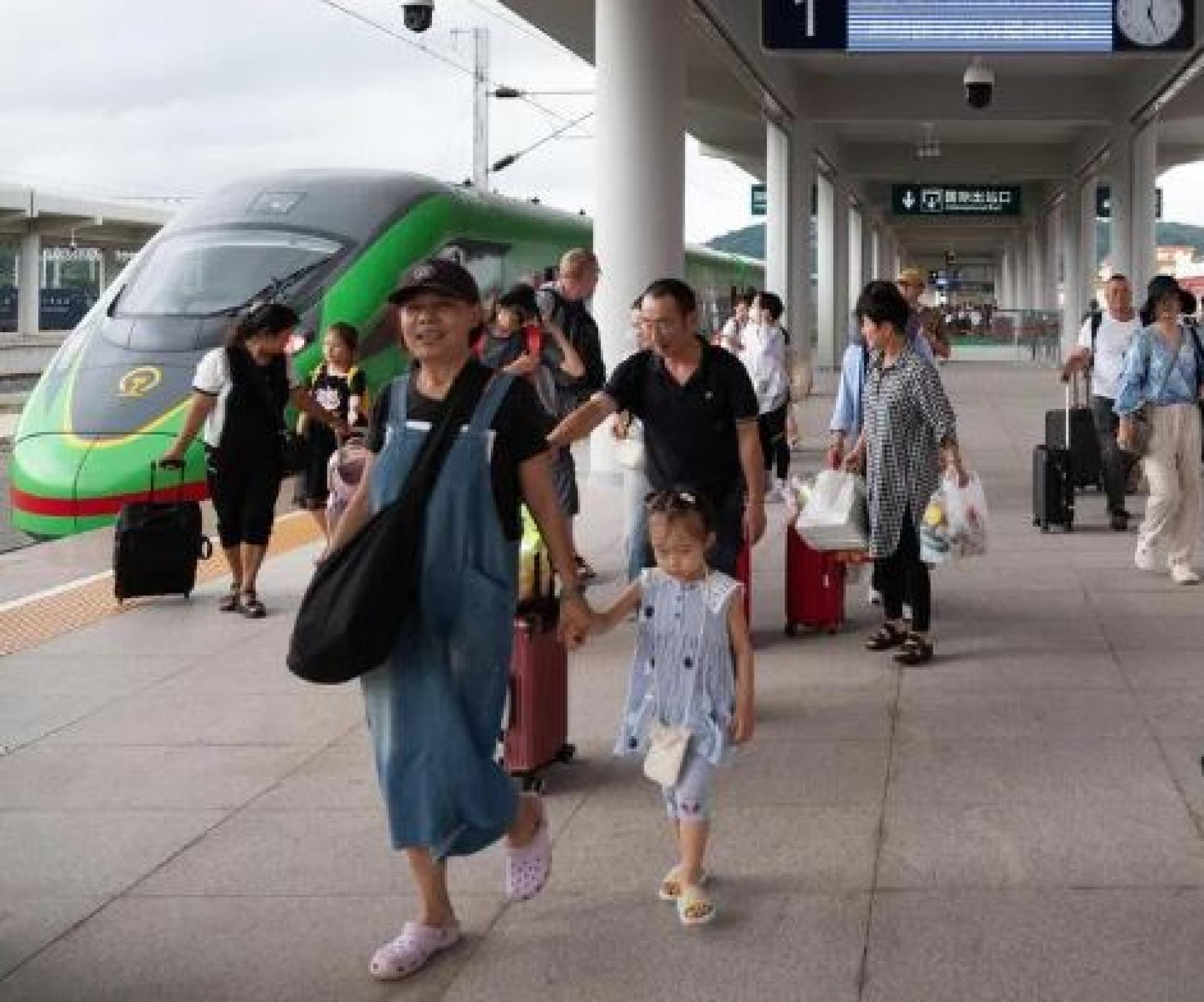
(Bangkok News) Thailand's first high-speed railway—the Bangkok to Nakhon Ratchasima (Korat) high-speed rail project (Bangkok-Korat High-Speed Rail)—has been confirmed to be delayed by at least one year. The original target for opening in 2029 has been adjusted to officially commence operations in 2030, mainly due to difficulties in land acquisition and overlapping with other infrastructure projects, which have hindered the progress of construction.
According to Thai media reports, the Bangkok-Korat High-Speed Rail extends 609 kilometers in total and is being built in two phases. Phase one runs from Bangkok to Korat, covering 250.77 kilometers and is expected to cost 179.4 billion baht (approximately 7.4 billion SGD); phase two will extend from Korat to the northeastern border province of Nong Khai, and construction was approved by the Thai government last year.
As of November 2025, overall progress of the high-speed rail construction had reached 50%. The State Railway of Thailand noted that the accumulated construction and coordination experience from phase one will help accelerate the implementation of phase two, especially as most of the second phase traverses flat terrain, avoiding mountainous areas like the first phase, thus expected to shorten the construction period.
Kanphol, Deputy Director of Special Projects and Construction Engineering at the State Railway of Thailand, stated that the delay in phase one was mainly due to project overlap with the railway system connecting Don Mueang, Suvarnabhumi, and U-Tapao airports, while negotiations for land acquisition along the route remained unresolved, further slowing progress.
He also revealed that the high-speed rail line must traverse mountainous and forest areas to ensure the track remains straight and suitable for high-speed travel, making construction more complex, and requiring environmental management and ecological protection measures.
"Although these challenges increase the project’s difficulty, they have also allowed the authorities to accumulate valuable technical and management experience,” said Kanphol, emphasizing that most of the second phase will be on flat ground, creating more ideal construction conditions and is expected to be completed faster than the first phase.
The Bangkok-Korat High-Speed Rail is a major Thai-Chinese collaborative infrastructure project actively promoted during former Prime Minister Prayut's administration. Thailand and China signed a railway cooperation memorandum in 2014, and construction officially began in December 2015. However, the project has since been delayed multiple times due to cost negotiation differences, opposition from affected residents, design adjustments, and cumbersome bureaucratic procedures.
According to the initial agreement, the high-speed rail will total 873 kilometers in length, linking Vientiane, Laos in the north directly to Kunming, China, and connecting southward to Malaysia and Singapore. It is an important component of the Pan-Asian Railway plan, holding both strategic and regional connectivity significance.
As of November 2025, overall progress of the high-speed rail construction had reached 50%. The State Railway of Thailand noted that the accumulated construction and coordination experience from phase one will help accelerate the implementation of phase two, especially as most of the second phase traverses flat terrain, avoiding mountainous areas like the first phase, thus expected to shorten the construction period.
Kanphol, Deputy Director of Special Projects and Construction Engineering at the State Railway of Thailand, stated that the delay in phase one was mainly due to project overlap with the railway system connecting Don Mueang, Suvarnabhumi, and U-Tapao airports, while negotiations for land acquisition along the route remained unresolved, further slowing progress.
He also revealed that the high-speed rail line must traverse mountainous and forest areas to ensure the track remains straight and suitable for high-speed travel, making construction more complex, and requiring environmental management and ecological protection measures.
"Although these challenges increase the project’s difficulty, they have also allowed the authorities to accumulate valuable technical and management experience,” said Kanphol, emphasizing that most of the second phase will be on flat ground, creating more ideal construction conditions and is expected to be completed faster than the first phase.
The Bangkok-Korat High-Speed Rail is a major Thai-Chinese collaborative infrastructure project actively promoted during former Prime Minister Prayut's administration. Thailand and China signed a railway cooperation memorandum in 2014, and construction officially began in December 2015. However, the project has since been delayed multiple times due to cost negotiation differences, opposition from affected residents, design adjustments, and cumbersome bureaucratic procedures.
According to the initial agreement, the high-speed rail will total 873 kilometers in length, linking Vientiane, Laos in the north directly to Kunming, China, and connecting southward to Malaysia and Singapore. It is an important component of the Pan-Asian Railway plan, holding both strategic and regional connectivity significance.