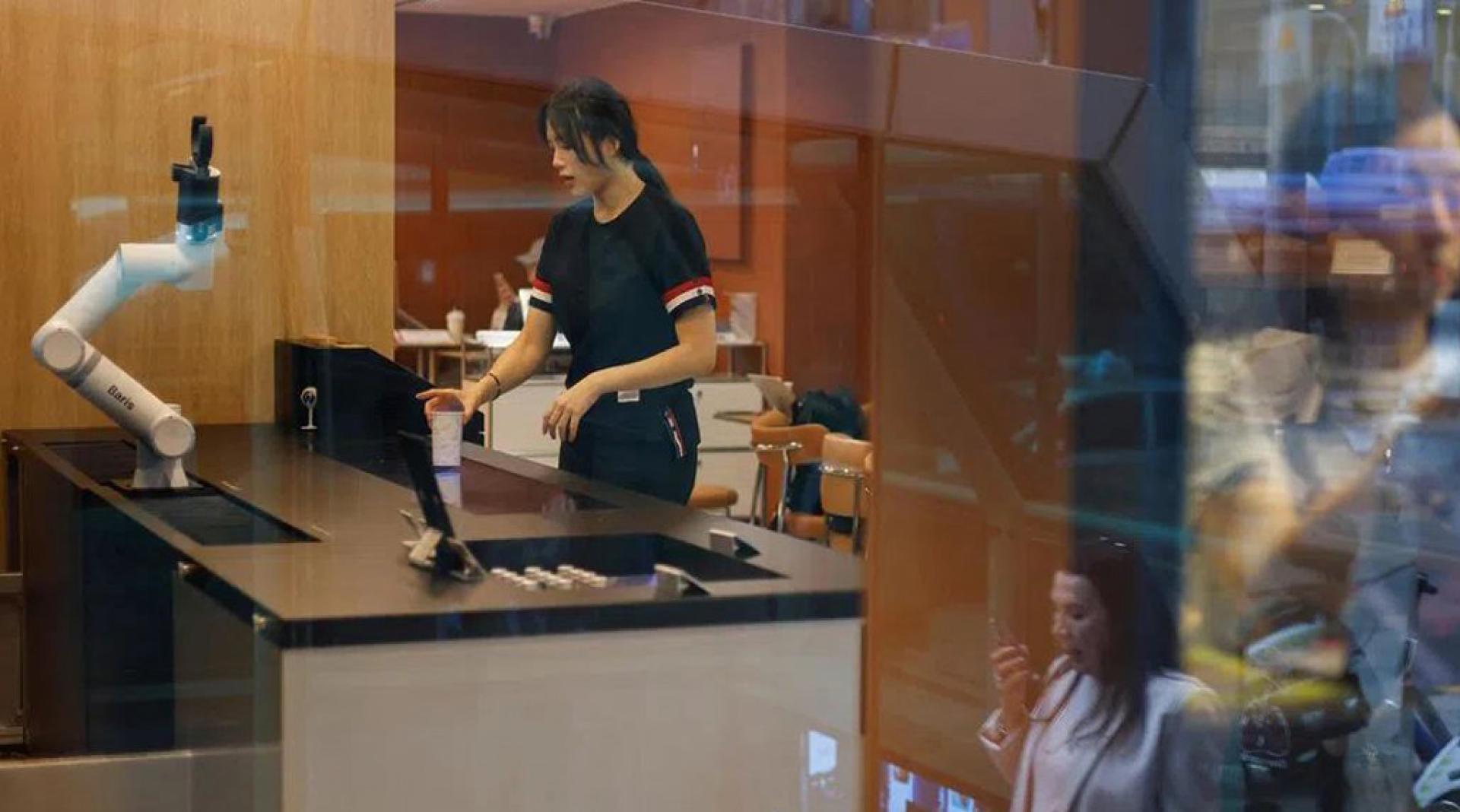
Unmanned cafes, ramen shops, and flower stores are becoming increasingly common across South Korea. Shop owners are turning to robots and self-service models to cope with rising labor costs, and this business model largely depends on customers' honesty and self-discipline.
According to the Korean Fire Agency, the number of such stores—usually open around the clock—is expected to reach 9,000 by the end of 2024. Payment service provider Samsung Card predicts that by 2025, the number of these shops will be four times higher than in 2020.
While unmanned shops are not rare globally—the UK and the US, for example, already have cashier-less grocery stores—in South Korea the concept is spreading more broadly, even encompassing pet shops and boutique clothing stores.
Shop owners say that difficulty hiring suitable staff and rising wage costs are the main reasons for adopting this model. In addition, South Korea has relatively low rates of petty crime and law-abiding customers, which provide favorable conditions for the model.
Meanwhile, South Korea is experiencing rapid population aging, with a birth rate among the lowest in the world, leading to labor shortages. The government estimates that by 2072, the country's population will fall from the current 51.8 million to 36.2 million—a decrease of nearly one third.