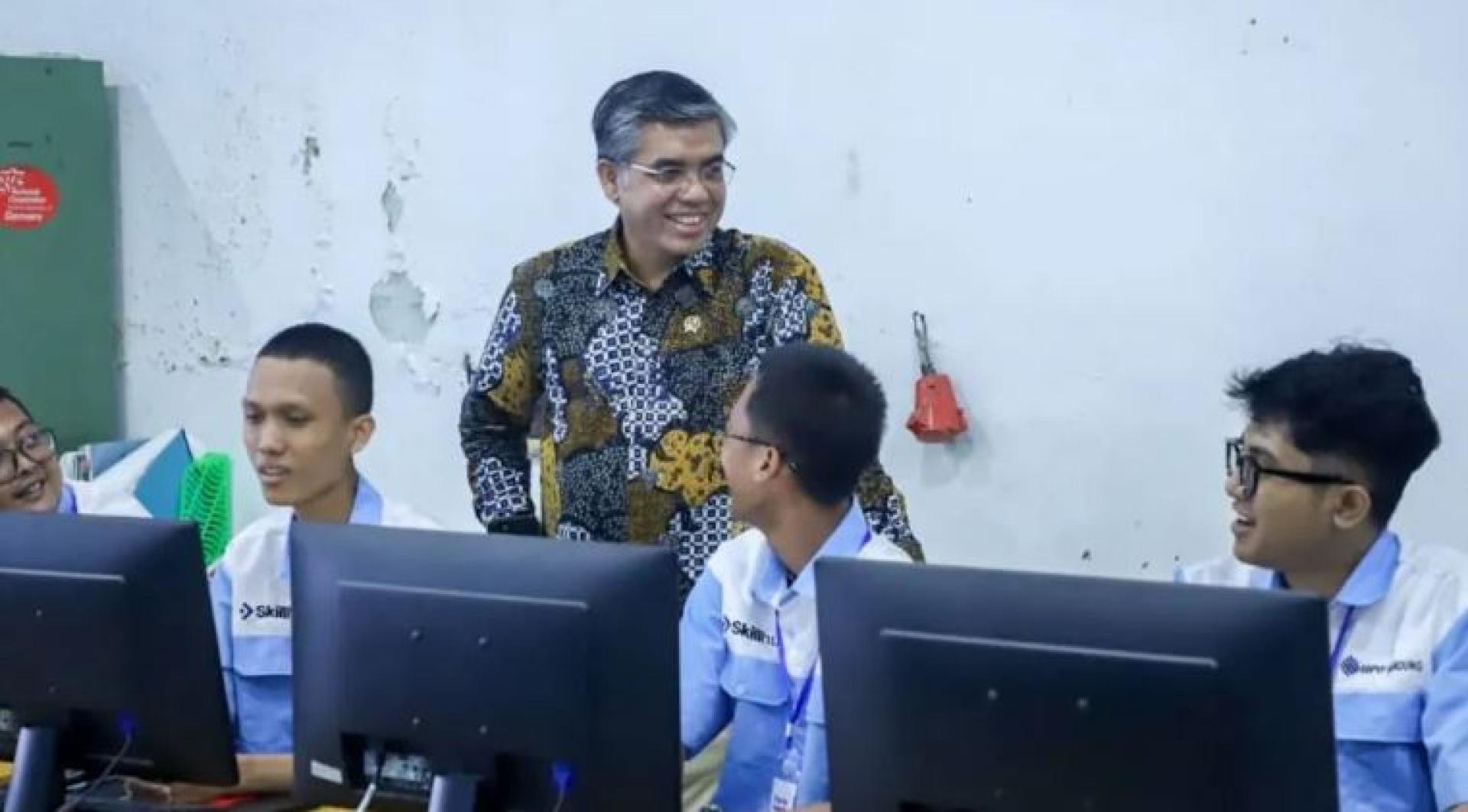
Indonesian Minister of Manpower, Yasirli, stated that the government plans to enroll 70,000 people in the national vocational training program by 2026 to enhance workforce skills, align with industry demands, and strengthen employability.
He said the program emphasizes "industry-education alignment" by intensifying skills training so that trainees can enter the labor market directly after graduating.
Currently, 10,405 trainees nationwide are participating in training, covering 21 government vocational training centers, 13 directly administered training units, and 46 locally managed training centers.
At the Bandung Center for Vocational and Productivity Training Development in West Java, 512 trainees have participated in the first batch of courses. The training content includes forklift operation, barista skills, baking, as well as computer-aided design (CAD) for 3D modeling.
In addition, trainees also strengthen their practical and technical abilities through project-based learning in integrated smart building systems and other projects. The relevant training facilities, faculty, and curricula are all designed according to industry needs.
Participants enjoy free training, meals, and transportation subsidies, as well as occupational accident and death insurance, and receive training and skill certificates issued by the National Professional Certification Agency. Some courses also provide accommodation.
The authorities noted that the program is primarily aimed at high school and vocational school graduates, is fully funded by the national treasury, and aims to cultivate technical talent who can directly serve the industrial sector.
Currently, 10,405 trainees nationwide are participating in training, covering 21 government vocational training centers, 13 directly administered training units, and 46 locally managed training centers.
At the Bandung Center for Vocational and Productivity Training Development in West Java, 512 trainees have participated in the first batch of courses. The training content includes forklift operation, barista skills, baking, as well as computer-aided design (CAD) for 3D modeling.
In addition, trainees also strengthen their practical and technical abilities through project-based learning in integrated smart building systems and other projects. The relevant training facilities, faculty, and curricula are all designed according to industry needs.
Participants enjoy free training, meals, and transportation subsidies, as well as occupational accident and death insurance, and receive training and skill certificates issued by the National Professional Certification Agency. Some courses also provide accommodation.
The authorities noted that the program is primarily aimed at high school and vocational school graduates, is fully funded by the national treasury, and aims to cultivate technical talent who can directly serve the industrial sector.