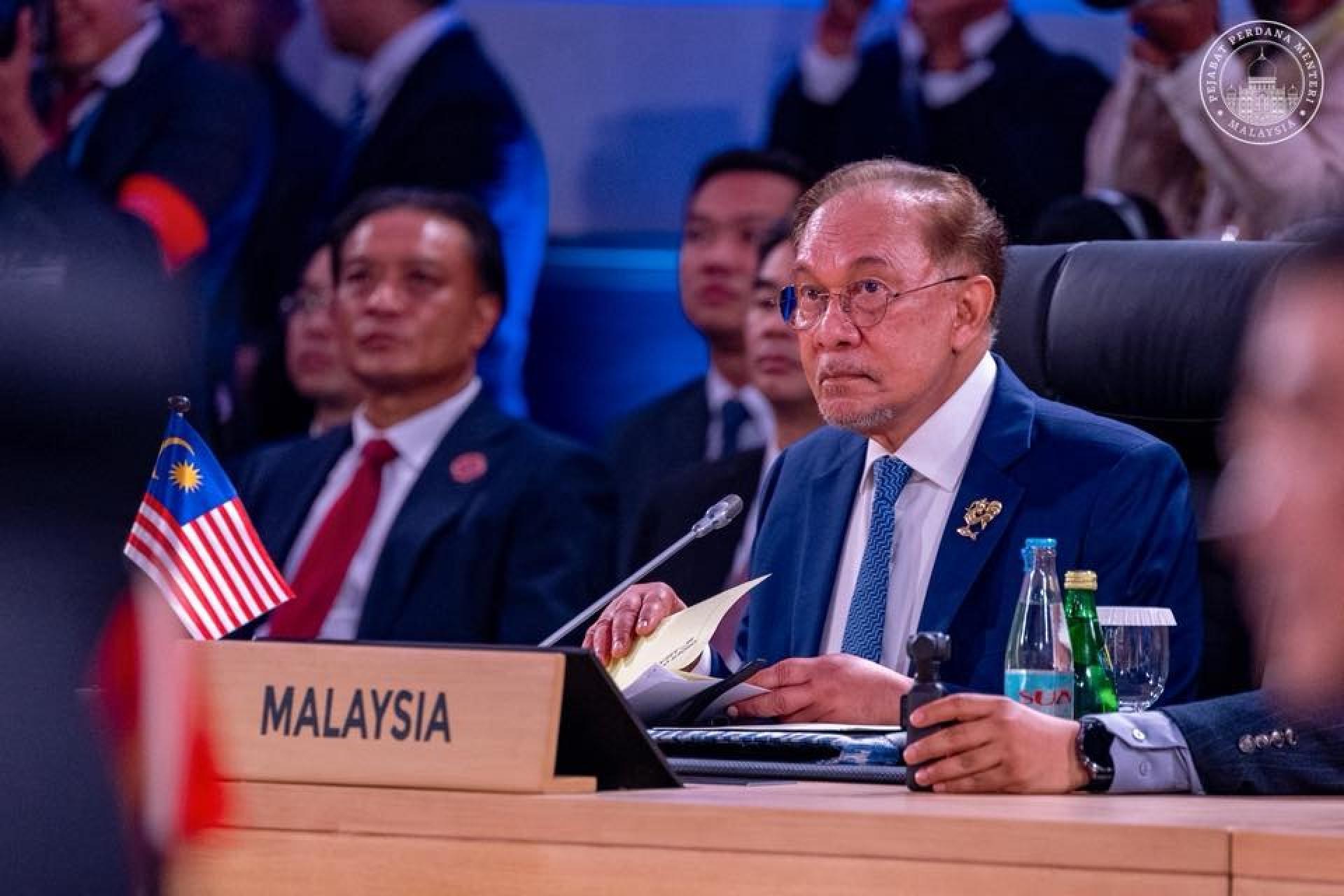
Prime Minister Datuk Seri Anwar has proposed that relevant ASEAN ministers urgently discuss the establishment of a regional food security reserve mechanism to respond to the ongoing Middle East conflicts and other various crises, thereby accelerating coordination and emergency response speed.
When delivering his speech at the 48th ASEAN Summit plenary session on Friday (8th), he pointed out that the energy crisis has already worsened food insecurity. Rising fuel prices have continued to drive up the costs of fertilizers, transportation, and production, putting direct supply pressure on the entire region.
"If supply disruptions persist, ASEAN will face the risk of reduced output and continued food inflation into next year. Therefore, food security must be regarded as a regional strategic priority."
He said it is necessary to strengthen the ASEAN Plus Three Emergency Rice Reserve (APTERR), and to work with partners to expand cooperation from rice reserves to cover fertilizer security.
Mentioning the "Kuala Lumpur Declaration" adopted at the 46th ASEAN Summit last year, Anwar pointed out that this 20-year framework recognizes that energy security, food resilience, supply chain stability, and stronger regional connectivity have now become strategic priorities—not just concerns at the sectoral level.
Therefore, he called on ASEAN member states to continue advancing based on the momentum of this declaration, and to reaffirm their shared commitment to strategic autonomy, economic resilience, and sustainable growth.

"We must also diversify sources of fossil fuels and reduce over-reliance on fragile supply chains. We need to recognize that strategic cooperation with trusted partners and regional groupings can strengthen ASEAN's long-term energy security."
He also urged ASEAN to make good use of its cooperation with the Gulf Cooperation Council (GCC), including broader ASEAN-GCC-China ties, to build more reliable and resilient energy arrangements.
He emphasized that the ASEAN Power Grid remains at the core of ASEAN's energy transition and long-term security, and that greater investment is needed to accelerate cross-border interconnectivity and low-carbon growth.

Regarding the safety of ASEAN citizens during the Middle East crisis, Anwar urged member states to strengthen information sharing, consular cooperation, and emergency response mechanisms.
He said closer cooperation with external partners, international organizations, and stakeholders would help safeguard people's well-being.
"From foreign workers, seafarers to peacekeepers and students, the risks brought by regional instability require us to strengthen coordination amongst ourselves."
He reiterated Malaysia’s strong support for the Philippines as this year's rotating ASEAN chair, stating that the theme of 'Together Towards a Shared Future' is both timely and very necessary.
"This reflects the continuation of our shared vision, as well as the determination to strengthen ASEAN unity, resilience, and centrality in an increasingly complex global environment."