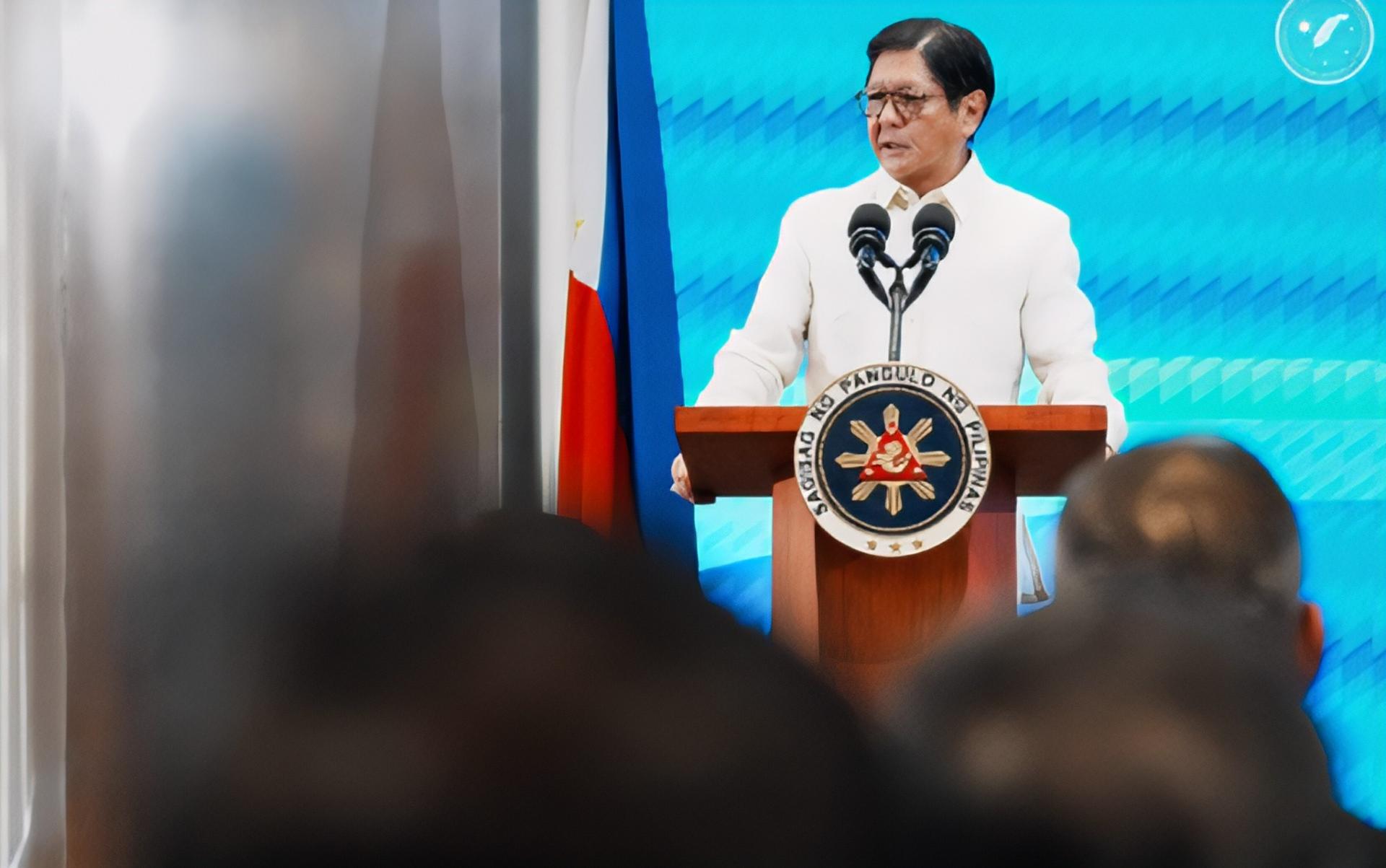
(Manila, 29th – Comprehensive Report) Philippine President Ferdinand Marcos Jr. stated that the government, in addressing the West Philippine Sea issue, will adopt a "firm yet diplomatic" approach in handling the recent escalating war of words between Filipino and Chinese officials. The Presidential Palace made this statement on Thursday.
Presidential spokesperson Claire Castro noted that the President has taken notice of the public exchanges between Filipino officials and the Chinese Embassy in the Philippines, with the situation even prompting some lawmakers to call for certain Chinese diplomats to be declared "persona non grata."
The Philippine Department of Foreign Affairs (DFA) stated that declaring diplomats as "persona non grata" is one of the government's most severe diplomatic measures and should only be used as a "last resort."
The DFA emphasized that the Philippines remains committed to resolving disputes through dialogue, and is currently maintaining direct communication with the Chinese government on several important bilateral and international issues.
In a statement read by Castro, the DFA pointed out that it hopes all parties will give the Department sufficient space to handle foreign affairs through dialogue and consultation, in accordance with the guidelines set by the President as the chief architect of the nation's foreign policy, rather than resorting to public confrontations.
Responding to the President's stance, Castro stated that the President hopes the government will remain steadfast in upholding national interests while responding diplomatically.
"The government can take diplomatically measured actions while adhering to its principles," she said.
Recently, verbal exchanges between the Chinese Embassy in the Philippines and Filipino officials have become noticeably heated, mainly targeting Philippine Coast Guard West Philippine Sea spokesperson Tarriela, as well as several lawmakers who have taken a tough stance on China's actions in the disputed waters.
In recent years, Manila and Beijing have faced off at sea multiple times. The Philippines accuses China of aggressive actions within its exclusive economic zone, including the use of water cannons and interference with resupply missions.
China, on the other hand, continues to assert its sovereignty claims over much of the South China Sea, including parts that fall within the Philippine exclusive economic zone.
The Philippines' position is based on the 1982 United Nations Convention on the Law of the Sea and the 2016 international arbitral tribunal ruling, which invalidated China's extensive maritime claims.
Castro also noted that as the rotating ASEAN chair in 2026, the Philippines will continue to promote the conclusion of a binding "Code of Conduct in the South China Sea" with China to prevent escalation of conflicts and promote regional stability.
The President and the Department of Foreign Affairs expect that this code will be negotiated and concluded during the Philippines' chairmanship, ensuring clear regulation of maritime conduct through diplomatic means while firmly safeguarding national interests.
The Philippine Department of Foreign Affairs (DFA) stated that declaring diplomats as "persona non grata" is one of the government's most severe diplomatic measures and should only be used as a "last resort."
The DFA emphasized that the Philippines remains committed to resolving disputes through dialogue, and is currently maintaining direct communication with the Chinese government on several important bilateral and international issues.
In a statement read by Castro, the DFA pointed out that it hopes all parties will give the Department sufficient space to handle foreign affairs through dialogue and consultation, in accordance with the guidelines set by the President as the chief architect of the nation's foreign policy, rather than resorting to public confrontations.
Responding to the President's stance, Castro stated that the President hopes the government will remain steadfast in upholding national interests while responding diplomatically.
"The government can take diplomatically measured actions while adhering to its principles," she said.
Recently, verbal exchanges between the Chinese Embassy in the Philippines and Filipino officials have become noticeably heated, mainly targeting Philippine Coast Guard West Philippine Sea spokesperson Tarriela, as well as several lawmakers who have taken a tough stance on China's actions in the disputed waters.
In recent years, Manila and Beijing have faced off at sea multiple times. The Philippines accuses China of aggressive actions within its exclusive economic zone, including the use of water cannons and interference with resupply missions.
China, on the other hand, continues to assert its sovereignty claims over much of the South China Sea, including parts that fall within the Philippine exclusive economic zone.
The Philippines' position is based on the 1982 United Nations Convention on the Law of the Sea and the 2016 international arbitral tribunal ruling, which invalidated China's extensive maritime claims.
Castro also noted that as the rotating ASEAN chair in 2026, the Philippines will continue to promote the conclusion of a binding "Code of Conduct in the South China Sea" with China to prevent escalation of conflicts and promote regional stability.
The President and the Department of Foreign Affairs expect that this code will be negotiated and concluded during the Philippines' chairmanship, ensuring clear regulation of maritime conduct through diplomatic means while firmly safeguarding national interests.