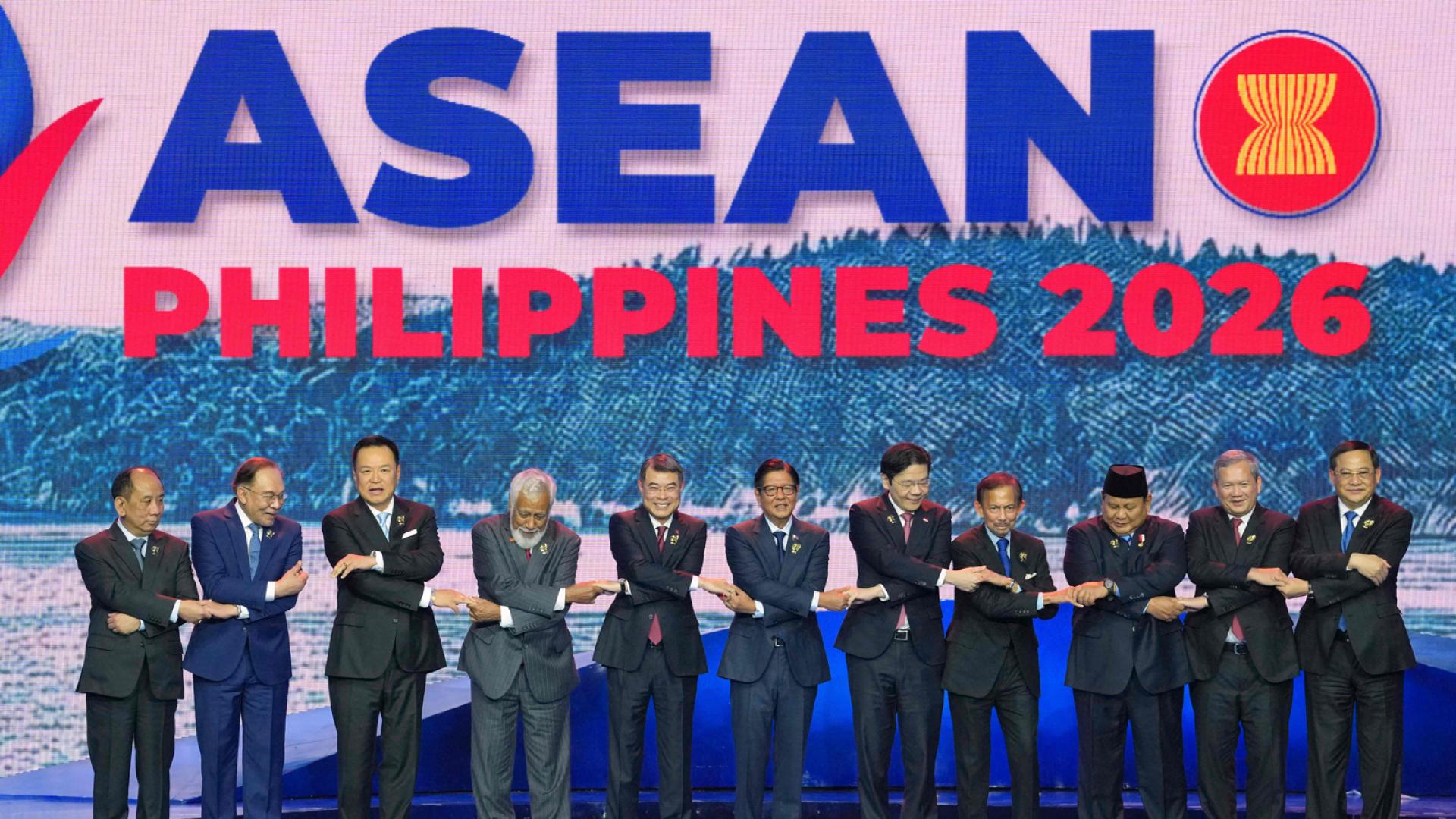
Philippine President Marcos Jr. stated at the ASEAN Summit on the 8th that as conflict in the Middle East escalates, ASEAN leaders must cooperate in response to the impact, ensuring energy resilience, food security, and the safety of overseas citizens.
The 48th Association of Southeast Asian Nations Summit was held in Cebu, Philippines, with leaders from all 11 ASEAN member states in attendance. The Philippines serves as this year's rotating chair, setting the theme "Shaping the Future Together" to advance the "ASEAN Vision 2045."
In his opening speech, Marcos Jr. expressed "grave concern" for the armed conflict between Israel, the United States, and Iran, stating that global maritime and air transportation, as well as the flow of energy and essential goods, have all been significantly impacted.
He pointed out that this crisis highlights the urgency for ASEAN member states to strengthen practical cooperation and uphold "ASEAN centrality and unity" when facing geopolitical tensions.
Marcos Jr. outlined three major current ASEAN priorities: ensuring energy security and resilience, stabilizing food supplies, and protecting ASEAN citizens and workers affected by the Middle East crisis.
He urged ASEAN to strengthen energy interconnection, diversify energy sources, and accelerate the shift to renewable energy; at the same time, expand intra-ASEAN trade to protect and strengthen the regional food system; in addition, a more comprehensive early warning system and improved consular coordination should be established to boost the efficiency of humanitarian aid.
Accelerate Implementation of the ASEAN Power Grid
In addition, as the Middle East situation continues to disrupt global energy markets and supply chains, ASEAN foreign ministers agreed to accelerate the implementation of the ASEAN Power Grid, enhancing regional energy security and resilience through stronger power interconnection and cooperation.
Philippine Foreign Secretary Lazaro, who presided over the foreign ministers' meeting on the 7th, said, “The ongoing Middle East crisis and its cascading impacts remind us... that events beyond the region can immediately affect ASEAN and have far-reaching consequences.”