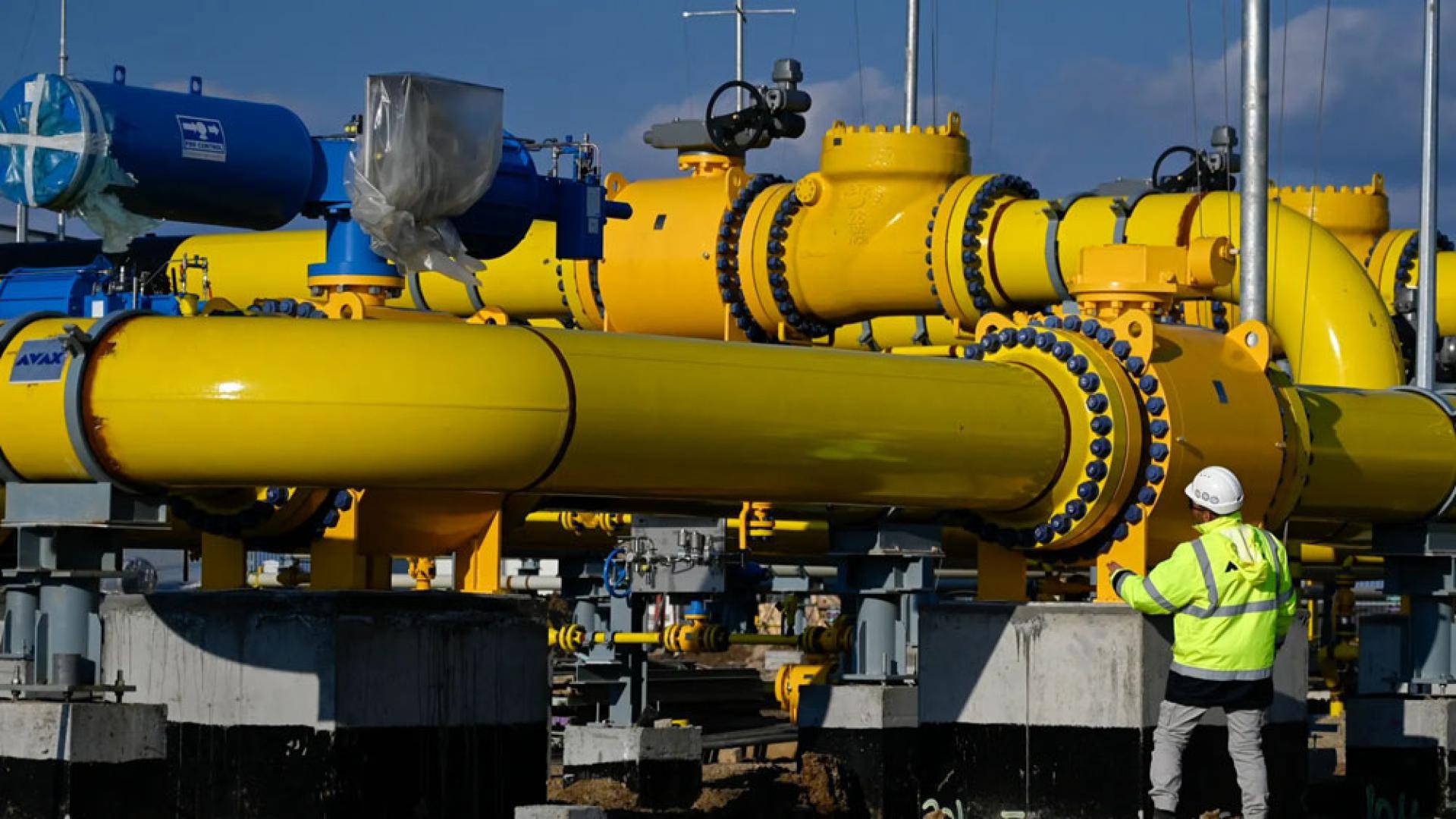
The European Union will fully ban imports of Russian natural gas starting in autumn 2027.
The European Council and representatives from the European Parliament have reached an agreement to gradually, and ultimately fully, prohibit the import of Russian natural gas. The agreement stipulates that the ban on Russian liquefied natural gas (LNG) imports will come into effect by the end of 2026, and the ban on pipeline natural gas imports will take effect from autumn 2027.
Denmark’s Minister for Climate, Energy and Utilities, who currently holds the rotating EU presidency, Lars Aagaard, said that the EU must end its reliance on Russian natural gas. To strengthen EU security and safeguard energy supply, member states and the European Parliament have quickly reached the above agreement.
According to a report released by the International Energy Agency (IEA) on October 27, Russian natural gas exports to Europe saw a sharp decline in the first three quarters of 2025, with LNG exports falling by 10% year-on-year and pipeline gas exports dropping by 45%.
The report predicts that this year, European LNG imports will reach a historic high, about 20% higher than in 2024. Due to increased demand and the reduction of pipeline gas imports, European LNG prices remain elevated.
Hungary and Slovakia File Lawsuits
Hungarian Minister of Foreign Affairs and Trade, Péter Szijjártó, stated on the 3rd that Hungary will file a lawsuit with the EU Court against the EU’s decision to gradually ban imports of Russian energy, arguing that the decision undermines Hungary’s energy security and violates EU treaties.
At a press conference during the NATO foreign ministers’ meeting in Brussels, he said the European Commission, the European Council, and the European Parliament had reached a political agreement on a legislative draft aiming to gradually ban EU member states from importing Russian natural gas via pipelines starting from September 2027. He added that the Commission also proposed to ban imports of Russian crude oil from the end of 2027.
He pointed out that under the current infrastructure conditions, Hungary cannot do without supplies of Russian crude oil and natural gas, and thus cannot accept or implement this EU “mandate.”
He warned that gradually banning Russian energy imports would leave some suppliers and countries with a monopoly over Hungary’s energy supply, drastically pushing up energy prices in Hungary and causing household energy expenditures to “at least triple.”
Szijjártó criticized the EU’s decision as being driven by political and ideological motives, claiming that it goes against the EU’s fundamental treaties, which state that energy policy is entirely within the jurisdiction of the member states. He said that once the legislation banning Russian energy imports is approved, Hungary will immediately file a lawsuit with the EU court, and the relevant legal preparations are already underway.
He also stated that Slovakia is similarly highly dependent on Russian oil and gas supply, and the decision poses a serious threat to the country’s energy security and economy. He has discussed this with his Slovak counterpart, and both countries have agreed to coordinate and take legal action together.
He added that the Slovak government has also decided to continue fighting the EU on importation of Russian energy through legal channels.