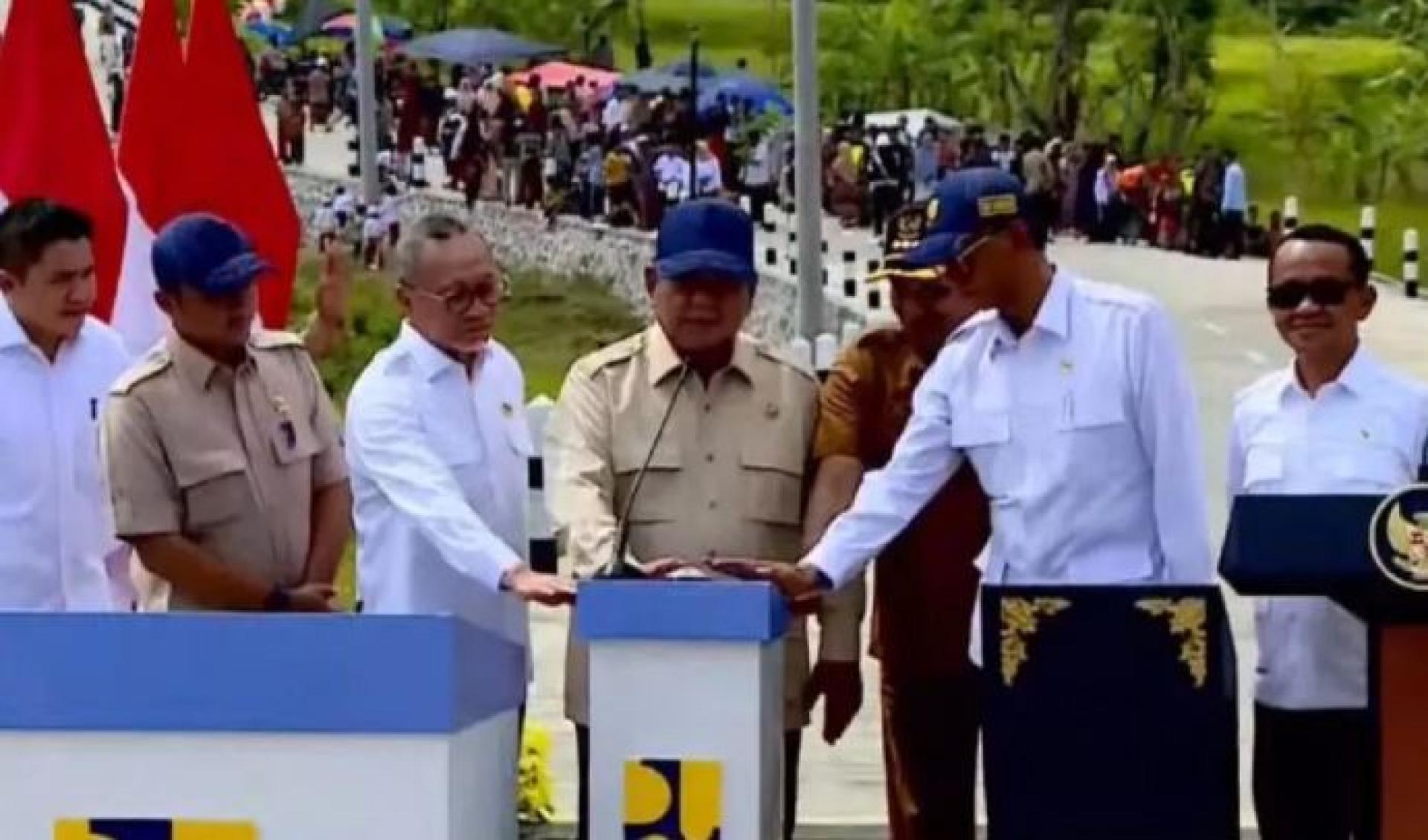
(Jakarta, 24th Comprehensive News) Indonesian President Prabowo on Tuesday presided over the launch ceremony of the national regional road construction project in Sampang Regency, East Java, symbolically announcing the official commencement of a regional road construction plan with a total length of 1,151 kilometers, covering 37 provinces across the country, in order to promote balanced nationwide development.
According to the live broadcast footage from the Indonesian Presidential Secretariat, Prabowo stated that regional road construction is an important infrastructure for driving the nation's economic development, and also a vital lifeline supporting the economic activities of the people.
He said that Indonesia has vast territory and complex and diverse geographical environments, so a complete road infrastructure is crucial to reducing logistics costs and enhancing the country's competitiveness.
Prabowo pointed out that if a comprehensive road network can be established to strengthen the connectivity between production centers and residential areas, it will effectively lower transportation costs and make logistics operations more efficient.
He said that the government is committed to ensuring that no part of the country is marginalized in the development process due to insufficient transportation infrastructure.
Prabowo emphasized: "We will not allow any region to lag behind simply because of inconvenient transportation. We must reduce logistics costs for all people and promote the continued growth of the national economy."
He pointed out that road construction not only helps boost economic activity, but is also an important part of the national resilience strategy, including goals such as achieving food self-sufficiency and energy independence.
Prabowo also called on local governments to properly maintain and make good use of the infrastructure that has been built, to ensure that these constructions bring the greatest benefit to the people.
He stated that the central government will continue to increase funding in the future to further strengthen regional and rural infrastructure construction, so that more comprehensive development results can benefit all parts of the country.