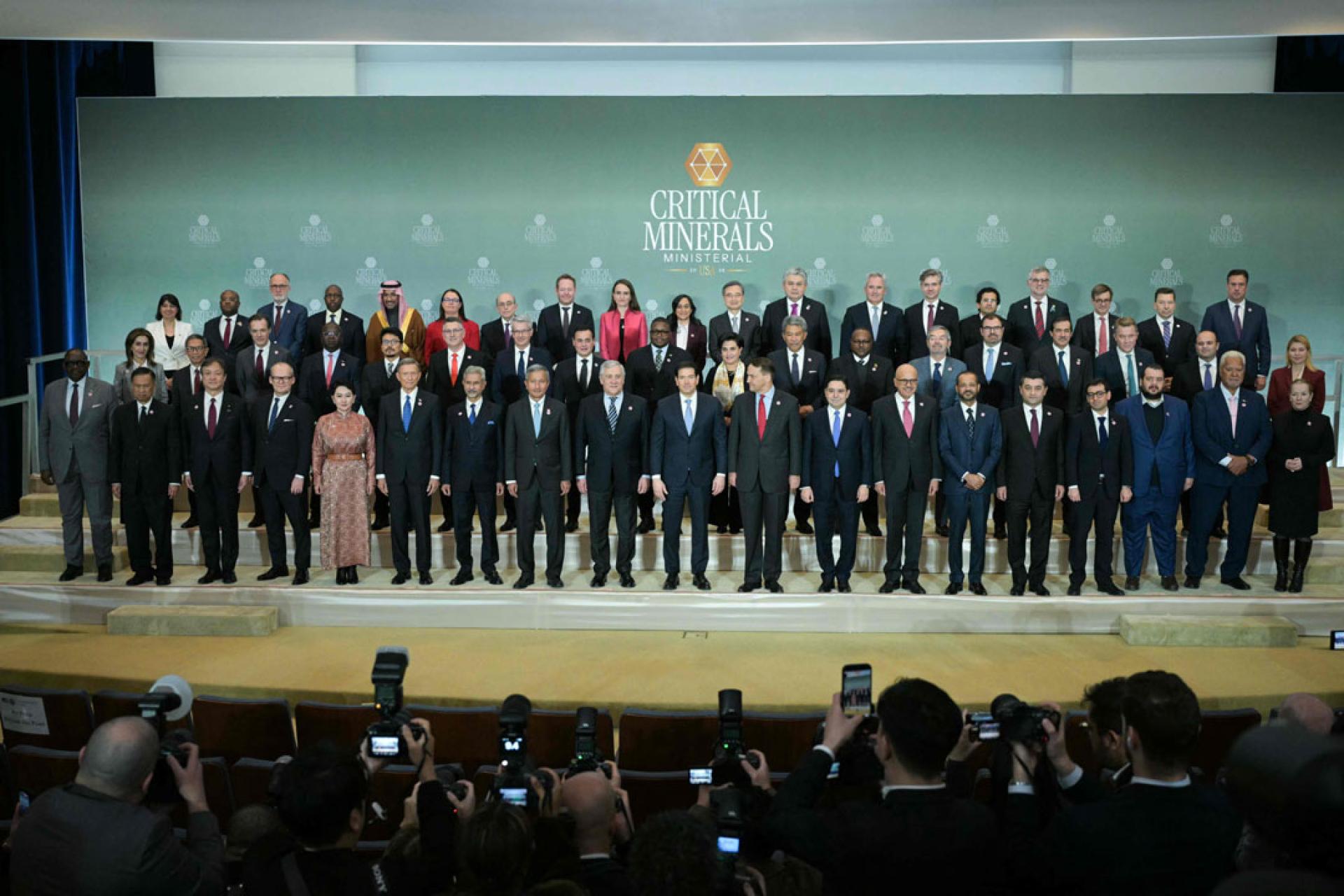
At the Ministerial Summit on Critical Minerals held in Washington on the 4th, US Vice President Vance announced a new initiative: the US will join forces with its allies to form a critical minerals 'preferential trade group.'
The initiative aims to weaken China's dominant position in key advanced manufacturing materials sectors.
Vance told ministers from multiple countries at the summit: 'We want to address this issue: a massive influx of cheap critical minerals is entering our markets, impacting and weakening the competitiveness of our domestic manufacturers.'
He pointed out that the US hopes to establish reference prices for each production stage of critical minerals and implement these using tariff measures within the preferential trading area, thus forming a price floor to prevent low-price dumping from impacting domestic and allied industries.
Meanwhile, Secretary of State Rubio stated that 55 countries attended the Washington minerals summit, including South Korea, India, Thailand, Japan, Germany, Australia, and the Democratic Republic of Congo, each possessing capabilities in mining or refining.
Rubio emphasized, critical minerals 'are highly concentrated in the hands of one country,' and have already been used 'as a tool of pressure in geopolitics.'
During the summit, US Trade Representative Greer announced that the US had reached a bilateral plan with Mexico, and a trilateral agreement with the EU and Japan, to strengthen the critical minerals supply chain and pave the way for broader agreements with more allies in the future.
The move to set a price floor for critical minerals among multiple countries is viewed as the latest attempt by the Trump administration to exert more direct influence over private enterprises. Analysts believe this approach could reshape global supply chains for materials needed in electric vehicles, semiconductors, and defense systems, but in the short term will raise manufacturing costs and heighten trade tensions with Beijing.