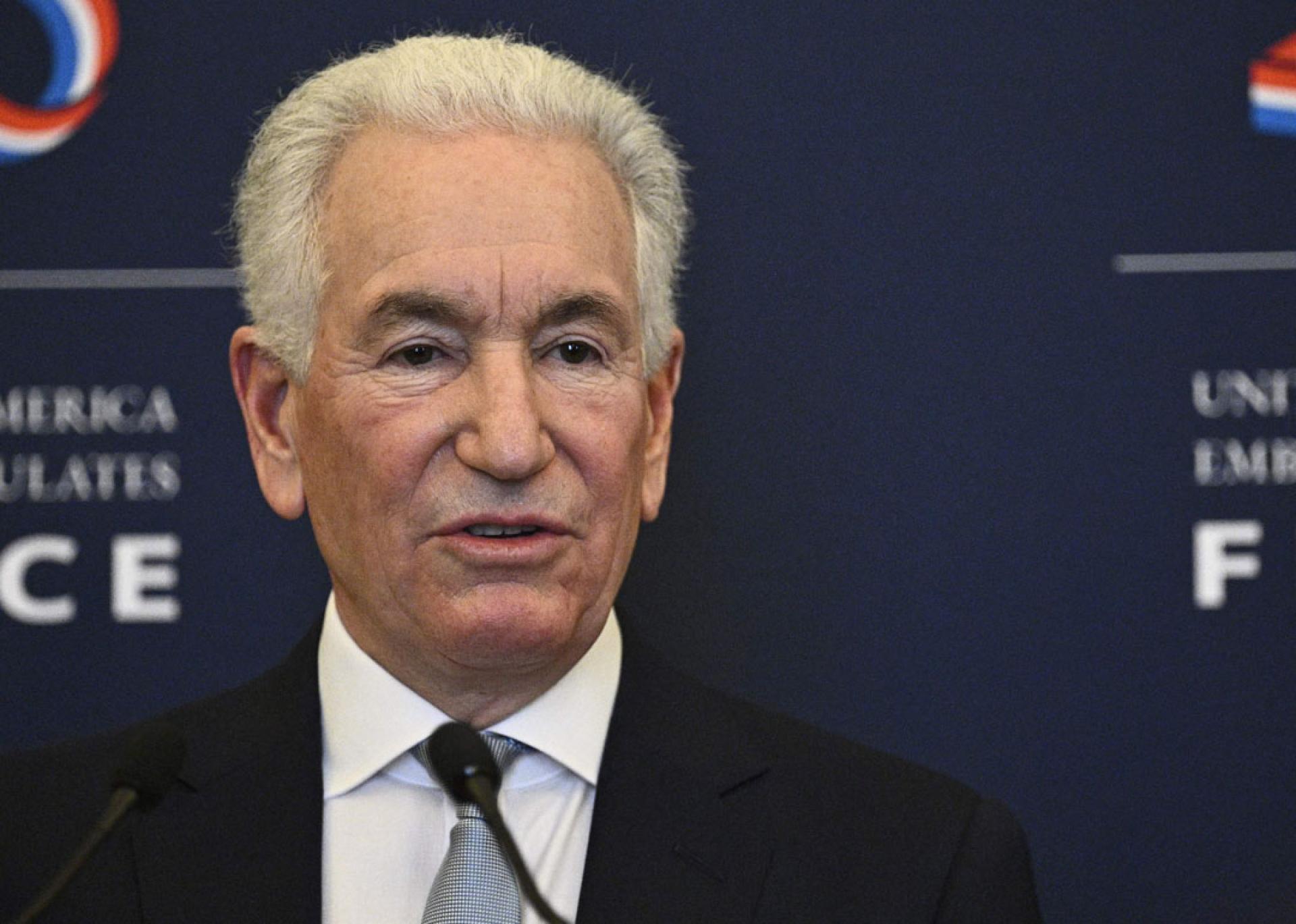
On the 24th, French Foreign Minister Barrot expressed 'surprise' at U.S. Ambassador to France Charles Kushner’s failure to go to the French Foreign Ministry as requested to accept a summons, and demanded an explanation from him.
In any case, the U.S. Embassy spokesperson pointed out in a statement on the same day that U.S. Ambassador to France Charles Kushner and French Foreign Minister Barrot 'had a frank and friendly phone conversation today.'
Earlier, Barrot said on a French news radio program that as the U.S. Ambassador to France, Charles Kushner should respect the most basic diplomatic etiquette and respond to the French Foreign Ministry’s summons.
He noted that this incident 'will not affect Franco-American relations,' but it would affect Charles Kushner’s 'ability to carry out his mission in France.'
He reiterated that under no circumstances does the French side 'accept foreign intervention or involvement in French domestic political debate.' Once Charles Kushner responds to the summons and gives an explanation on this matter, he would 'naturally regain channels to contact members of the French government.'
On the 22nd, Barrot announced that because the United States commented on the death of French far-right activist Deylangc, the French Foreign Ministry scheduled to summon Charles Kushner at 7 p.m. local time on the 23rd. Le Figaro and other French media quoted sources from the French Foreign Ministry as reporting that Charles Kushner did not show up, but instead sent an embassy official as a representative. On the 23rd, Barrot demanded that Charles Kushner no longer be allowed to 'directly contact members of the French government.'
Deylangc died on the 12th after being surrounded and beaten by far-left activists while protesting at Sciences Po Lyon. On the 20th, the U.S. Embassy in France commented on social media, saying that Deylangc’s death highlighted the growing threat of violence from left-wing extremism to public safety.