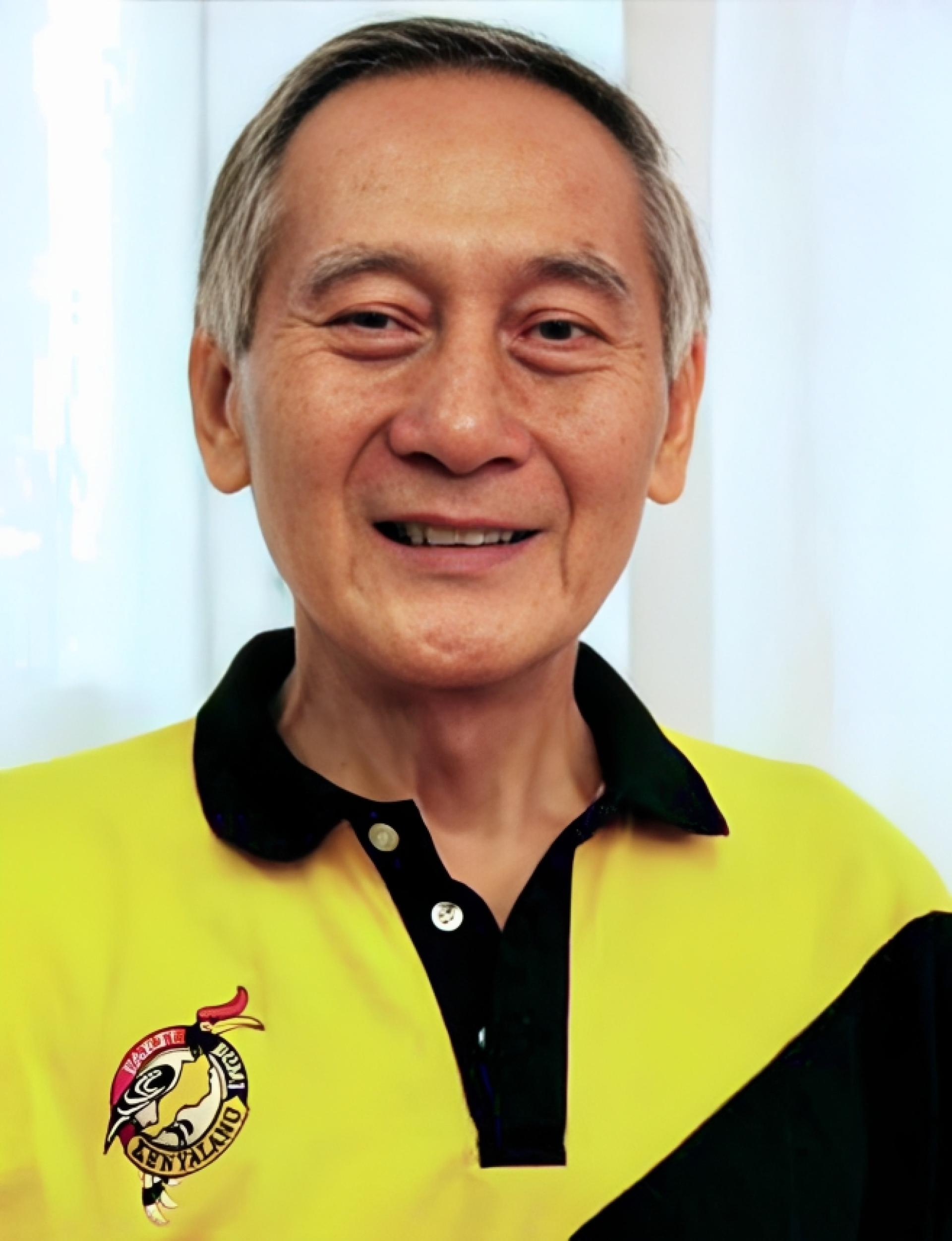
(Miri, 15th) – Kenyalang People's Party Permanent Chairman Yu Qinglu pointed out that, following the coming to power of the Madani government, discussions surrounding language policy and the recognition of the Chinese independent school's Unified Examination Certificate (UEC) have once again heated up. These debates are no longer merely a divergence over a single education policy, but rather reflect significant choices concerning the nation’s governance in diversity and the overall direction for future development.
He said that recently, Prime Minister Dato' Seri Anwar and former Economics Minister Rafizi Ramli respectively put forward different arguments regarding whether to recognize the UEC. On the surface, this is a difference in policy direction, but from the perspective of Sarawak’s historical experience and current situation, this debate has touched upon deeper issues, such as the federal governing philosophy, regional differences, and the long-term competitiveness of the nation.
Yu Qinglu stated that Anwar emphasized Article 152 of the Federal Constitution as an important basis for his language policy and stance toward the UEC, which carries certain mobilizing efficacy in the political context of Peninsular Malaysia. However, from Sarawakian society’s perspective, such statements often tend to use the political and institutional logic of the Malayan era as the main reference, rather than integrating the spirit of plurality and partnership embodied in the 1963 formation of Malaysia.
He pointed out that Article 152 of the Constitution establishes the status of Malay as the national language, but at the same time guarantees the learning and use of other languages. The status of the national language and the recognition of the UEC originally belong to different levels of issues, but in practical politics are often processed together, causing educational issues to be imbued with excessive political symbolism.
“For Sarawak, multilingualism is not a tool of identity politics, but a practical capability formed through long-term regional interaction, and is also an important condition for participating in regional and international economies,” he said.
Yu Qinglu believes that, by comparison, Rafizi’s approach—analyzing the matter from the perspective of changes in global economic structure, talent demands, and national competitiveness, emphasizing the importance of multilingual abilities—is more in line with current world development trends and aligns better with Sarawak’s long-standing regional economic engagement. However, he also points out, this type of argument still largely stays at the level of policy adjustments and does not sufficiently discuss the issues of decentralization and policy flexibility in education and development under the federal system.
He also mentioned that last year’s controversy over the “Guidelines for Chinese Education Fundraising Performances” again highlighted the institutional and administrative uncertainties faced by educational issues. The relevant guidelines were re-cited within specific political contexts, arousing society’s concern for the stability of long-term Chinese school fundraising mechanisms.
“Over the years, Chinese education fundraising performances have raised significant funds for Chinese schools nationwide, which to some extent has made up for insufficient public education resources. How to strike a balance between regulation and practical needs is worthy of a more systematic review by the government,” he said.
In addition, Yu Qinglu also pointed out that discussions on language and education policy should not be limited merely to Chinese education and the UEC itself, but should be considered within a broader historical and institutional context. This includes the pluralistic spirit embodied in the Malaysia Agreement of 1963 (MA63), as well as the practical needs of regions in educational and administrative practices.
He emphasized that whether or not to recognize the UEC should not be simplified into “support or oppose a particular ethnic group,” but should be rationally evaluated from the perspective of national capacity building, the competitiveness of the new generation, and balanced regional development.
“The impact of language policy often does not manifest immediately, but once disparities form in the structure of talent and capability, the price paid could be an entire generation’s opportunity cost,” he said.
Yu Qinglu called on the Madani government to, while upholding constitutional principles, return to the pluralistic intentions inherent within them, re-examine the current tendency towards a centralized education system, provide institutional recognition of the achievements of diverse education models, and grant greater flexibility in language, education, and development policies—including for Sarawak and other regions.
He added that genuine forward-looking and enlightened national governance should be centered on openness, inclusivity, and long-term competitiveness, rather than letting education and language topics remain mired in symbolic and antagonistic debates.