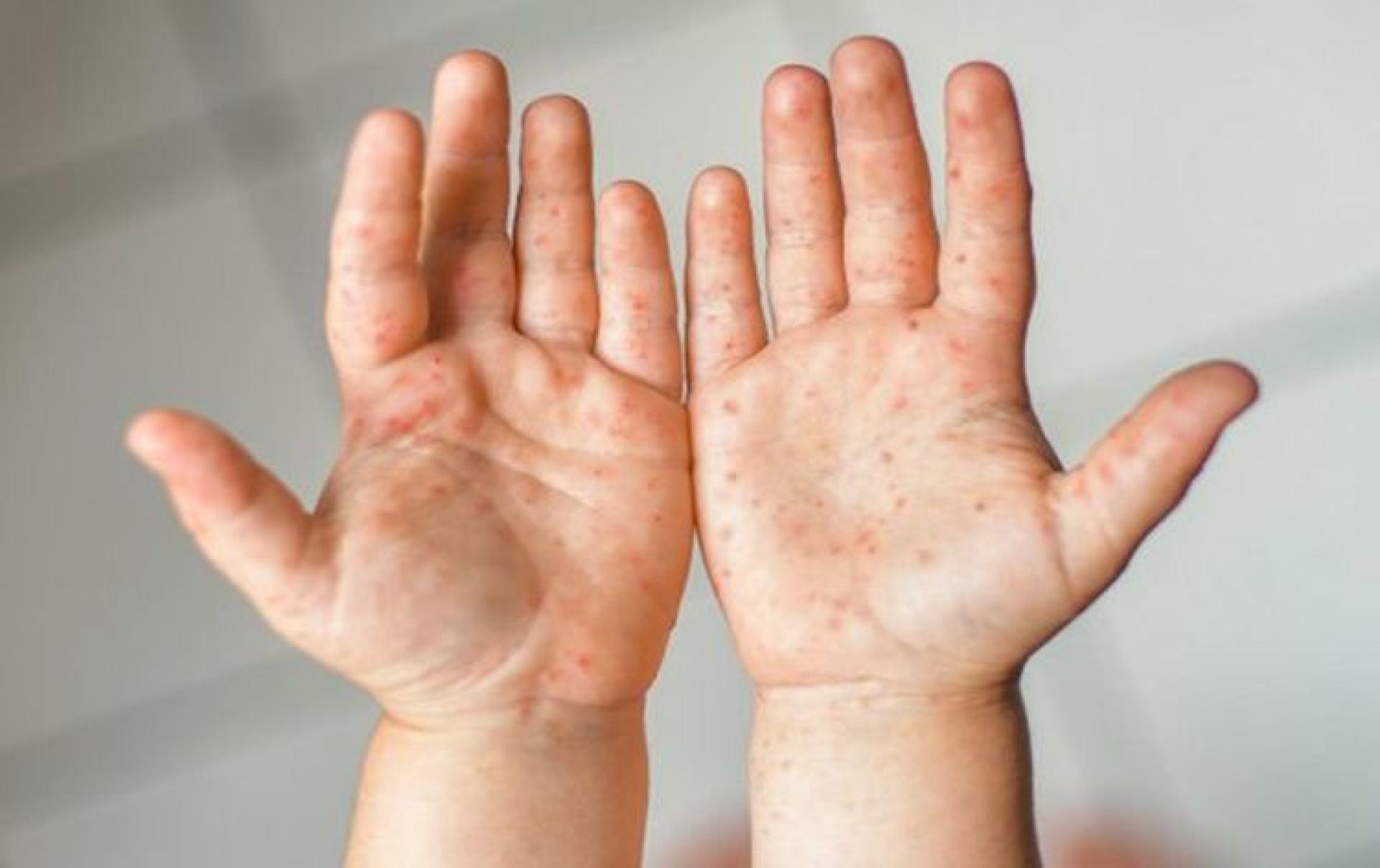
Data released by Japan's National Institute of Health Crisis Management on the 14th show that from June 29 to July 5, designated medical institutions across Japan reported about 16,000 cases of hand, foot, and mouth disease, with an average of 7.03 cases per medical institution, exceeding the baseline of 5 cases and reaching an epidemic alert level nationwide.
The latest data from the institute show that during the above period, designated medical institutions across Japan reported a total of 15,845 cases of hand, foot, and mouth disease, an increase of about 52% compared to the previous week's 10,396 cases. Out of all 47 prefectures, 27 have reached the epidemic alert level. In terms of average cases reported per medical institution, Shimane, Saga, and Tokyo rank as the top three in the country.
Hand, foot, and mouth disease is an infectious disease caused by enteroviruses, most common during summer and autumn, and primarily affects infants and young children. It is mainly characterized by rashes on the hands and feet and blisters in the mouth. Most cases are transmitted through droplets or excreta and generally recover within a week, but in rare cases it may lead to complications such as meningitis or encephalitis.
The Japanese Ministry of Health, Labour and Welfare urges the public to avoid sharing towels, wash hands frequently, handle excreta properly, and strengthen preventive measures.