Gansu Weiyuan Scenic Area Flash Flood Leaves 10 Dead
Published atJul 27, 2026 04:22 pm
At 1:40 pm on July 26, a flash flood disaster triggered by a short period of heavy rainfall struck the Shuangshimen Scenic Area in Weiyuan County, Dingxi City, Gansu Province, China. As of 9:15 pm that evening, 240 people who were trapped had been rescued, among whom 10 had died and 23 were injured.
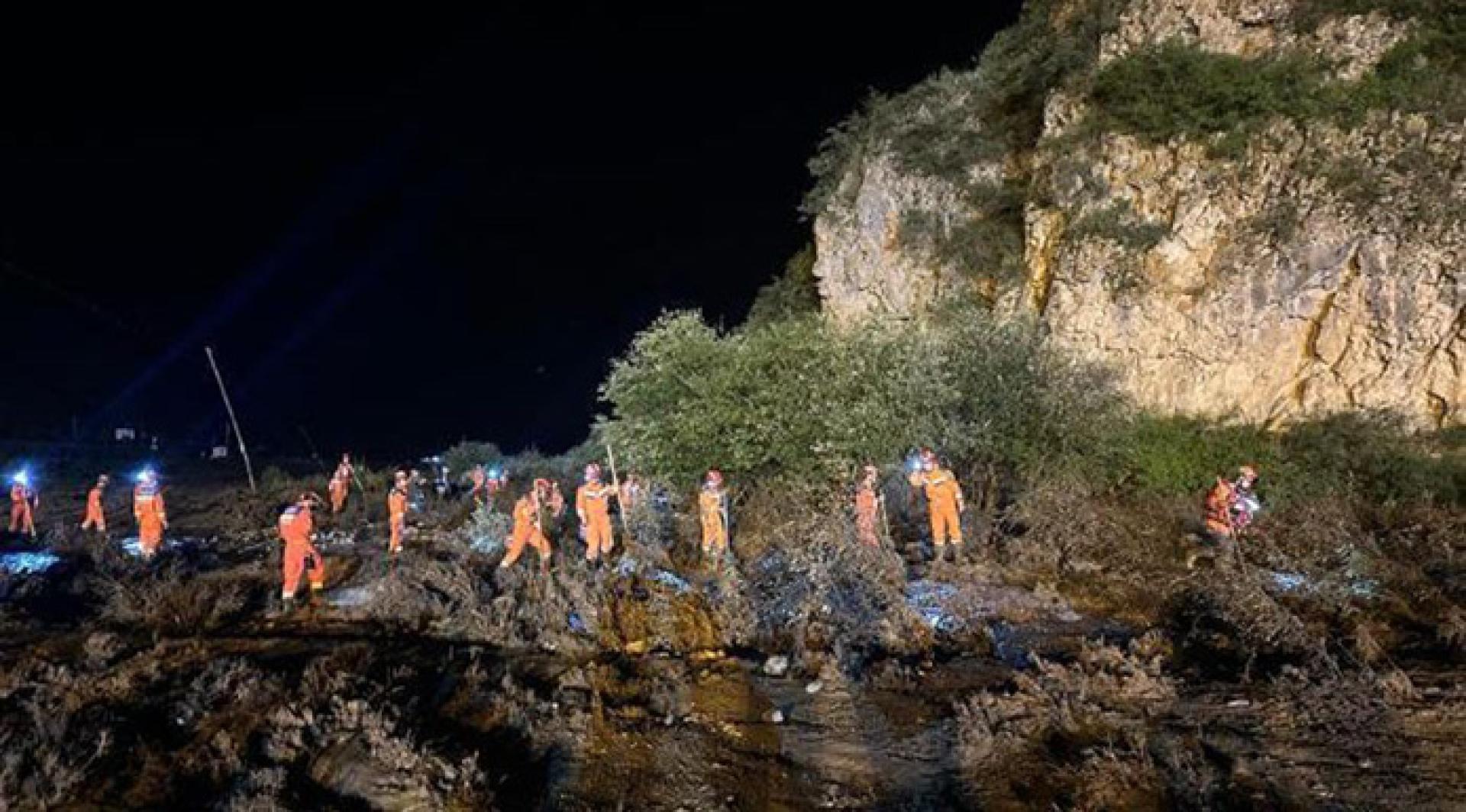
At around 9:40 pm on Sunday, a group of China News Service reporters arrived at Shuangshimen Valley, Huichuan Town, Weiyuan County. On the road to the scenic area, a long line of firefighting and rescue vehicles stretched ahead, with police lights flickering in the night. At the entrance to the scenic area, fire, armed police, public security and other rescue forces were fully engaged in operations, with large machinery roaring away. By this time, nearly eight hours had passed since the flash flood occurred.
Reporters followed firefighters into the scenic area, where thick mud made every step extremely difficult. The ground scoured by floodwaters was pitted and uneven. On both sides of the river, branches knocked down by the torrent were scattered everywhere, and shoes and hats left behind by visitors could be seen in the mud. A rescuer told reporters that fortunately, the rain had stopped temporarily at night, offering a precious window for the search and rescue.
According to Lu Jun, head of the Gansu Provincial Fire and Rescue Brigade, the brigade dispatched 305 firefighters, 68 fire trucks, and 4 search and rescue dogs to the scene after receiving the alert. They formed 15 search and rescue teams and advanced in a 'person + machinery + dog' joint strategy. As of that night, three rounds of on-site search and rescue had been completed, with a fourth round continuing overnight.
After the disaster, Gansu Provincial Party Secretary Hu Changsheng and Governor Ren Zhenhe rushed to the scene to lead the rescue. The Office of the National Flood Control and Drought Relief Headquarters of China and the Ministry of Emergency Management sent teams to the site to supervise response and initiated a Level 4 emergency flood response condition for Gansu. Dingxi City Public Security deployed more than 300 personnel for the emergency rescue. A total of 164 pieces of mechanical equipment, including loaders and excavators, were put into service, over 1,000 professional rescuers in fire and medical fields were organized, and more than 400 relief supplies were distributed. 30多辆车冲成一堆,甘肃景区山洪致10死。Camping is a Major Project Locally: 'More than 30 Cars Washed Together'
Shuangshimen Scenic Area is a well-known summer resort in the region. Public information shows Weiyuan County is located at the source of the Wei River, and Shuangshimen is a landmark natural scenic area in the county, situated along a tributary of the Wei River. It is an ideal short-haul destination around Lanzhou for summer escapes, hiking, camping, and relaxation. Every year from June to September, large numbers of tourists drive to the Shuangshimen Scenic Area to camp and have fun.
At the scene, a rescuer told Beijing News reporters that at around 2 pm when he arrived, he saw an area of about 100 square meters near the scenic area piled up with more than 30 cars that were washed down by the flood. Some of the trapped people were sheltering on a comparatively gentle slope within the valley. When rescuers arrived, they used loaders and human relays to transfer those trapped to safe areas. 'Wherever the current was strong, we used loaders; where loaders couldn't reach, rescuers relayed people out with ropes.'
He added that there was no central camping ground inside the scenic area, so tourists could park and pitch tents wherever they found a scenic spot, setting up on grasslands by the river to camp, barbecue, or wade in the water.
After the incident, rescuers searched along the water flow, trekking upstream from the entrance. The same rescuer noted that after the flood, the river was more than 30 meters wide at its broadest, and the muddy torrent churned with sand and stones, constantly scouring the ground and making it extremely difficult to distinguish whether anyone was in danger in the water. Rescuers donned life jackets, tied themselves to ropes, and ventured into the floodwaters to search. By that evening, three rounds of on-site search and rescue had been completed, with a fourth round continuing overnight.
This article has been translated using our AI technology. While we strive for accuracy,
AI translations
may contain errors. For the most precise information, please refer to the original article.