PORT DICKSON, Aug 14 (Bernama) -- A scientific biodiversity expedition at the Pasir Panjang Forest Reserve here has documented four dragonfly species and eight fruit fly species for the first time in Negeri Sembilan.
Expedition leader and Universiti Malaysia Terengganu (UMT) senior lecturer Associate Prof Dr Amiruddin Ahmad said the dragonfly species recorded were Pornothemis serrata, Onychargia atrocyana, Pseudagrion williamsoni and Teinobasis ruficollis.
The five-day expedition, organised by the Forestry Department of Peninsular Malaysia (JPSM) in collaboration with the Negeri Sembilan Forestry Department, also discovered eight fruit fly species, including three species of economic importance in Peninsular Malaysia.
“The research team also recorded six endemic plant species, including Santaloides rugosa and Syzygium subdecussatum, as well as three bird species - Green Iora (Aegithina viridissima), Grey-bellied Bulbul (Rubigula cyaniventris) and Lesser adjutant (Leptoptilos javanicus).
“It also found small mammals such as the Black giant squirrel (Ratufa bicolor), which is listed as Near Threatened, the Sunda slow loris (Nycticebus coucang) and Long-tailed macaque (Macaca fascicularis), as well as the Spiny hill turtle (Heosemys spinosa), which is classified as Endangered,” he said at the closing of the Biodiversity Scientific Expedition at Port Dickson Forest Sungai Menyala here today.
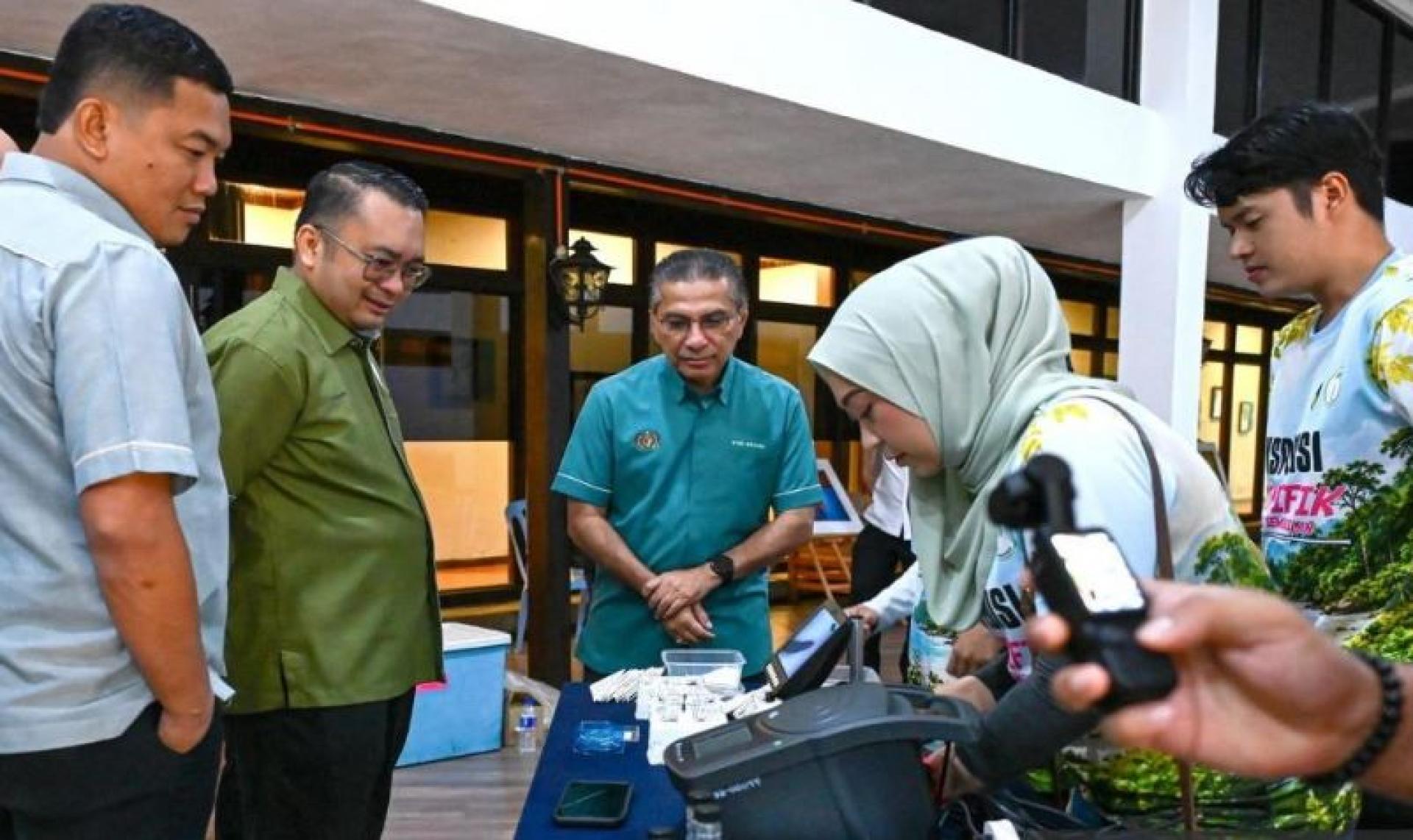
Also present were Deputy Minister of Natural Resources and Environmental Sustainability (NRES) Syed Ibrahim Syed Noh, JPSM director-general Datuk Mohd Radhi Chu Abdullah, deputy director-general (Policy and Planning) Datuk Roslan Rani, and Negeri Sembilan Forestry director Mohd Yussainy Md Yusop.
Amiruddin said the expedition involved 37 scientists and researchers from government agencies, research institutes, higher learning institutions and non-governmental organisations (NGOs).
He said the findings would strengthen scientific data and support sustainable management, conservation and development of biodiversity resources at the Pasir Panjang Forest Reserve.
Meanwhile, Syed Ibrahim said the 53rd JPSM scientific expedition and the fifth held in Negeri Sembilan aimed to explore, document and assess biodiversity and natural resources through studies on flora, fauna, geology, ecotourism and socioeconomics.
He said the 155.60-hectare Pasir Panjang Forest Reserve, gazetted in 1911, is a lowland and coastal forest ecosystem rich in biodiversity.
“The Federal government also provides the Ecological Fiscal Transfer for Biodiversity Conservation (EFT) to assist state governments in implementing forest and biodiversity conservation efforts.
“Negeri Sembilan received RM54.96 million through EFT from 2019 until this year to carry out various conservation efforts on the ground,” he added.
The five-day expedition, organised by the Forestry Department of Peninsular Malaysia (JPSM) in collaboration with the Negeri Sembilan Forestry Department, also discovered eight fruit fly species, including three species of economic importance in Peninsular Malaysia.
“The research team also recorded six endemic plant species, including Santaloides rugosa and Syzygium subdecussatum, as well as three bird species - Green Iora (Aegithina viridissima), Grey-bellied Bulbul (Rubigula cyaniventris) and Lesser adjutant (Leptoptilos javanicus).
“It also found small mammals such as the Black giant squirrel (Ratufa bicolor), which is listed as Near Threatened, the Sunda slow loris (Nycticebus coucang) and Long-tailed macaque (Macaca fascicularis), as well as the Spiny hill turtle (Heosemys spinosa), which is classified as Endangered,” he said at the closing of the Biodiversity Scientific Expedition at Port Dickson Forest Sungai Menyala here today.
Also present were Deputy Minister of Natural Resources and Environmental Sustainability (NRES) Syed Ibrahim Syed Noh, JPSM director-general Datuk Mohd Radhi Chu Abdullah, deputy director-general (Policy and Planning) Datuk Roslan Rani, and Negeri Sembilan Forestry director Mohd Yussainy Md Yusop.
Amiruddin said the expedition involved 37 scientists and researchers from government agencies, research institutes, higher learning institutions and non-governmental organisations (NGOs).
He said the findings would strengthen scientific data and support sustainable management, conservation and development of biodiversity resources at the Pasir Panjang Forest Reserve.
Meanwhile, Syed Ibrahim said the 53rd JPSM scientific expedition and the fifth held in Negeri Sembilan aimed to explore, document and assess biodiversity and natural resources through studies on flora, fauna, geology, ecotourism and socioeconomics.
He said the 155.60-hectare Pasir Panjang Forest Reserve, gazetted in 1911, is a lowland and coastal forest ecosystem rich in biodiversity.
“The Federal government also provides the Ecological Fiscal Transfer for Biodiversity Conservation (EFT) to assist state governments in implementing forest and biodiversity conservation efforts.
“Negeri Sembilan received RM54.96 million through EFT from 2019 until this year to carry out various conservation efforts on the ground,” he added.