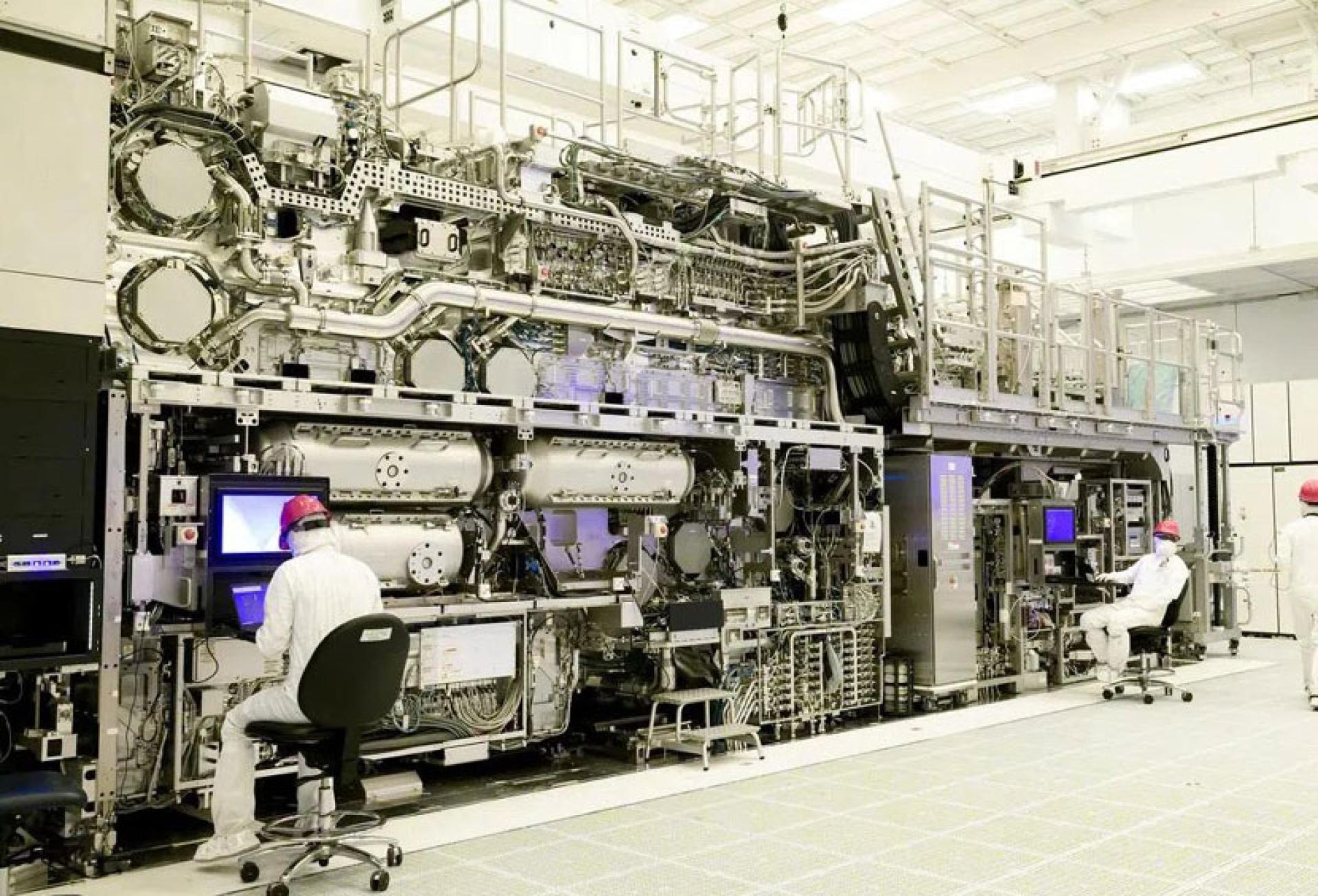
This week, news emerged from China that it has begun producing domestically developed immersion deep ultraviolet (DUV) lithography machines, with an estimated 5 units of this critical chip-making equipment to be delivered within this year. Scholars interviewed assessed that if the news is true, it would mean that the US's years-long 'small yard, high fence' tech war strategy against China has effectively failed, and that China has made a milestone breakthrough in overcoming the stranglehold of US chip and lithography machine restrictions. However, it may take years for the quality of these machines to catch up with industry leaders.
It is reported that Shanghai ISN Electronic Technology Group, founded three years ago, is leading the production effort after integrating teams from China's top lithography startups.
US tech media outlet The Information on Monday quoted two sources as saying that a Shanghai state-owned enterprise has begun producing deep ultraviolet (DUV) lithography machines, and has recruited personnel from lithography startups such as Shanghai ULight Technology to form a research and development team. The plan is to produce about 5 DUV machines this year and around 20 next year, with the first batch expected to be delivered this year to SMIC, Hua Hong Semiconductor, and CXMT. These three major Chinese chip manufacturers are currently subject to varying degrees of US sanctions and export controls.
Since Dutch chip equipment giant ASML is prohibited from exporting its most advanced extreme ultraviolet (EUV) lithography machines to China, immersion DUV has become the most advanced lithography equipment currently available to Chinese chipmakers for printing circuit patterns on silicon wafers. The report notes that China is also developing domestic EUV lithography machines, but these are still at the prototype stage.
The sources say that ISN's DUV lithography machines still require further testing and remain far behind ASML's models, and will not pose a direct commercial threat. However, investors are still concerned that this could challenge the Dutch giant's position in the Chinese market, causing ASML's share price to drop to its lowest level since early June on Monday, plunging as much as 8.3% at one point.
J.P. Morgan analysts noted in a report on Tuesday that producing a small quantity of DUV tools is different from mass production: 'In mass production, yield, overlay accuracy, throughput, and the reliability of running thousands of wafers are key.'