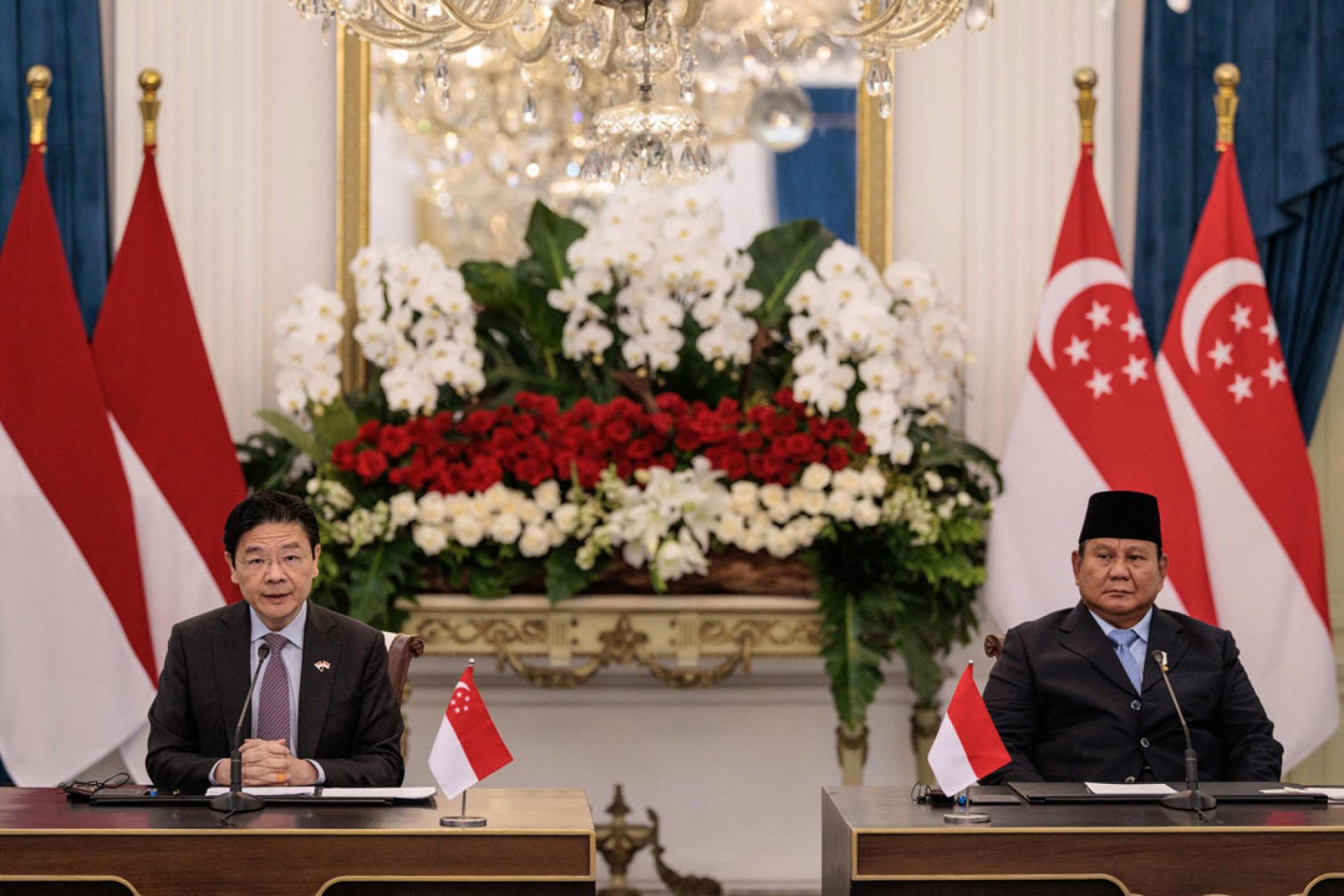
Indonesia and Singapore vowed on the 6th that even if Iran levies fees on ships passing through the Strait of Hormuz, Southeast Asia’s key oil transport artery—the Strait of Malacca—will remain in a “navigable” state.
Surrounded by Malaysia, Indonesia, Singapore, and Thailand, the Strait of Malacca is—according to the US Energy Information Administration (EIA)—the world’s busiest maritime choke point for oil transportation.
The latest data from the US Energy Information Administration shows that, in the first half of last year, more than 23 million barrels of oil passed through the Strait of Malacca per day, accounting for about 29% of all seaborne oil trade.
As the Middle East war pushes up oil prices and puts pressure on Southeast Asian economies, Indonesian President Prabowo and Singaporean Prime Minister Lawrence Wong discussed related issues during a meeting in Jakarta on the 6th.
Prabowo stated that Indonesia and Singapore intend to maintain the free passage of the Strait of Malacca.
He said: “We will continue to coordinate with Malaysia and Thailand to ensure that the Strait of Malacca is always open, safe, and navigable to all countries.”
Wong highlighted that Singapore and Indonesia are committed to upholding the freedom of navigation and the right of passage stipulated by the United Nations Convention on the Law of the Sea (UNCLOS), and that the strait must “remain safe, open, and accessible to all.”