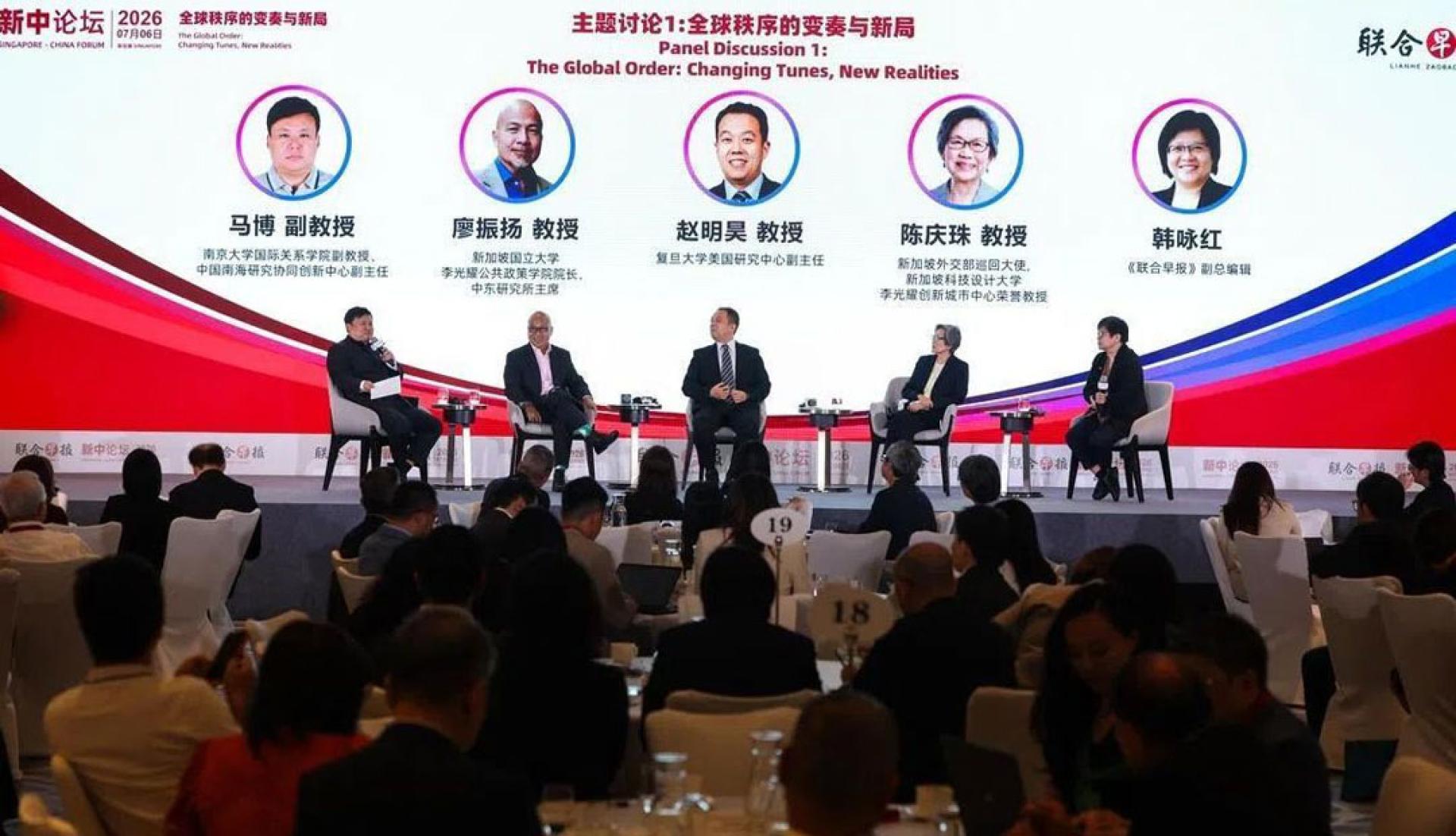
Singapore’s Ambassador-at-Large Chan Heng Chee pointed out that a 'Group of Two' (G2) comprising China and the United States is taking shape. Although Beijing sees itself as different from the U.S. in not seeking hegemony and is reluctant to be regarded as a member of the G2, regardless, China is already seen by the world as one of the G2.
The eighth Singapore-China Forum, organized by Singapore’s Lianhe Zaobao, was held on Monday. Speaking during the first panel discussion, “Variations and New Dynamics in the Global Order,” Chan said: “Whether China likes it or not, the G2 framework has already taken shape, because that’s how the world sees it.”
She added that the G2 has not yet been formally defined or institutionalized, but the meeting between the Chinese and U.S. presidents in Beijing this May did indeed attract global attention.
Chan Heng Chee believes that stable China-US relations will create more space and opportunities for the development of other countries. At the same time, countries are now all asking: What kind of power will China become? Chinese policymakers are also asking themselves: What kind of power should we be? “(China) doesn't want to be like the U.S., but what kind of great power should it become? I think China is also working hard on addressing this issue.”
At the same panel, Zhao Minghao, Deputy Director of the Center for American Studies at Fudan University, said that regarding the future of China-U.S. relations, in the economic sphere, U.S. policy toward China is shifting from strategic decoupling to exploring a “manageable trade” relationship. “This is a very significant change.”
But Zhao Minghao also pointed out that there are still points of contest between the two sides ahead, including the U.S. considering revoking China’s Permanent Normal Trade Relations status, how to handle the ongoing Section 301 investigation involving China in July, and the issue of new tariffs.