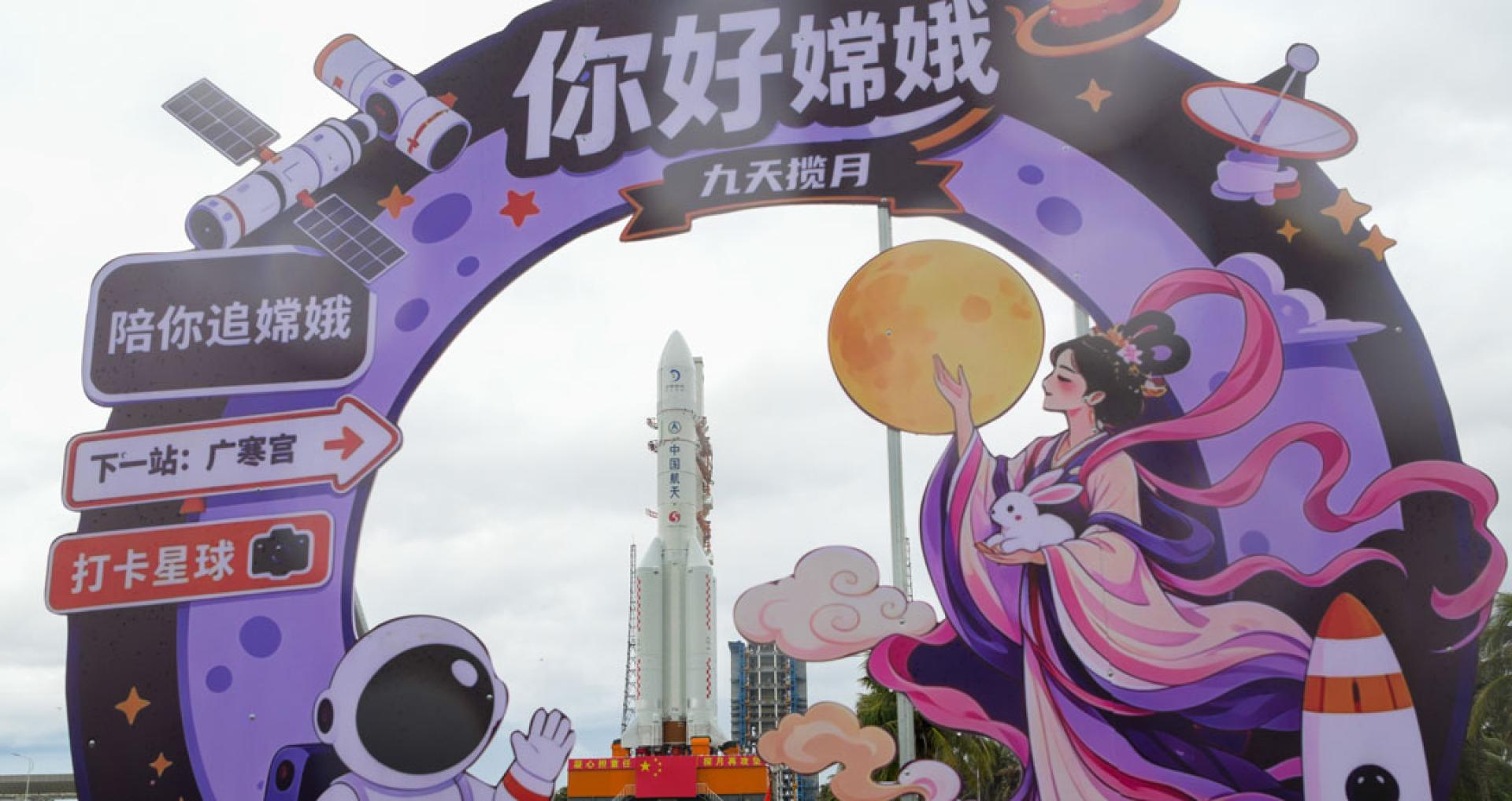
China is about to launch Chang'e-7.
AFP reported on the 21st that the Chang'e-7 probe will be launched next week from the Wenchang Spacecraft Launch Site on Hainan Island in southern China, carried by the Long March 5 Y14 launch vehicle. The probe is equipped with a variety of scientific instruments, including a water molecule analyzer, cameras, and radar. After entering lunar orbit, the probe will first survey potential landing areas near the lunar south pole, and then attempt a landing.
ABC News also reported that China will launch Chang'e-7 as early as next Monday (the 24th).
According to the China Manned Space Engineering Office, the launch site’s facilities and equipment are currently in good condition. Preparations such as pre-launch function checks, joint tests, fueling, and other work will be carried out as planned, with the launch expected to take place in the coming days at an appropriate time.
This is China's most technically complex lunar exploration mission to date. The goal is to search for possible frozen water resources inside permanently shadowed craters near the lunar south pole.
The unmanned mission is named after the moon goddess "Chang'e" from Chinese mythology, and will deploy a robotic lander, a lunar rover, and a "hopping" probe to one of the coldest regions in the solar system.
Chang'e-7 will be an important step towards China’s long-term goal: establishing a permanent human presence on the Moon. Currently, China is advancing related plans with the goal of achieving a crewed lunar landing before 2030 and setting up a joint lunar research station with Russia by 2035.
One of the currently considered landing sites is near the rim of Shackleton Crater. The interior of this crater has long been in permanent shadow, yet its rugged rim is almost constantly bathed in sunlight.
Why choose the lunar south pole
Some craters near the lunar south pole have not been exposed to sunlight for billions of years. Therefore, scientists believe that these areas may serve as natural "refrigerators," preserving ancient water and volatile organic compounds. According to data from NASA, temperatures in these permanently shadowed regions can drop as low as minus 203 degrees Celsius.
If usable water resources can be found, it would be vital for the future establishment of lunar bases. Water can not only supply astronauts with drinking water, but can also be split to produce oxygen, or even used as rocket propellant, thus reducing the need for expensive resupply missions from Earth.
Unlike most regions of the Moon, where a single lunar night can last up to 14 Earth days, some highlands and crater rims near the lunar south pole can receive near-continuous sunlight. Thus, these areas could be ideal locations for building lunar outposts: not only is the thermal environment relatively stable, but they can also rely on consistent solar power.