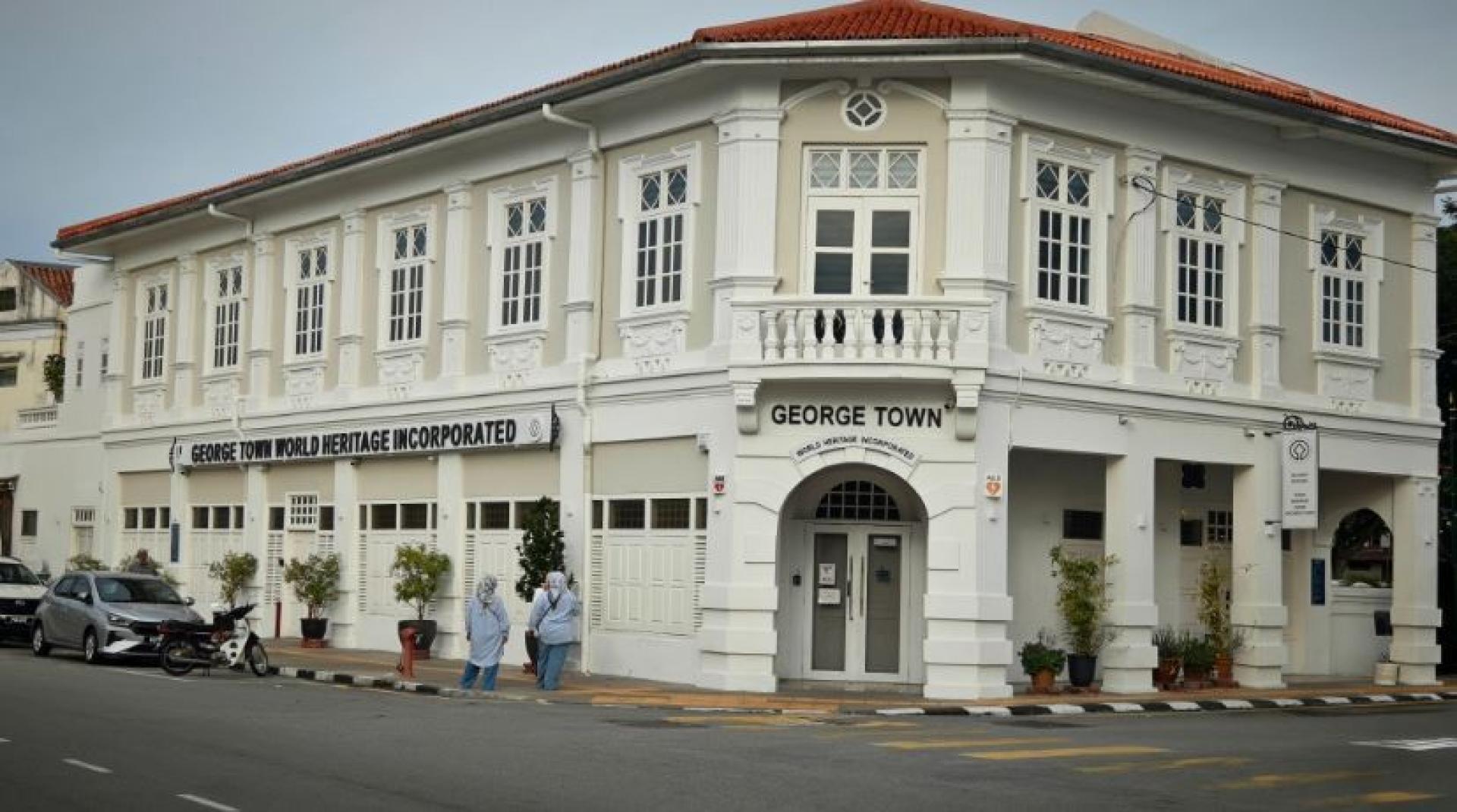
GEORGE TOWN, July 7 (Bernama) -- George Town has maintained its status as a UNESCO World Heritage Site for 18 years, but the historic city has achieved far more than preserving its heritage buildings. It has evolved into a living heritage city that continues to sustain the cultures, traditions, and lifestyles of its diverse communities.
Since its inscription on July 7, 2008, in recognition of its Outstanding Universal Value (OUV), George Town has witnessed the conservation of hundreds of heritage buildings, the expansion of a heritage-based economy, and the growth of a vibrant creative industry, all while retaining the unique identity that sets it apart globally.
Penang Local Government and Town and Country Planning Committee chairman Jason H'ng Mooi Lye said the city's landscape has undergone significant transformation across its physical, economic, social, and tourism sectors.
He said one of the most notable changes has been the growing number of heritage buildings conserved in line with international principles, breathing new life into structures that were once neglected.
"Historic buildings are being given a new lease on life through adaptive reuse, transforming them into boutique hotels, museums, art galleries, restaurants, and commercial premises without compromising their original heritage value.
"At the same time, public spaces, pedestrian walkways, lighting, and the urban landscape have been enhanced to create a higher-quality and more visitor-friendly heritage city environment.
"The true strength of George Town lies not merely in its historic buildings, but in its status as a living heritage city, inhabited by a diverse, multi-ethnic community that continues to practise its heritage cultures, traditions, culinary arts, and ways of life to this day," he told Bernama in conjunction with the 18th anniversary of George Town's declaration as a UNESCO World Heritage Site.
H'ng said UNESCO recognition had transformed George Town from a historic town into a world-class heritage city and a benchmark for urban heritage management.
He said the transformation is reflected in increased conservation efforts by both the public and private sectors, the growth of heritage-based economies, tourism, and creative industries, as well as greater public awareness of the importance of heritage preservation.
He added that the heritage management system has been further strengthened through close collaboration among the state government, the Penang Island City Council (MBPP), George Town World Heritage Incorporated (GTWHI), the National Heritage Department, building owners, professional bodies, and the local community.
Commenting on heritage building conservation, H'ng said the process goes beyond preserving old structures, as it also serves as a catalyst for investment, quality tourism, the creative economy, and improved quality of life for the community.
To ensure building owners remain committed to heritage conservation, he said the state government prioritises a collaborative and guidance-based approach rather than relying solely on enforcement.
"All conservation proposals must comply with the George Town UNESCO World Heritage Site Special Area Plan and international conservation principles. Every development proposal is also reviewed by the Technical Review Panel (MJTRP) to ensure that any alteration does not compromise George Town's Outstanding Universal Value," he said.
H'ng said the state government has also introduced various incentives to encourage the conservation of heritage buildings.
Under the federal government's 2024 Budget initiative, coordinated with MBPP and GTWHI, owners of Category I heritage buildings are eligible to apply for assistance of up to RM200,000, while owners of Category II heritage buildings can apply for up to RM50,000.
He said more than 50 owners of Category I heritage buildings and over 300 owners of Category II heritage buildings have benefited from an allocation of about RM17 million.
Meanwhile, Chief Minister Chow Kon Yeow said George Town's uniqueness lies not only in its historic architecture, but also in its cultural diversity, shared values, and spirit of community unity, which form the foundation of Penang's strength.
"Today, we are not merely celebrating George Town's recognition as a UNESCO World Heritage Site. We are also honouring the legacy of a city rich in history, culture, and the harmony of a multiracial community, a legacy passed down through generations.
"In line with the Penang2030: A Smart and Green State That Inspires the Nation vision, the state government is committed to strengthening heritage conservation alongside sustainable development, ensuring that the treasures we inherit today can continue to be enjoyed by future generations," he said.
Penang Local Government and Town and Country Planning Committee chairman Jason H'ng Mooi Lye said the city's landscape has undergone significant transformation across its physical, economic, social, and tourism sectors.
He said one of the most notable changes has been the growing number of heritage buildings conserved in line with international principles, breathing new life into structures that were once neglected.
"Historic buildings are being given a new lease on life through adaptive reuse, transforming them into boutique hotels, museums, art galleries, restaurants, and commercial premises without compromising their original heritage value.
"At the same time, public spaces, pedestrian walkways, lighting, and the urban landscape have been enhanced to create a higher-quality and more visitor-friendly heritage city environment.
"The true strength of George Town lies not merely in its historic buildings, but in its status as a living heritage city, inhabited by a diverse, multi-ethnic community that continues to practise its heritage cultures, traditions, culinary arts, and ways of life to this day," he told Bernama in conjunction with the 18th anniversary of George Town's declaration as a UNESCO World Heritage Site.
H'ng said UNESCO recognition had transformed George Town from a historic town into a world-class heritage city and a benchmark for urban heritage management.
He said the transformation is reflected in increased conservation efforts by both the public and private sectors, the growth of heritage-based economies, tourism, and creative industries, as well as greater public awareness of the importance of heritage preservation.
He added that the heritage management system has been further strengthened through close collaboration among the state government, the Penang Island City Council (MBPP), George Town World Heritage Incorporated (GTWHI), the National Heritage Department, building owners, professional bodies, and the local community.
Commenting on heritage building conservation, H'ng said the process goes beyond preserving old structures, as it also serves as a catalyst for investment, quality tourism, the creative economy, and improved quality of life for the community.
To ensure building owners remain committed to heritage conservation, he said the state government prioritises a collaborative and guidance-based approach rather than relying solely on enforcement.
"All conservation proposals must comply with the George Town UNESCO World Heritage Site Special Area Plan and international conservation principles. Every development proposal is also reviewed by the Technical Review Panel (MJTRP) to ensure that any alteration does not compromise George Town's Outstanding Universal Value," he said.
H'ng said the state government has also introduced various incentives to encourage the conservation of heritage buildings.
Under the federal government's 2024 Budget initiative, coordinated with MBPP and GTWHI, owners of Category I heritage buildings are eligible to apply for assistance of up to RM200,000, while owners of Category II heritage buildings can apply for up to RM50,000.
He said more than 50 owners of Category I heritage buildings and over 300 owners of Category II heritage buildings have benefited from an allocation of about RM17 million.
Meanwhile, Chief Minister Chow Kon Yeow said George Town's uniqueness lies not only in its historic architecture, but also in its cultural diversity, shared values, and spirit of community unity, which form the foundation of Penang's strength.
"Today, we are not merely celebrating George Town's recognition as a UNESCO World Heritage Site. We are also honouring the legacy of a city rich in history, culture, and the harmony of a multiracial community, a legacy passed down through generations.
"In line with the Penang2030: A Smart and Green State That Inspires the Nation vision, the state government is committed to strengthening heritage conservation alongside sustainable development, ensuring that the treasures we inherit today can continue to be enjoyed by future generations," he said.