In response to Singapore's refusal to negotiate with Iran regarding the safe passage of ships through the Strait of Hormuz, interviewed scholars pointed out that this stance is intended to emphasize the 'international nature' of the strait; for small countries like Singapore, upholding relevant international law is crucial, and this principle is 'non-negotiable.'
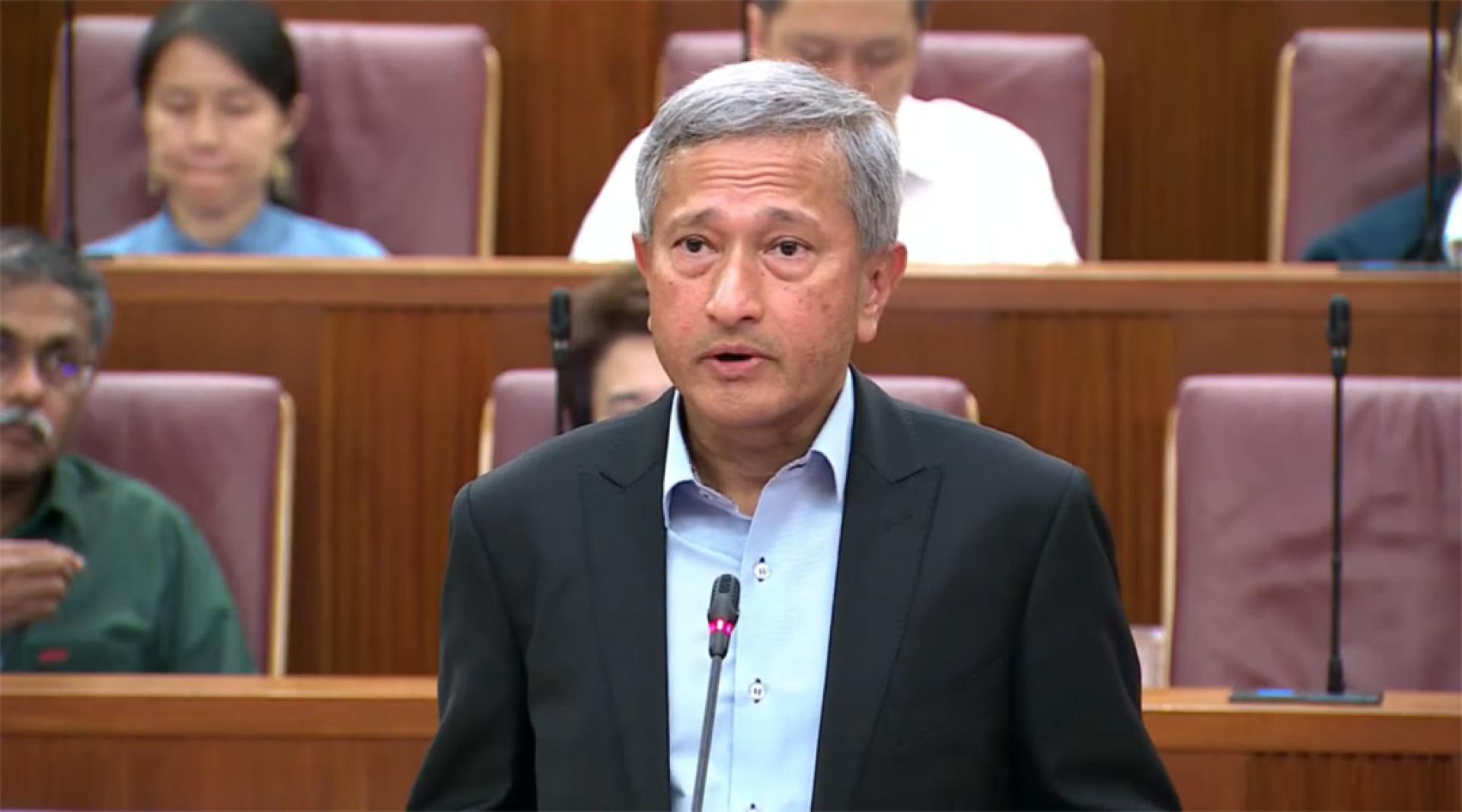
According to Lianhe Zaobao on the 9th, Singapore's parliament held a debate on the situation in the Middle East on the 7th. When asked whether the government would follow in the footsteps of countries such as Malaysia by engaging with Iran to ensure the safe passage of ships through the Strait of Hormuz, Foreign Minister Dr. Vivian Balakrishnan responded that, like the Straits of Malacca and Singapore, the Strait of Hormuz is a strait used for international navigation, and ships enjoy the right of transit passage.
He said that upholding the right of passage through international straits is vital to Singapore's national interests. Therefore, Singapore will not negotiate with Iran on safe passage for ships or passage fees, so as not to undermine the legal foundation concerned.
On this, Dr. Tara Davenport, Assistant Professor at the National University of Singapore Faculty of Law and Co-Director of the Ocean Law and Policy team at the Centre for International Law, told Lianhe Zaobao that the stance expressed by Dr. Vivian in parliament has clear grounds in international law.
She said that according to the United Nations Convention on the Law of the Sea (UNCLOS), the Strait of Hormuz fits the definition of a strait used for international navigation, and as a party to the convention, Singapore may invoke the right of transit passage.
She noted that Iran has signed but not yet ratified UNCLOS and is not bound by its specific provisions, but under international law, Iran must still refrain from acts contrary to the object and purpose of the convention. Furthermore, when Iran signed the convention, it also indicated that the parties have the right of transit passage.
Davenport pointed out that even according to customary international law, ships of all countries enjoy passage rights through such straits. Coastal states may regulate passage but must not completely prohibit it; in the event of armed conflict, the passage rights of neutral ships should also be protected.
After the US and Israel launched military action against Iran on February 28, Iran imposed control over the Strait of Hormuz. Multiple countries—including Malaysia, Thailand, and the Philippines—then engaged in their own dialogues or negotiations with Iran to ensure that their oil tankers could pass through.