(City, 26th) Recently, 'A Letter to Grandma' has become a sensation in various regions, with the profound traits of Chinese culture displayed in the film resonating widely.
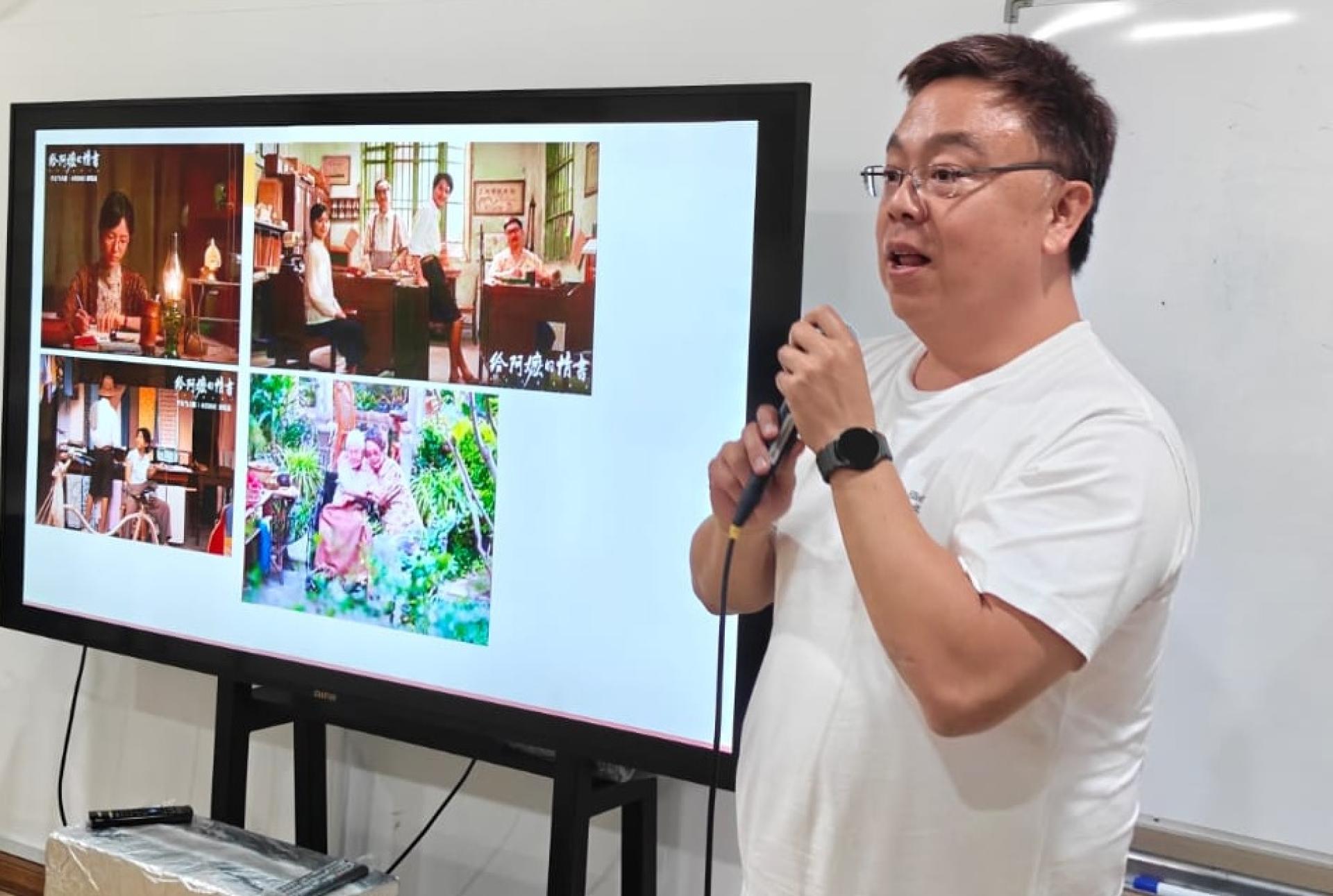
At a recent screening reflection sharing organized by the 'Cultural Classroom', participants not only shared their personal afterthoughts, but also examined the film from literary and cultural perspectives. They delved into character naming, the use of lines, as well as the cultural significance carried by classical poetry, everyday objects, and family memories, further elucidating the unique Chinese aesthetic inclinations, emotional bonds, and spiritual foundation.
On the aesthetic level, Chinese culture has always emphasized expressing emotions through scenery and conveying aspirations through objects. From the lingering longing in the pre-Qin 'Song of the Yue Boatman'—'There are trees on the hills, and branches upon the trees,' to the wistful sorrow of separation in Han dynasty yuefu poetry—'The southern bird nests upon the southern branch,' Chinese aesthetic expression often uses nature as a metaphor for people, and all things to evoke emotion.
The sharing pointed out that the name 'Shurou' (gentle and soft), as written by Yuan dynasty authors, often already foreshadows a character's fate; and literary expressions such as 'A bosom friend knows no distance' (Hai Nei Cun Zhi Ji) and 'The bright moon rises over the sea' (Hai Shang Sheng Ming Yue), adapted within letters, demonstrate how a thousand years of poetry has long intertwined with everyday language.
In Chinese culture, the moon is not just the moon, but also a symbol of home and longing; the act of giving flowers is not merely that, but embodies the ultimate romance of 'a branch of spring from Jiangnan.' This kind of implicit yet profound system of symbols precisely defines the distinct aesthetic characteristic of Chinese culture.
In terms of emotional expression, Chinese culture often carries deep feelings and collective memory through tangible objects. A bowl of olive vegetables—on the surface, the question is 'Is it cold?', but in essence, it is a concern for whether the heart remains warm; a 'qiaopi' (remittance letter), sent with both letter and money, bears the deep and weighty yearning of early migrants in Southeast Asia for their homeland.
The sharing noted that, though those who left home live in distant lands, they have always passed down writing, festivals, and family teachings from generation to generation. Even in a private school abroad, descendants are still taught to recite 'The Yellow River flows into the sea', ensuring that although born overseas, their spirit and cultural roots remain closely linked to their homeland.
As for the spiritual dimension, 'Cultural Classroom' believes that the core of Chinese culture lies in the concept of 'qing yi' (sentiment and loyalty).
'To be a person, one must have sentiment and loyalty.' Qing yi is not merely empty words, but is embodied in concrete living. A letter can be rewritten, a child not born of oneself can still be raised, and even if returning home is difficult, one never forgets their roots.
Just as in the film, the image of Grandma is gentle yet resilient, compassionate yet principled; with words and deeds she imparts a life philosophy of 'not complaining, not forgetting, not abandoning.'
The conclusion drawn in the sharing is that the soul of a nation is rooted in this silent sense of responsibility and enduring sense of attachment. Chinese aesthetics, emotions, and spirit are not abstract concepts, but the very essence of life hidden in poetry, objects, and behavior, becoming ever deeper and more profound as years go by.
On the aesthetic level, Chinese culture has always emphasized expressing emotions through scenery and conveying aspirations through objects. From the lingering longing in the pre-Qin 'Song of the Yue Boatman'—'There are trees on the hills, and branches upon the trees,' to the wistful sorrow of separation in Han dynasty yuefu poetry—'The southern bird nests upon the southern branch,' Chinese aesthetic expression often uses nature as a metaphor for people, and all things to evoke emotion.
The sharing pointed out that the name 'Shurou' (gentle and soft), as written by Yuan dynasty authors, often already foreshadows a character's fate; and literary expressions such as 'A bosom friend knows no distance' (Hai Nei Cun Zhi Ji) and 'The bright moon rises over the sea' (Hai Shang Sheng Ming Yue), adapted within letters, demonstrate how a thousand years of poetry has long intertwined with everyday language.
In Chinese culture, the moon is not just the moon, but also a symbol of home and longing; the act of giving flowers is not merely that, but embodies the ultimate romance of 'a branch of spring from Jiangnan.' This kind of implicit yet profound system of symbols precisely defines the distinct aesthetic characteristic of Chinese culture.
In terms of emotional expression, Chinese culture often carries deep feelings and collective memory through tangible objects. A bowl of olive vegetables—on the surface, the question is 'Is it cold?', but in essence, it is a concern for whether the heart remains warm; a 'qiaopi' (remittance letter), sent with both letter and money, bears the deep and weighty yearning of early migrants in Southeast Asia for their homeland.
The sharing noted that, though those who left home live in distant lands, they have always passed down writing, festivals, and family teachings from generation to generation. Even in a private school abroad, descendants are still taught to recite 'The Yellow River flows into the sea', ensuring that although born overseas, their spirit and cultural roots remain closely linked to their homeland.
As for the spiritual dimension, 'Cultural Classroom' believes that the core of Chinese culture lies in the concept of 'qing yi' (sentiment and loyalty).
'To be a person, one must have sentiment and loyalty.' Qing yi is not merely empty words, but is embodied in concrete living. A letter can be rewritten, a child not born of oneself can still be raised, and even if returning home is difficult, one never forgets their roots.
Just as in the film, the image of Grandma is gentle yet resilient, compassionate yet principled; with words and deeds she imparts a life philosophy of 'not complaining, not forgetting, not abandoning.'
The conclusion drawn in the sharing is that the soul of a nation is rooted in this silent sense of responsibility and enduring sense of attachment. Chinese aesthetics, emotions, and spirit are not abstract concepts, but the very essence of life hidden in poetry, objects, and behavior, becoming ever deeper and more profound as years go by.