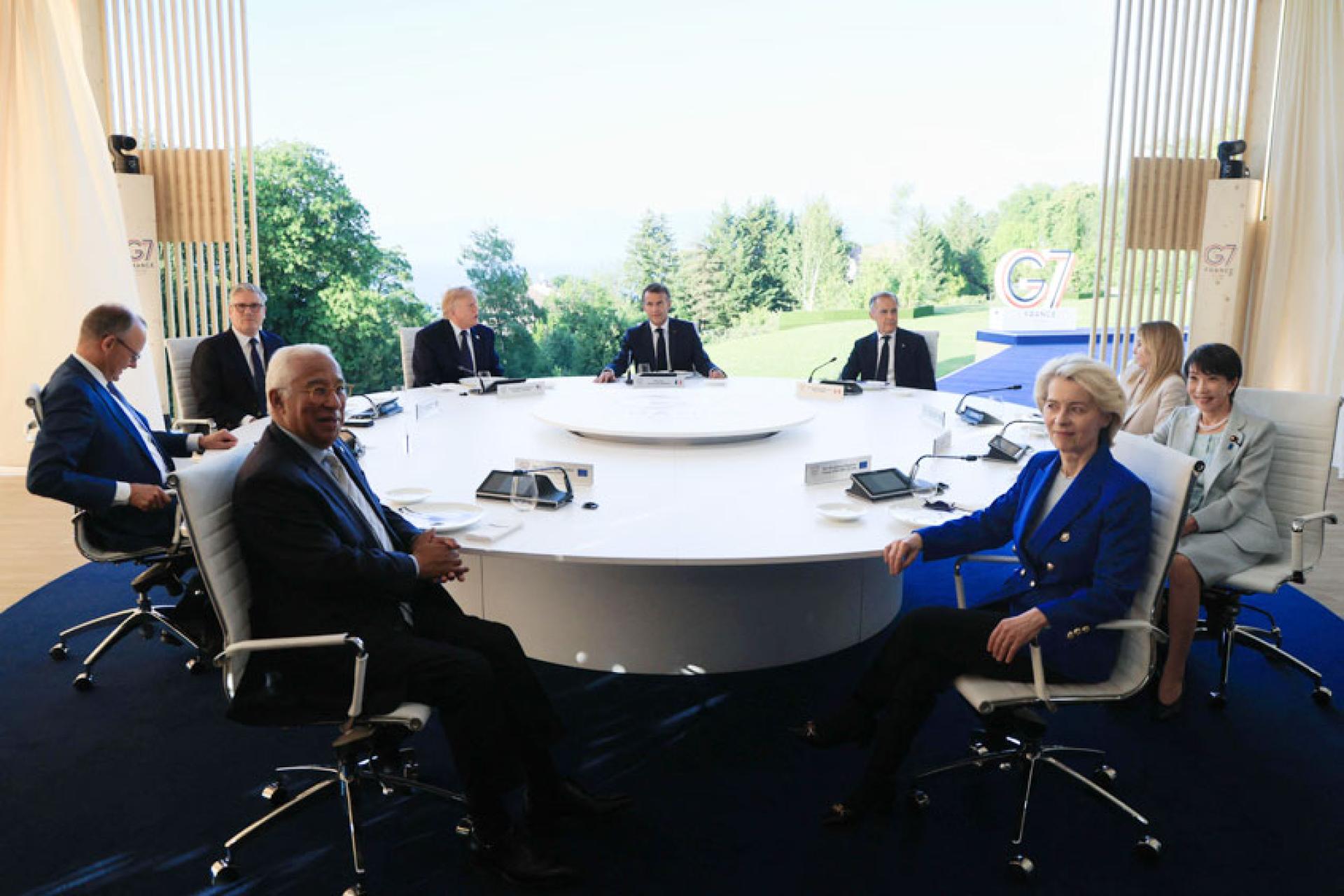
The Group of Seven (G7) Summit opened on the 15th in Évian-les-Bains, France, while protests persisted outside the venue.
According to the agenda, the three-day summit will focus on discussions about the Russia-Ukraine conflict, the situation in the Middle East, balanced, shared, and sustainable economic growth, as well as artificial intelligence.
In addition to G7 leaders, leaders from more than ten other countries and international organizations—including Brazil, South Korea, India, Kenya, Egypt, and Ukraine—were also invited to attend.
French President Emmanuel Macron stated on social media that France, together with its allies and partners, will work to promote a ceasefire between Ukraine and Russia during the summit.
In an interview with France's TF1 at the summit site, he said the G7 would hold a meeting on the 16th regarding the Iran issue, in an effort to ensure the implementation of the memorandum of understanding between the United States and Iran.
Starting from the afternoon of the 14th, large-scale protests against the G7 Summit were held in Geneva, Switzerland, about 40 kilometers from the venue, with approximately 20,000 demonstrators participating. Several clashes occurred between protesters and police near the United Nations headquarters in Geneva.
Since the 11th, sturdy wooden protective barriers have been gradually installed in busy commercial districts and the old government quarters of Geneva. After shop fronts were sealed off, only small entrances remained to guard against possible rioting, vandalism, looting, and other disruptions during the protests.
Switzerland has recently ramped up security, deploying 4,000 military and police officers at the border, and since the 11th has closed 25 Swiss-French border highway crossings. For this summit, France has also deployed about 16,000 police officers, gendarmes, and other security personnel.
In addition to G7 leaders, leaders from more than ten other countries and international organizations—including Brazil, South Korea, India, Kenya, Egypt, and Ukraine—were also invited to attend.
French President Emmanuel Macron stated on social media that France, together with its allies and partners, will work to promote a ceasefire between Ukraine and Russia during the summit.
In an interview with France's TF1 at the summit site, he said the G7 would hold a meeting on the 16th regarding the Iran issue, in an effort to ensure the implementation of the memorandum of understanding between the United States and Iran.
Starting from the afternoon of the 14th, large-scale protests against the G7 Summit were held in Geneva, Switzerland, about 40 kilometers from the venue, with approximately 20,000 demonstrators participating. Several clashes occurred between protesters and police near the United Nations headquarters in Geneva.
Since the 11th, sturdy wooden protective barriers have been gradually installed in busy commercial districts and the old government quarters of Geneva. After shop fronts were sealed off, only small entrances remained to guard against possible rioting, vandalism, looting, and other disruptions during the protests.
Switzerland has recently ramped up security, deploying 4,000 military and police officers at the border, and since the 11th has closed 25 Swiss-French border highway crossings. For this summit, France has also deployed about 16,000 police officers, gendarmes, and other security personnel.