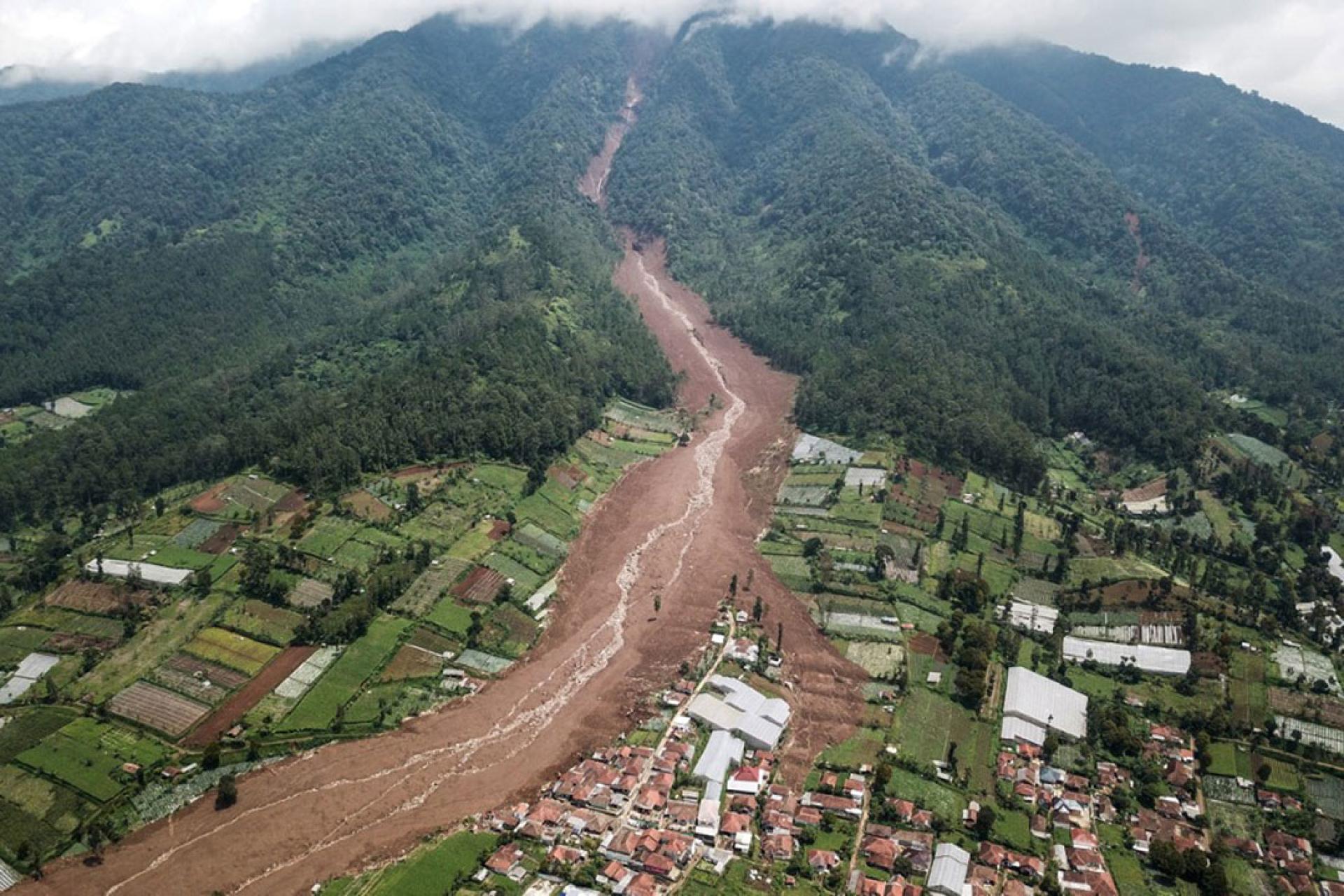
Despite dramatic changes in the international situation and geopolitics over the past year, Southeast Asian respondents still view climate change as the most pressing challenge.
According to the Lianhe Zaobao report, based on the "Southeast Asia Situation Report 2026" released by the Yusof Ishak Institute of Southeast Asian Studies, 60% of respondents believe climate change and increasingly severe extreme weather events are the most urgent challenges facing Southeast Asia, an increase from last year's 55.3%.
Last year, countries such as Indonesia, Thailand, Malaysia, the Philippines, and Vietnam experienced heavy rains or typhoons, causing severe floods and landslides. In Indonesia alone, severe floods at the end of the year in the provinces of Aceh, North Sumatra, and West Sumatra claimed more than 1,200 lives and displaced over 130,000 people.
Extreme weather not only causes enormous loss of life and property, but also impacts food supply and infrastructure. This is why respondents see climate change as the most urgent challenge.
In addition, economic tensions caused by major power rivalries, as well as domestic political instability, are also pressing challenges faced by Southeast Asia.
In terms of geopolitical issues, 51.9% of respondents are most concerned about American leadership under President Trump, highlighting the unease in Southeast Asia regarding shifting U.S. policies.
Global scam issues ranked second with a difference of only 0.5 percentage points. The attention of Southeast Asian respondents to this issue rose to 51.4%, up from 48.1% last year.
Since last year, Thailand, Cambodia, Myanmar, and Vietnam have stepped up efforts to crack down on telecom fraud. In January this year, Cambodia extradited the head of the telecom gang, Prince Group's Chen Zhijian, back to China. However, investigations indicate that cross-border telecom fraud is rebounding in more covert forms, continuing to attract international concern.
This year, the proportion of respondents concerned about the South China Sea issue (48.2%) has decreased, putting the South China Sea issue in third place; while last year's conflict between Thailand and Cambodia ranks fourth this year.
Of these, nearly 40% of respondents believe that ASEAN has taken positive steps to mediate the Thai-Cambodian border conflict, while another 28.1% believe that ASEAN has done its best within institutional constraints. ASEAN has always adhered to the principles of non-interference in internal affairs and consensus-based decision making, taking a neutral stance to maintain regional stability. However, only 28% of Cambodian respondents and 24% of Thai respondents support this view, reflecting that intellectuals in Thailand and Cambodia have higher expectations for ASEAN to play a stronger strategic and autonomous role in resolving border disputes and maintaining regional order.