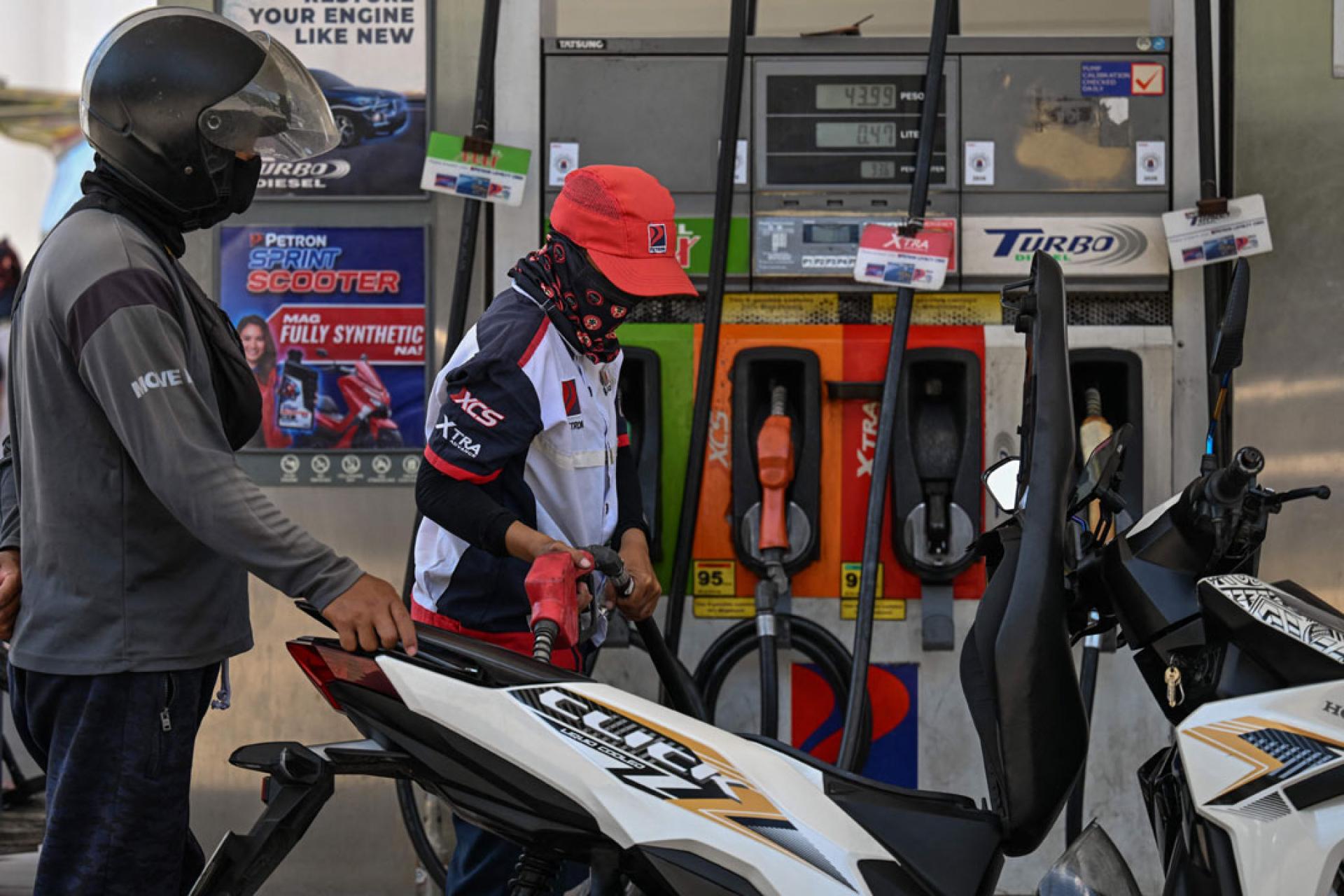
Due to soaring international oil prices, Thailand's year-long deflation trend is coming to an end, and inflation is expected to rebound significantly in the second quarter. Similarly, in the Philippines—a country also highly dependent on energy imports—the inflation rate climbed to 4.1% in March, reaching its highest level in nearly two years.
According to a Lianhe Zaobao report, data released by Thailand's Ministry of Commerce on the 7th showed that the Consumer Price Index in March fell 0.08% year-on-year. While this marks the 12th consecutive month of falling prices in Thailand, the decline is much narrower compared to the 0.88% drop in February.
The rapidly narrowing price decline highlights Thailand's vulnerability in the face of energy shocks. More than half of Thailand’s crude oil imports come from the Middle East, and most have to be shipped through the Strait of Hormuz, making domestic inflation levels highly susceptible to geopolitical turmoil.
Although March's data is still negative, Thailand’s Trade Policy and Strategy Office pointed out that as high energy costs are passed on to the end market, the inflation rate in April is highly likely to turn positive, and will increase significantly in the second quarter.
The Bank of Thailand predicts that overall inflation may return to the 1%–3% target range sooner than expected. However, economists believe that inflation will still remain within controllable levels.
Meanwhile, the Philippines saw its inflation rate surge from 2.4% in February to 4.1% in March, far exceeding market expectations. This is the highest level since July 2024.
The National Economic and Development Authority of the Philippines said on the 7th that the sharp rise in March's inflation was mainly due to the transportation sector, where the transport inflation rate reached 9.9%, and private transportation inflation accelerated to 31.3%.
Philippine national statistician Mapas disclosed at a press conference that almost all public transport uses diesel, resulting in prices soaring by nearly 60%.
With fuel costs remaining high, the Philippines has declared a national energy emergency and introduced measures such as a four-day workweek for civil servants to conserve energy.