The Russian Foreign Ministry issued a statement on the 4th, saying that Russia believes that the parties to the New Strategic Arms Reduction Treaty (New START)—namely Russia and the United States—are no longer bound by any obligations or reciprocal declarations under the treaty, including its core provisions, and in principle are "free to choose subsequent actions."
The Russia-US New START Treaty was valid until February 5 this year. After the 2019 expiration of the Intermediate-range Nuclear Forces Treaty (INF), it was the only arms control treaty between the two countries.
The Russian Foreign Ministry said President Putin suggested that, for at least one year after the expiration of New START, the parties would voluntarily keep their relevant weapons within the limits set by the treaty. However, Russia has yet to receive any official response from the US through bilateral channels to its proposal, and the US’s public statements have not indicated a willingness to follow the “strategic offensive arms operating procedures” proposed by Russia.
The statement reads: “Under current circumstances, we believe the parties to the Russia-US New START Treaty are no longer bound by any obligations or reciprocal declarations under the treaty, including its core provisions, and in principle are free to choose subsequent actions.”
The statement stressed that, at the same time, Russia will act responsibly and prudently, formulating its own strategy on strategic offensive weapons based on a careful analysis of US military policy and the overall strategic environment.
The statement said that Russia is prepared to take decisive military-technical countermeasures in response to potential threats to national security. If in the future the “necessary conditions for similar cooperation” are met, Russia is still willing to seek comprehensive strategic stability through political and diplomatic means, based on equal and mutually beneficial dialogue.
Russia and the US signed the New START in 2010, aiming to limit the number of deployed nuclear warheads and delivery vehicles. The treaty officially came into force on February 5, 2011, with a planned validity of 10 years, later extended through negotiation to February 5, 2026.
In September 2025, Putin stated that if the US does not take actions that undermine the current balance, Russia will continue to observe the core limitations of the New START for one year after its expiration.
US President Trump declared in January this year that he was not worried about the impending expiration of the New START and indicated both sides would reach a new agreement. However, multiple media outlets pointed out that reaching a replacement agreement with equivalent binding force and technical complexity would be a long and arduous process.
The Expiration of the Treaty Marks a Grim Moment for International Peace and Security
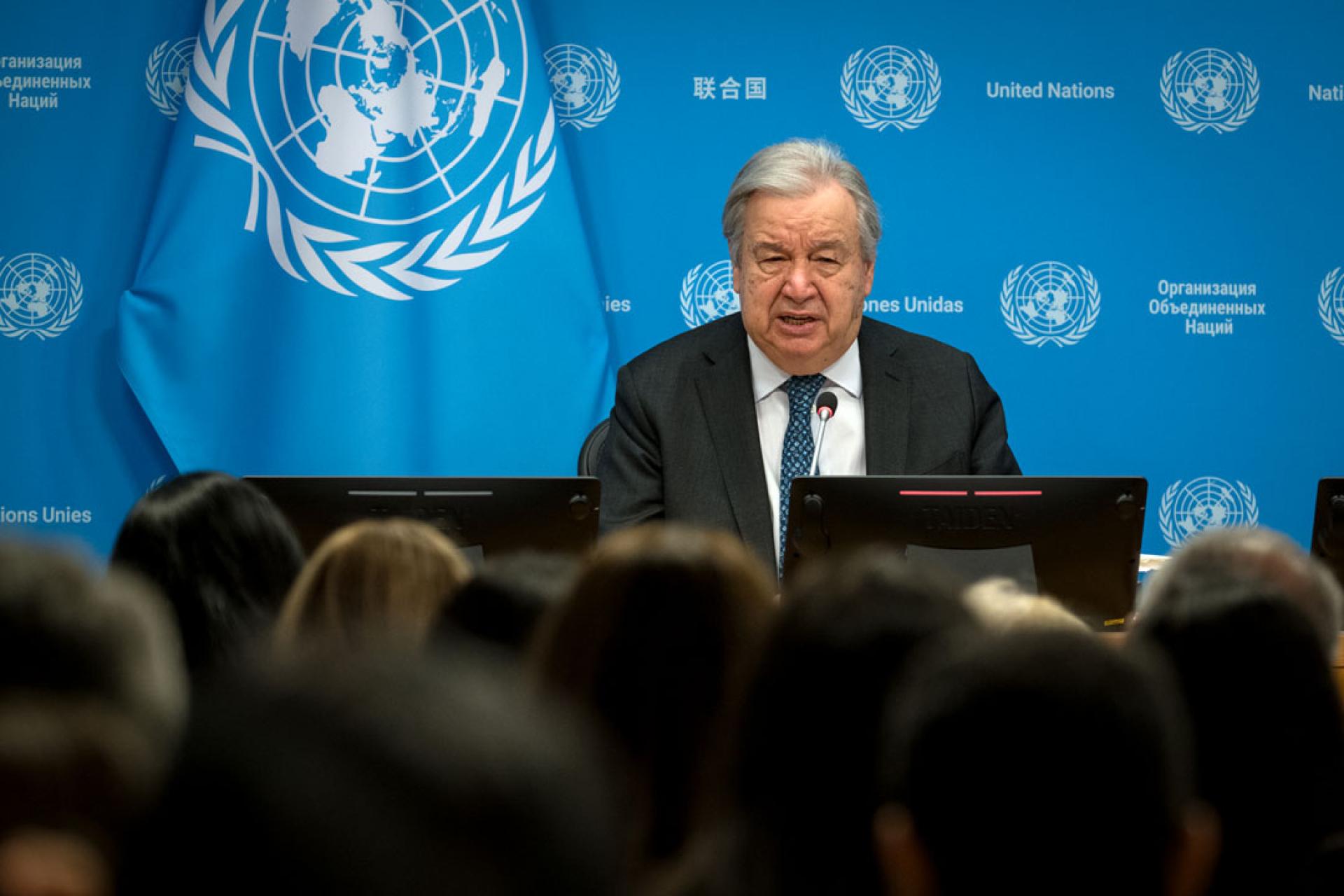
UN Secretary-General Guterres said on the 4th that the expiration of the Russia-US New START is a grim moment for international peace and security.
He stated that the expiration of the treaty marks the first time in more than half a century that there are no binding limits on the strategic nuclear arsenals of Russia and the United States. During the Cold War and post-Cold War eras, nuclear arms control between Russia and the US built strategic stability and, combined with other measures, prevented catastrophic miscalculation. Nuclear arms control initiated by Russia and the US reduced thousands of nuclear weapons, greatly enhancing the security of peoples globally, especially those in Russia and the US.
Guterres noted that the expiration of New START has occurred at the worst possible time, with the risk of nuclear weapon use at its highest in decades. We must not lose hope as a result; now is the opportunity to restart the process and establish arms control mechanisms suitable for the evolving new context.
Guterres urged Russia and the US to immediately return to the negotiating table, reach consensus on a new follow-up framework, restore verifiable limits, reduce risks, and strengthen global collective security.