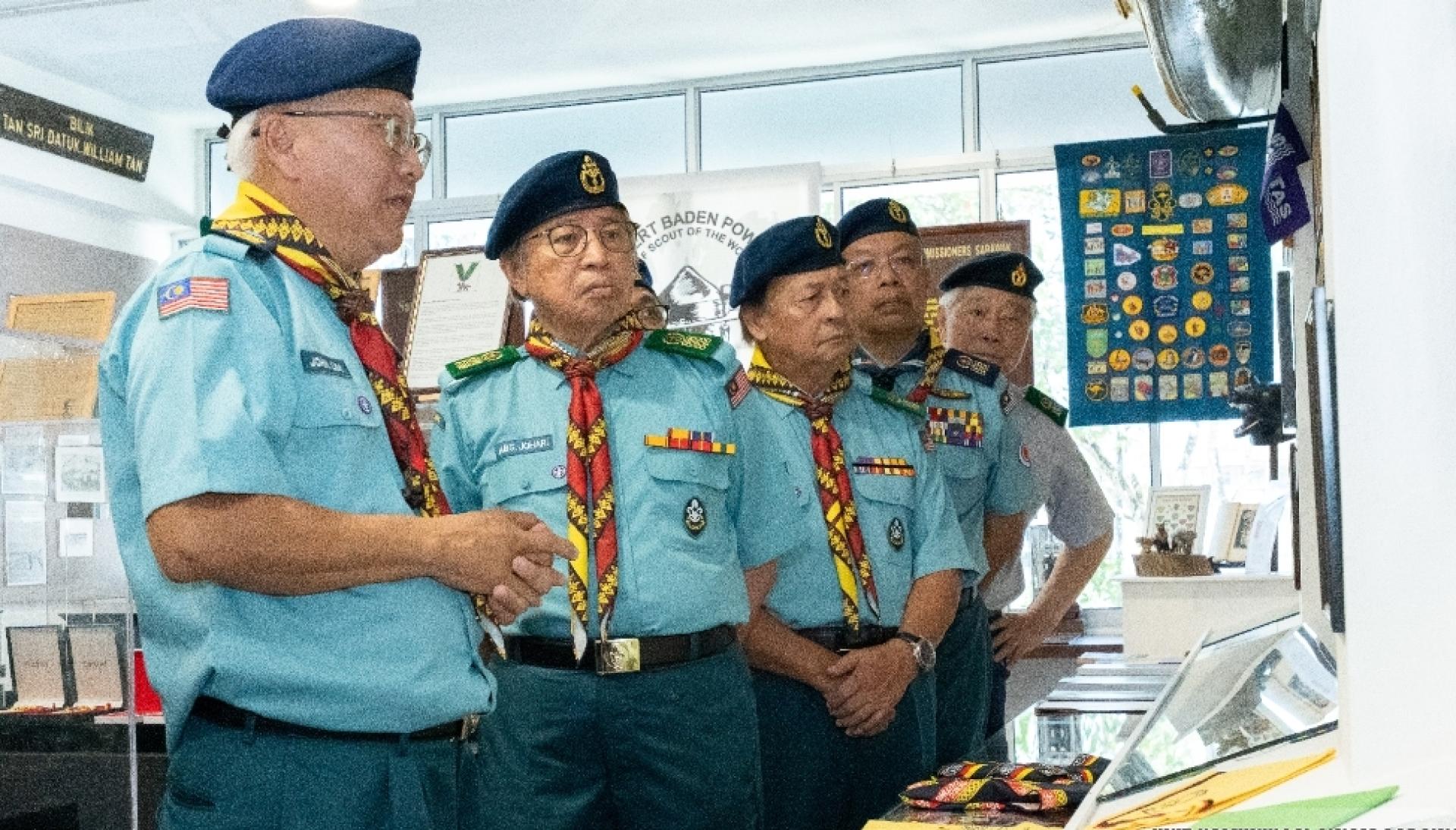
(Kuching, 30th) Sarawak Premier Datuk Patinggi Tan Sri Abang Johari stated that Sarawak’s railway development will prioritize the Bintulu to Samalaju line and will be pushed forward in phases in conjunction with the comprehensive Borneo Railway study.
He said that the relevant railway study currently forms part of the Borneo Railway Corridor, which involves Indonesia, Brunei, and Malaysia. However, Malaysia has already taken the lead by launching studies focused on its own regions, namely Sarawak and Sabah.
He pointed out that the study is being conducted by the Malaysian Economic Planning Unit, and once the railway corridor route is finalized, Sarawak will first promote the construction of the Bintulu to Samalaju railway within the planned scope.
Abang Johari made these remarks when asked about the Samalaju to Bintulu railway project after attending the Batu Lintang Scouts Headquarters new building groundbreaking ceremony today.
He said that the Sarawak government is currently discussing the matter with the federal government and will give its full support.
"Since Samalaju and Bintulu are designated as low-carbon industrial clusters, railway development will help meet the region’s industrial and logistics needs."
He pointed out that other transportation schemes were also considered, but due to geographic factors and the fact that the federal government had already conceived a railway development plan, Sarawak is able to support its implementation.
As for whether the railway will extend from Bintulu to Miri and Kuching, he said that will depend on national railway corridor planning, emphasizing that the cost of railway construction is high and must be implemented in phases.
"We need to look at the national route plan first, but things must move step by step because railway costs are quite high."
He noted that there is a large volume of freight between Bintulu Port and Samalaju Port, and the route will also pass through Kidurong, thus the priority is to build what serves practical logistics needs.
He also revealed that Malaysia still needs further discussions with Indonesia, and it’s possible in the future that it will connect with the Kalimantan railway system.
Asked about the possibility of using hydrogen as railway power, he stated that with current technology and energy prices, the cost of hydrogen production is gradually becoming competitive, especially against the backdrop of international energy price fluctuations.
He added that a hydrogen production plant will be built in Rembus to supply the required hydrogen for the ART system.
"The price per kilogram of hydrogen may be slightly lower than fossil fuels. Initially, it was indeed expensive and faced criticism, but at this stage, my assessment has been proven correct."
He said that as hydrogen production technology further matures, costs are likely to decrease, and the application of hydrogen energy in transport systems will become increasingly feasible.
He pointed out that the study is being conducted by the Malaysian Economic Planning Unit, and once the railway corridor route is finalized, Sarawak will first promote the construction of the Bintulu to Samalaju railway within the planned scope.
Abang Johari made these remarks when asked about the Samalaju to Bintulu railway project after attending the Batu Lintang Scouts Headquarters new building groundbreaking ceremony today.
He said that the Sarawak government is currently discussing the matter with the federal government and will give its full support.
"Since Samalaju and Bintulu are designated as low-carbon industrial clusters, railway development will help meet the region’s industrial and logistics needs."
He pointed out that other transportation schemes were also considered, but due to geographic factors and the fact that the federal government had already conceived a railway development plan, Sarawak is able to support its implementation.
As for whether the railway will extend from Bintulu to Miri and Kuching, he said that will depend on national railway corridor planning, emphasizing that the cost of railway construction is high and must be implemented in phases.
"We need to look at the national route plan first, but things must move step by step because railway costs are quite high."
He noted that there is a large volume of freight between Bintulu Port and Samalaju Port, and the route will also pass through Kidurong, thus the priority is to build what serves practical logistics needs.
He also revealed that Malaysia still needs further discussions with Indonesia, and it’s possible in the future that it will connect with the Kalimantan railway system.
Asked about the possibility of using hydrogen as railway power, he stated that with current technology and energy prices, the cost of hydrogen production is gradually becoming competitive, especially against the backdrop of international energy price fluctuations.
He added that a hydrogen production plant will be built in Rembus to supply the required hydrogen for the ART system.
"The price per kilogram of hydrogen may be slightly lower than fossil fuels. Initially, it was indeed expensive and faced criticism, but at this stage, my assessment has been proven correct."
He said that as hydrogen production technology further matures, costs are likely to decrease, and the application of hydrogen energy in transport systems will become increasingly feasible.