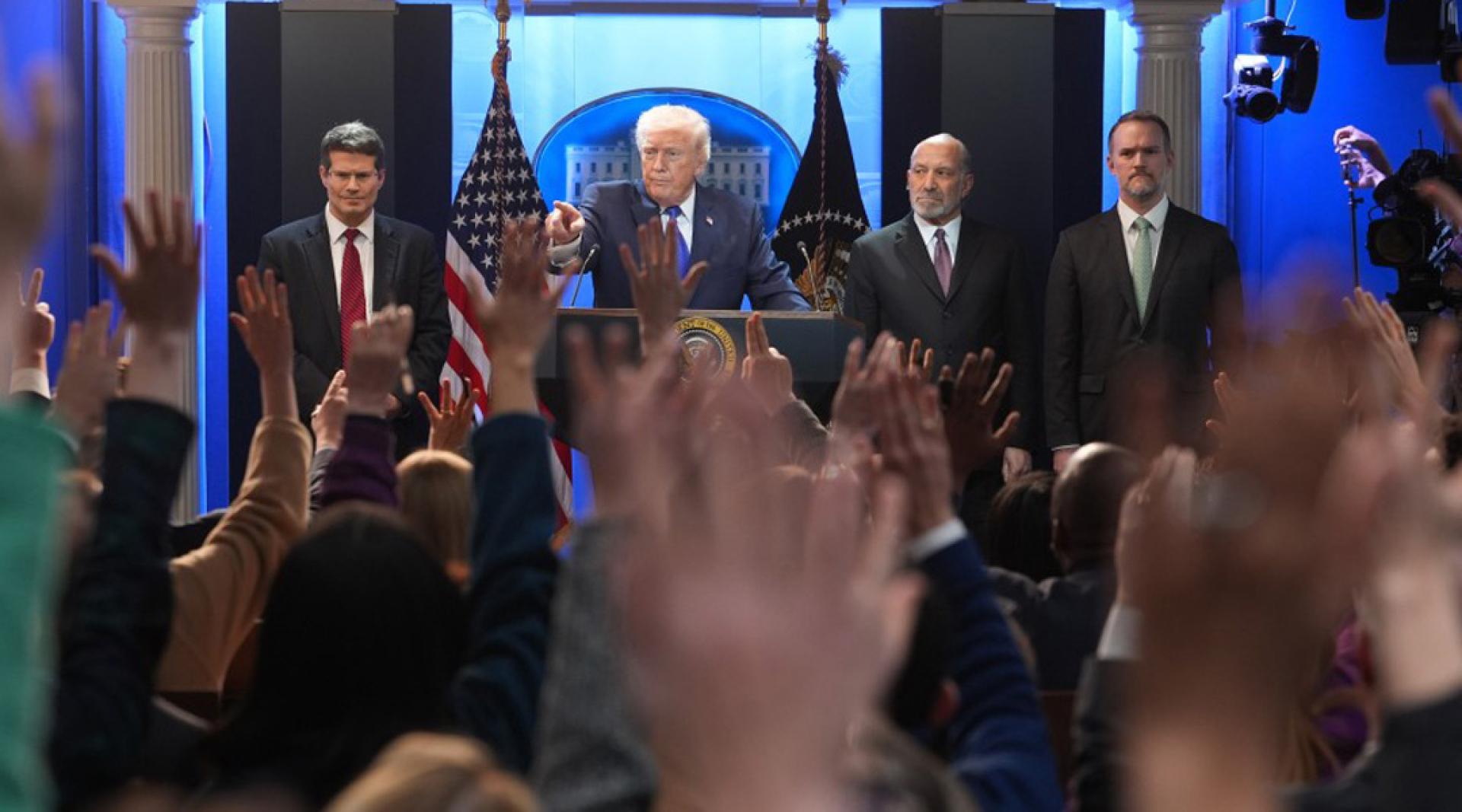
On the 20th, U.S. Supreme Court justices voted 6 to 3 to uphold a lower court decision and release the verdict, ruling that President Trump lacked explicit legal authorization under the International Emergency Economic Powers Act (IEEPA) to impose tariffs. Trump held a press conference the same day, calling the ruling deeply disappointing. He subsequently signed an executive order to impose an ad valorem import tax of 10% on goods imported into the United States from around the globe, valid for 150 days, to replace certain emergency tariffs previously found unlawful by the U.S. Supreme Court.
Trump expressed shame at some Supreme Court justices, especially those appointed by the Democratic Party, saying they lacked the courage to do what is best for the country and believed the Supreme Court was influenced by foreign interests. He also said that foreign nations were pleased with the ruling, but this would not last long, as the U.S. would adopt alternative tariff measures—for example, launching several investigations into "unfair trade practices" in accordance with Section 301 of the 1974 Trade Act. He stated such alternatives could bring in even more money and make America greater. All tariffs imposed on the grounds of national security, as well as those imposed under Section 232 of the 1962 Trade Expansion Act and Section 301 of the 1974 Trade Act, will remain in effect.
Trump admitted that the Supreme Court's ruling would trigger a prolonged legal entanglement. When asked whether the approximately $175 billion (683.667 billion ringgit) in previously collected tariff revenue would be refunded, he bluntly stated that the Supreme Court's ruling was flawed and did not mention whether to 'retain' or 'not retain' this money, believing that lawsuits over the matter would continue for the next 2 or even 5 years.
Subsequently, the White House announced that Trump had signed an executive order to impose temporary tariffs on imported goods to address fundamental international payment issues and continue the administration's efforts to rebalance trade relations and benefit American workers, farmers, and manufacturers. Trump cited Section 122 of the 1974 Trade Act, which authorizes the president to address certain fundamental international payment issues through surcharges and other special import restrictions. The executive order stipulates a 10% ad valorem import tax on goods entering the United States, effective at 12:01 a.m. EST on February 24.