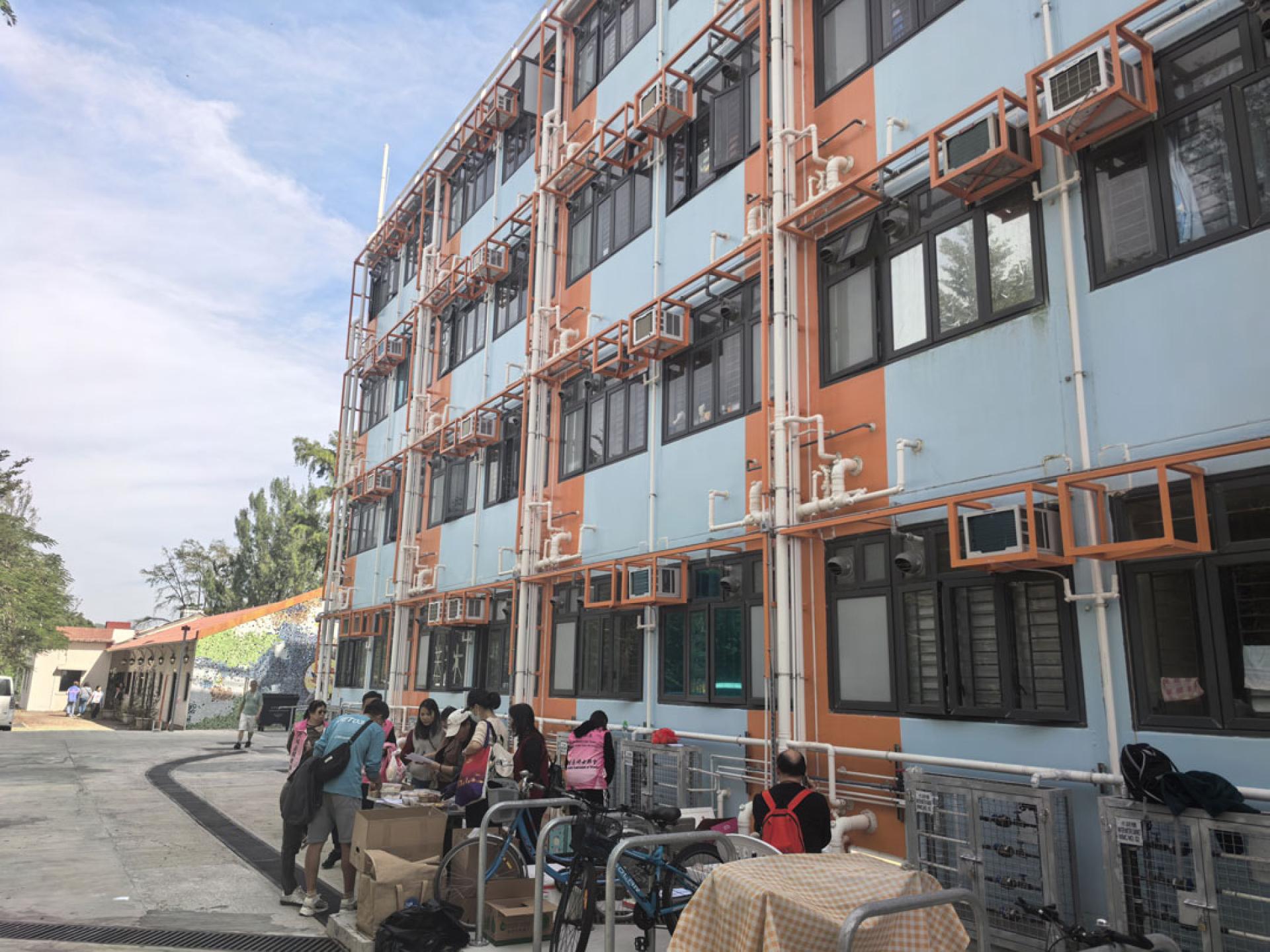
In the afternoon, sunlight streams into Shan House, No. 168, Chenyu, Shuen Wan, Tai Po, Hong Kong. Here, the children of Ms. Chen, a resident affected by the Tai Po Hong Fuk Court fire, are happily picking plush toys from the relief supplies, while members of the Care Team passing by joke with the kids from time to time. Ms. Chen quietly watches from the side, occasionally replying to messages on her phone.
According to China News Service, Shan House is one of the transitional housing units for residents affected by the Hong Fuk Court fire. On the 28th, Ms. Chen told the reporter that she and her brother's family, a total of nine people, had transferred here from the temporary shelter at Kwong Fuk Community Hall. They are now temporarily settled, “not as sad and lost as before.”
After the serious fire at Tai Po Hong Fuk Court on the 26th, the Housing Bureau of the Hong Kong SAR Government (referred to as the “Housing Bureau”) formed a special team to actively coordinate with operators of various transitional housing, assisting Hong Fuk Court residents affected by the fire in moving in. Housing Bureau Director Ho Wing-yin said that the special team has so far identified more than 1,400 available units to provide support for citizens in need.
Li Shuhui, Chief Executive of the Hong Kong Society for the Rehabilitation of Offenders, which manages Shan House, told reporters that the night of the fire, Shan House had already prepared some vacant units. Since the flats previously did not have furniture or appliances, the Society proactively gathered necessary supplies such as pillows, quilts, and mattresses from nearby communities for the disaster victims to use.
●No Rent or Utilities Required
To help the affected residents settle down as soon as possible, Shan House greatly simplified the move-in process: residents from Hong Fuk Court could move in after a simple registration. Even those unable to register could first settle in as long as they proved their identity. Li Shuhui said that after the fire, the only thought in her mind was to make sure all disaster victims coming here had a place to live. When the reporter visited, Shan House had already received 160 households totaling 300 residents, with none required to pay any rent or utilities.
On site, the reporter saw that Care Team members and staff of the operating organization were sorting supplies and organizing their distribution to residents in an orderly manner. The aid supplies were plentiful, including food, clothing, daily necessities, etc., filling seven to eight storage rooms. In Shan House’s community activity room, stationed medical personnel were conducting health checks and distributing medicine to some elderly residents. Staff from the Hong Kong SAR Government’s Immigration Department were also present to help residents who lost IDs and travel documents to register for replacements.
Li Shuhui said that the Shan House community is actively communicating with relevant SAR government departments about long-term resettlement concerns: “Having a small home that shelters from the wind and rain is always warmer.”