The 13th ASEAN Finance Ministers and Central Bank Governors’ Meeting (AFMGM) welcomed a financing mechanism proposal by the Asian Development Bank (ADB) involving $30 billion (MYR 141 billion) for the period from 2026 to 2030, to support the implementation of financial sector plans and the ASEAN Community Vision 2045.
The Ministry of Finance issued a statement today pointing out that the meeting also noted the re-establishment of the ASEAN Monetary Swap Arrangement, which will further strengthen the regional financial safety net.
"In promoting sustainable finance, ASEAN finance ministers and central bank governors noted the progress of the ASEAN Taxonomy for Sustainable Finance, as well as the strong project pipeline under the ASEAN Catalytic Green Finance Facility (ACGF), with total project value reaching $19.4 billion (MYR 91.2 billion) from 2026 to 2028."
"The meeting also welcomed the launch of the Regional Energy Connectivity Fund (RCF) on April 7, 2026, marking an important step towards enhancing regional energy security and supporting the ASEAN Power Grid."
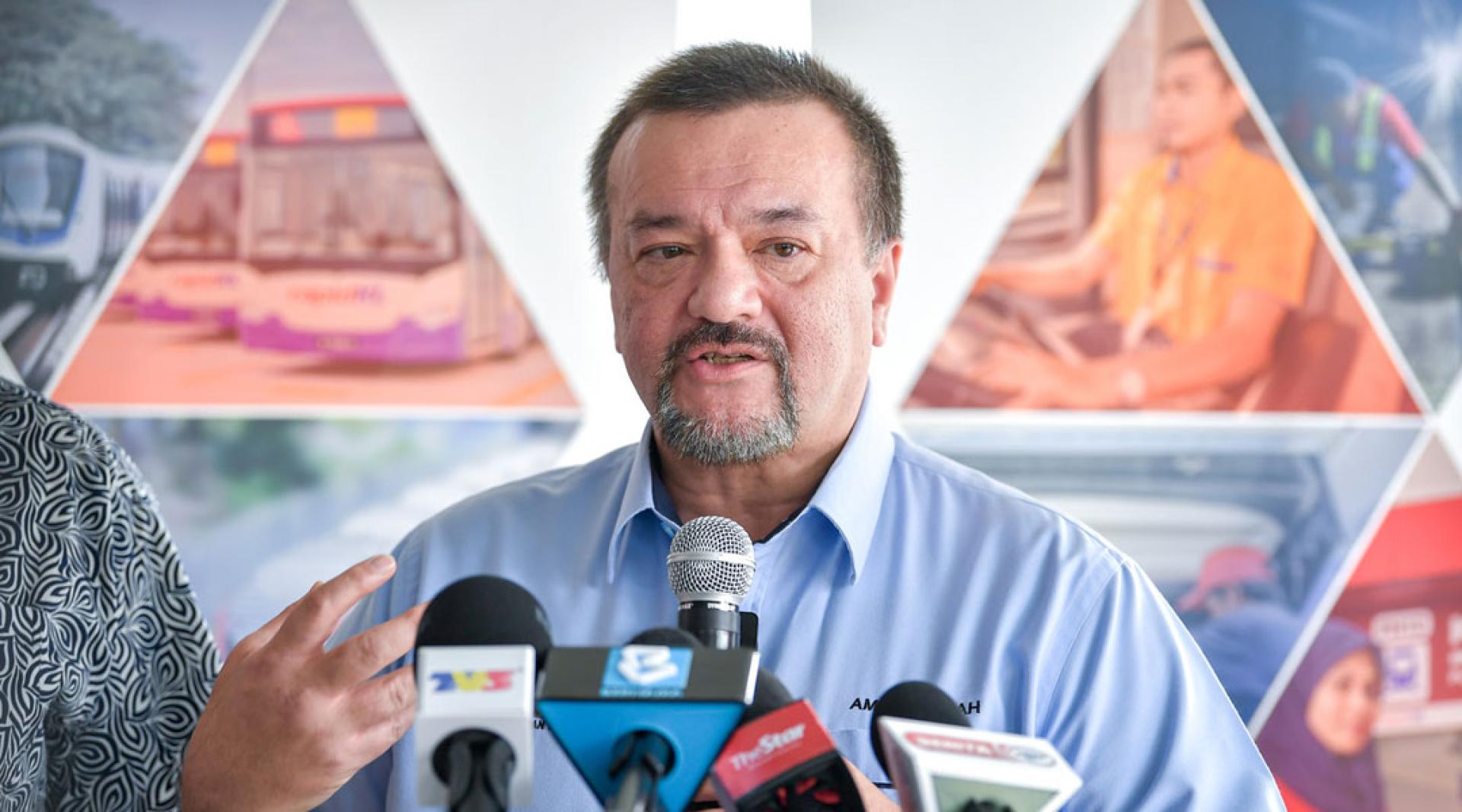
Second Finance Minister Dato' Seri Amir Hamzah stated in the same statement that ASEAN is concerned about tensions in the Middle East and their impact on global trade and energy, as well as risks such as tariffs, geo-economic fragmentation, and debt vulnerability.
He said Malaysia reaffirmed its commitment to deepening financial integration and regional cooperation to safeguard ASEAN's macroeconomic stability and resilience.
"Given the current global shocks, ASEAN should maintain a pragmatic and stable stance. Although our ability to control external volatility is limited, we can strengthen internal foundations through deepening integration, enhancing policy coordination, maintaining macroeconomic credibility, and boosting market confidence in ASEAN as a destination for investment and growth."
Amir led the Malaysian delegation in attending the online meeting yesterday, and participants included Bank Negara Malaysia Governor Dato' Seri Abdul Rasheed.
Deputy Secretary General (Policy) of the Ministry of Finance, Dato' Zain Zuri, headed the Malaysian delegation in the AFMGM deputies and related meetings.
The 13th AFMGM was co-chaired by Philippine Finance Minister Frederick and Philippine Central Bank Governor Eli, and the joint statement issued after the meeting reiterated ASEAN's commitment to maintaining macroeconomic and financial stability, promoting digital transformation, and fostering sustainable and inclusive growth.
The meeting also approved the key priority areas under the theme of the Philippines' chairmanship of ASEAN in 2026, "Together Towards the Future," including promoting a resilient and sustainable ASEAN capital market, strengthening regional payment connectivity, and facilitating healthy financial development by establishing a regional assessment framework.
The AFMGM and its associated meetings have also continued interactions with major external partners and international financial institutions, including the United States Department of the Treasury, Australian Treasury, US-ASEAN Business Council, EU-ASEAN Business Council, UK-ASEAN Business Council, TheCityUK, as well as the Asian Development Bank, International Monetary Fund, and World Bank, providing an opportunity for all parties to exchange views on regional and global economic developments.
"In promoting sustainable finance, ASEAN finance ministers and central bank governors noted the progress of the ASEAN Taxonomy for Sustainable Finance, as well as the strong project pipeline under the ASEAN Catalytic Green Finance Facility (ACGF), with total project value reaching $19.4 billion (MYR 91.2 billion) from 2026 to 2028."
"The meeting also welcomed the launch of the Regional Energy Connectivity Fund (RCF) on April 7, 2026, marking an important step towards enhancing regional energy security and supporting the ASEAN Power Grid."
Second Finance Minister Dato' Seri Amir Hamzah stated in the same statement that ASEAN is concerned about tensions in the Middle East and their impact on global trade and energy, as well as risks such as tariffs, geo-economic fragmentation, and debt vulnerability.
He said Malaysia reaffirmed its commitment to deepening financial integration and regional cooperation to safeguard ASEAN's macroeconomic stability and resilience.
"Given the current global shocks, ASEAN should maintain a pragmatic and stable stance. Although our ability to control external volatility is limited, we can strengthen internal foundations through deepening integration, enhancing policy coordination, maintaining macroeconomic credibility, and boosting market confidence in ASEAN as a destination for investment and growth."
Amir led the Malaysian delegation in attending the online meeting yesterday, and participants included Bank Negara Malaysia Governor Dato' Seri Abdul Rasheed.
Deputy Secretary General (Policy) of the Ministry of Finance, Dato' Zain Zuri, headed the Malaysian delegation in the AFMGM deputies and related meetings.
The 13th AFMGM was co-chaired by Philippine Finance Minister Frederick and Philippine Central Bank Governor Eli, and the joint statement issued after the meeting reiterated ASEAN's commitment to maintaining macroeconomic and financial stability, promoting digital transformation, and fostering sustainable and inclusive growth.
The meeting also approved the key priority areas under the theme of the Philippines' chairmanship of ASEAN in 2026, "Together Towards the Future," including promoting a resilient and sustainable ASEAN capital market, strengthening regional payment connectivity, and facilitating healthy financial development by establishing a regional assessment framework.
The AFMGM and its associated meetings have also continued interactions with major external partners and international financial institutions, including the United States Department of the Treasury, Australian Treasury, US-ASEAN Business Council, EU-ASEAN Business Council, UK-ASEAN Business Council, TheCityUK, as well as the Asian Development Bank, International Monetary Fund, and World Bank, providing an opportunity for all parties to exchange views on regional and global economic developments.