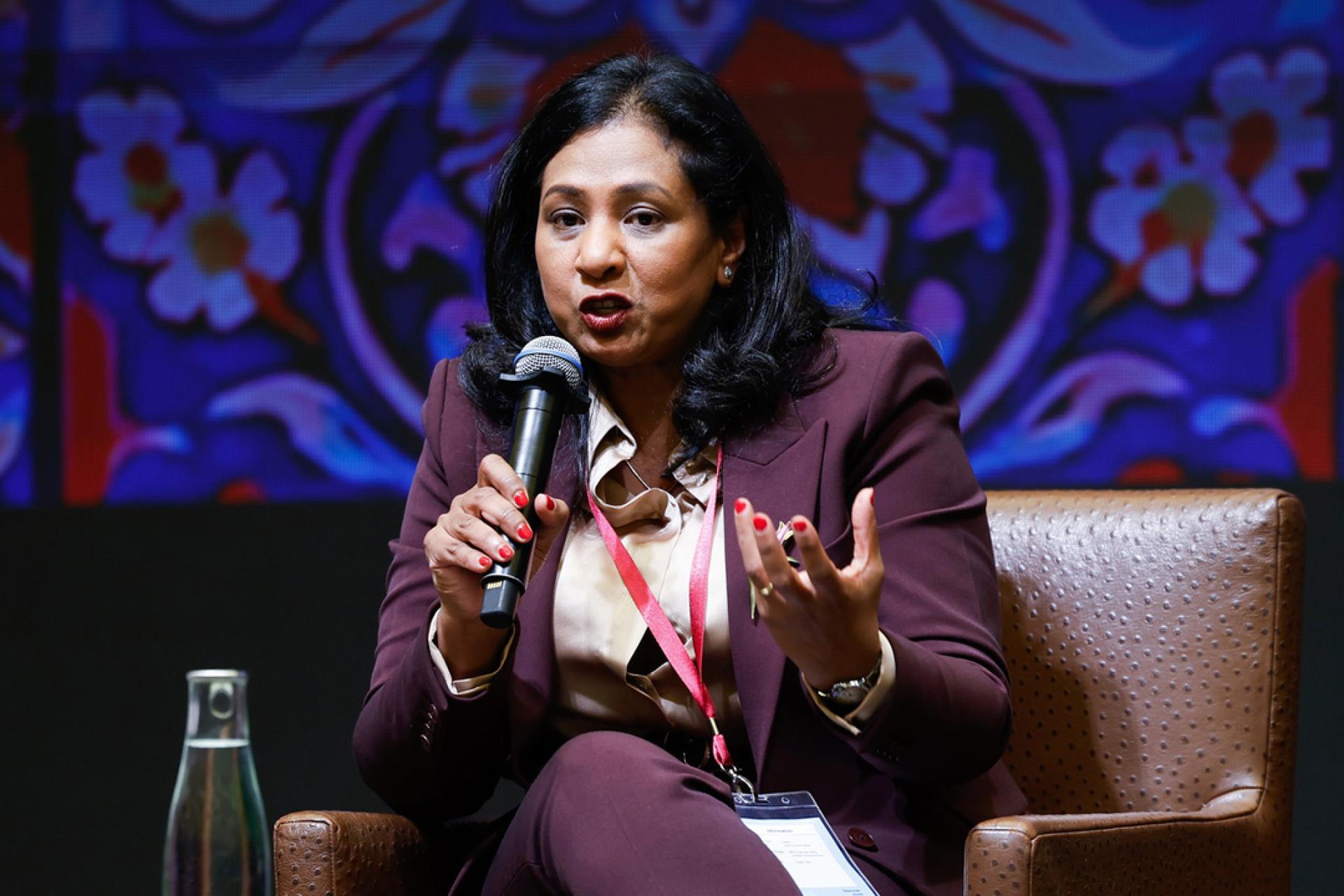
Scholars are calling for Malaysia and Turkey to strengthen defense cooperation beyond mere procurement, by establishing a strategic partnership and jointly developing local defense and aerospace industries.
Dr. Qochira, Director of Business Development, Policy and External Affairs (Southeast Asia) at Warwick Manufacturing Group, University of Warwick (UK), said in an interview held in conjunction with the 2026 Kuala Lumpur-Ankara Dialogue on Tuesday that Malaysia-Turkey relations should be elevated to a strategic alignment level.
"Bilateral relations should be repositioned as a strategic partnership based on defense policy, diplomatic policy alignment and coordinated industrial strategies."
She said Malaysia is Turkey's 7th largest defense partner and its earliest partner in Southeast Asia, so this strategic partnership should also include joint training programs and R&D cooperation to strengthen Malaysia's defense sector.
She mentioned that given the outbreak of conflict in the Middle East has led to instability in security situations, it is necessary to deepen defense cooperation.
"Malaysia's defense and diplomatic policies should converge with Turkey's industrial strategy, emphasizing a local pathway with alignment, and taking into consideration offset mechanisms."
Qochira pointed out that Malaysia should adopt a more macro, systematic approach and proceed in a stepwise manner following a blueprint, first establishing strategic direction at the government level, then promoting structured knowledge exchange among Malaysia-Turkey defense institutions, research units and academia.
She said this includes developing joint training programs, R&D collaborations and centers of excellence, while nurturing expertise in systems integration, project management, and defense technology.
"The focus should be on driving the commercialization and industrial momentum of the partnership… Measures in this area should not remain at the transactional level, but should be guided by a broader system perspective."
Speaking about Malaysia's National Defense Industry Policy launched in January this year, Qochira said the timing is appropriate given the escalating regional geopolitical uncertainties.
"But at the same time, there are still some gaps in this policy, particularly regarding its implementation structure, commitment to defense expenditure, and capability positioning."
"This is crucial, as capabilities will eventually translate into procurement-driven concrete actions."
She pointed out that although Malaysia needs to achieve a phased target of 30% local participation, it can leverage its strengths in Maintenance, Repair and Overhaul (MRO) and the semiconductor sector to make the country a regional hub in Southeast Asia for Turkish aircraft.
At present, equipment procured by Malaysia from Turkey includes armored vehicles, drones, and naval vessels, with increasing attention to surveillance and maritime platforms, and possible future expansion into the field of fighter aircraft.
According to reports, Southeast Asia's defense expenditure will rise 7.5% to $55 billion in 2025, a threefold increase since 2015.
Although the regional arms market is still dominated by the US, Europe, and the increasingly prominent South Korean companies, Turkish defense firms are gradually becoming important players, with their market share expected to further expand.