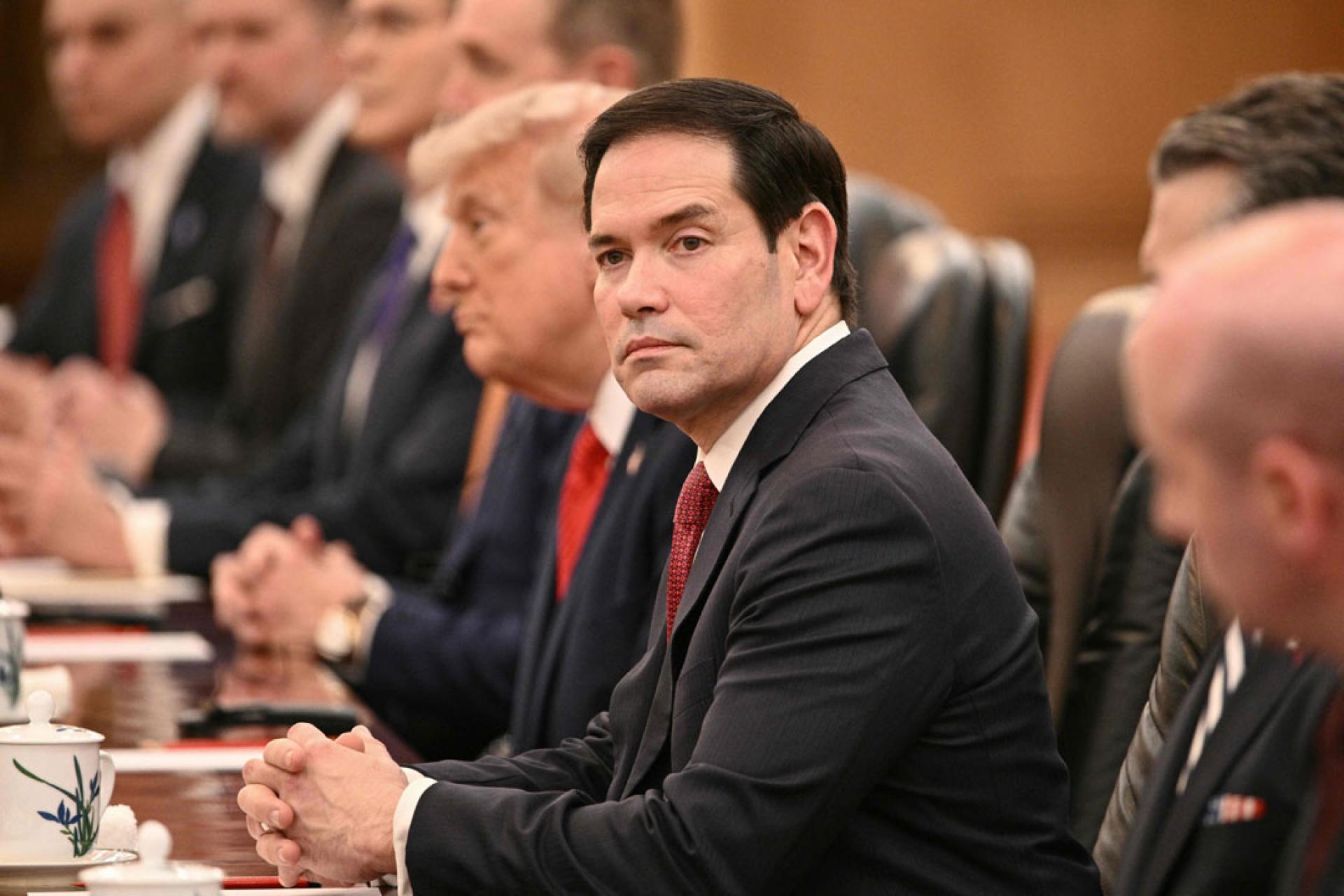
After the meeting between the heads of state of China and the United States in Beijing, U.S. Secretary of State Rubio said that Beijing raised the Taiwan issue during the talks, but the U.S. policy toward Taiwan has not changed.
After the more than two-hour meeting between Xi Jinping and Trump at the Great Hall of the People in Beijing on the 14th, the Chinese statement showed that Xi Jinping emphasized in the meeting that the Taiwan issue is the most important issue in China-U.S. relations. "If handled well, the bilateral relationship can remain generally stable; if not, the two countries will collide or even conflict, pushing the entire China-U.S. relationship into a very dangerous situation."
However, the summary of the meeting released by the White House did not mention the Taiwan issue.
In an exclusive interview with NBC on the 14th, Rubio said he believed China favored peaceful unification with Taiwan and that it would be an extremely serious mistake for China to use force against Taiwan. He stated that the U.S. policy toward Taiwan "has not changed" and that U.S. arms sales to Taiwan "were not a key topic" at this Beijing 'Xi-Trump summit'.
Regarding Xi Jinping's warning that mishandling the Taiwan issue would lead to China-U.S. collision or even conflict, Rubio said that China always brings up the Taiwan topic during talks. "Our policy toward Taiwan has not changed so far; under several presidents, the U.S. government has been quite consistent on this matter, and it remains consistent now."
Rubio warned that if China seizes Taiwan by force, it will be "an extremely serious mistake." He said, "From our perspective, any change to the current status in cross-strait relations is not beneficial to either (China or the U.S.)."
Rubio said, "I believe China is more likely to prefer that Taiwan willingly joins them; in an ideal situation, what China wants is for Taiwan to agree to merge with China through some form of vote or referendum."
●“Beijing’s Military Build-Up Not Only for Taiwan”
Rubio also said that, as part of Xi Jinping's broader push for China’s modernization, Beijing has ramped up military pressure on Taiwan.
Rubio noted that China's military growth over the past decade has been unprecedented; according to Pentagon data, China’s navy alone now surpasses the U.S. Navy in the number of ships, and Beijing has invested tens of billions of dollars into its naval system.
But Rubio believes Beijing’s military build-up is not solely for the Taiwan issue—their ultimate goal is to be able to project power globally like the United States.
When asked whether Chinese President Xi Jinping asked U.S. President Trump to stop selling arms to Taiwan, Rubio said this issue had come up in the past, but "was not a focus of today's talks."
He also pointed out that U.S. arms sales to Taiwan are "a matter decided by the president," and that Congress also plays a certain role in the relevant process.