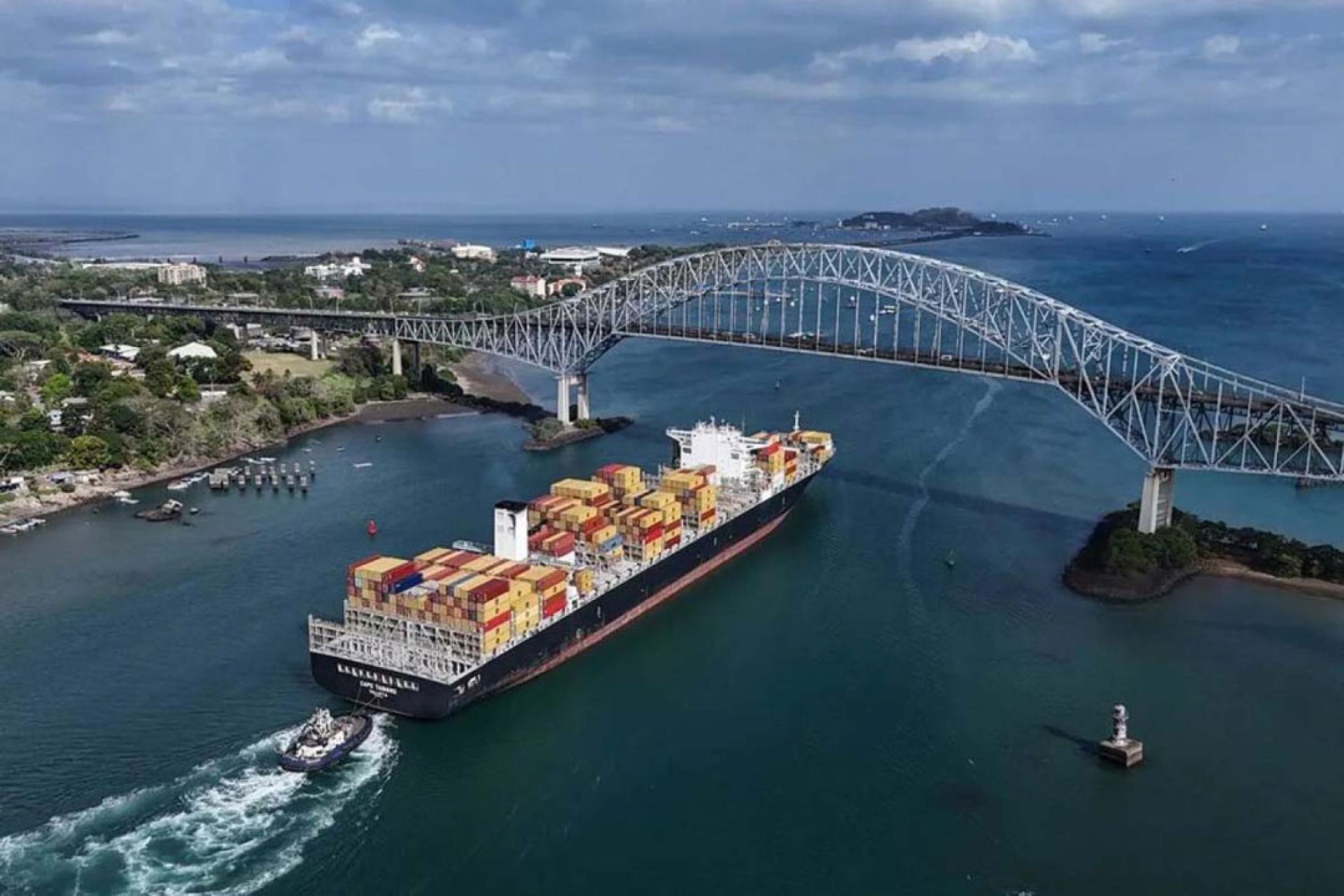
According to shipping media Lloyd's List, Chinese ports detained 28 Panama-flagged vessels—accounting for 75.7% of all detentions—from March 8 to 12, far exceeding historical levels. This move appears to be Beijing's latest retaliatory action after Panama's government revoked Hong Kong's CK Hutchison Group's operations at two Panamanian ports.
Lloyd's List cited sources in its report on the 13th, noting that Chinese maritime authorities have issued verbal instructions to step up inspections on Panama-flagged vessels. The first week has been characterized as a trial phase, with further escalation expected.
The report said that after Panama took over CK Hutchison's assets at the Balboa and Cristóbal ports at the two ends of the Panama Canal, Beijing appears to be leveraging Port State Control (PSC) inspections as a pressure tactic.
After Panama's takeover, Danish shipping giant Maersk and Italian company Mediterranean Shipping Company were temporarily allowed to operate the relevant ports.
In response to Lloyd's List's report that China detained 28 Panama-flagged vessels from March 8 to 12, the Chinese maritime information consulting platform “Xinde Maritime” posted on the evening of the 16th that no detailed list of vessels, specific port distribution, or official statistics from Chinese authorities has been released so far.
However, Xinde Maritime pointed out that the Panama ship registry has indeed recently issued a risk advisory regarding PSC inspections by Chinese maritime authorities, indicating the risk level has now risen to the point where a dedicated advisory for shipowners and managers is needed.
Xinde Maritime's analysis suggests this advisory indicates at least two things. First, the Panama ship registry itself acknowledges that Panama-flagged vessels face relatively frequent and noteworthy detainable deficiencies during PSC checks by Chinese authorities. Second, this risk did not only emerge with the publicity in mid-March, but the Panama registry had already begun documenting and responding at an earlier stage. In other words, there may be both sudden political factors at play this time and preexisting pressures related to PSC compliance management for Panama-flagged vessels.