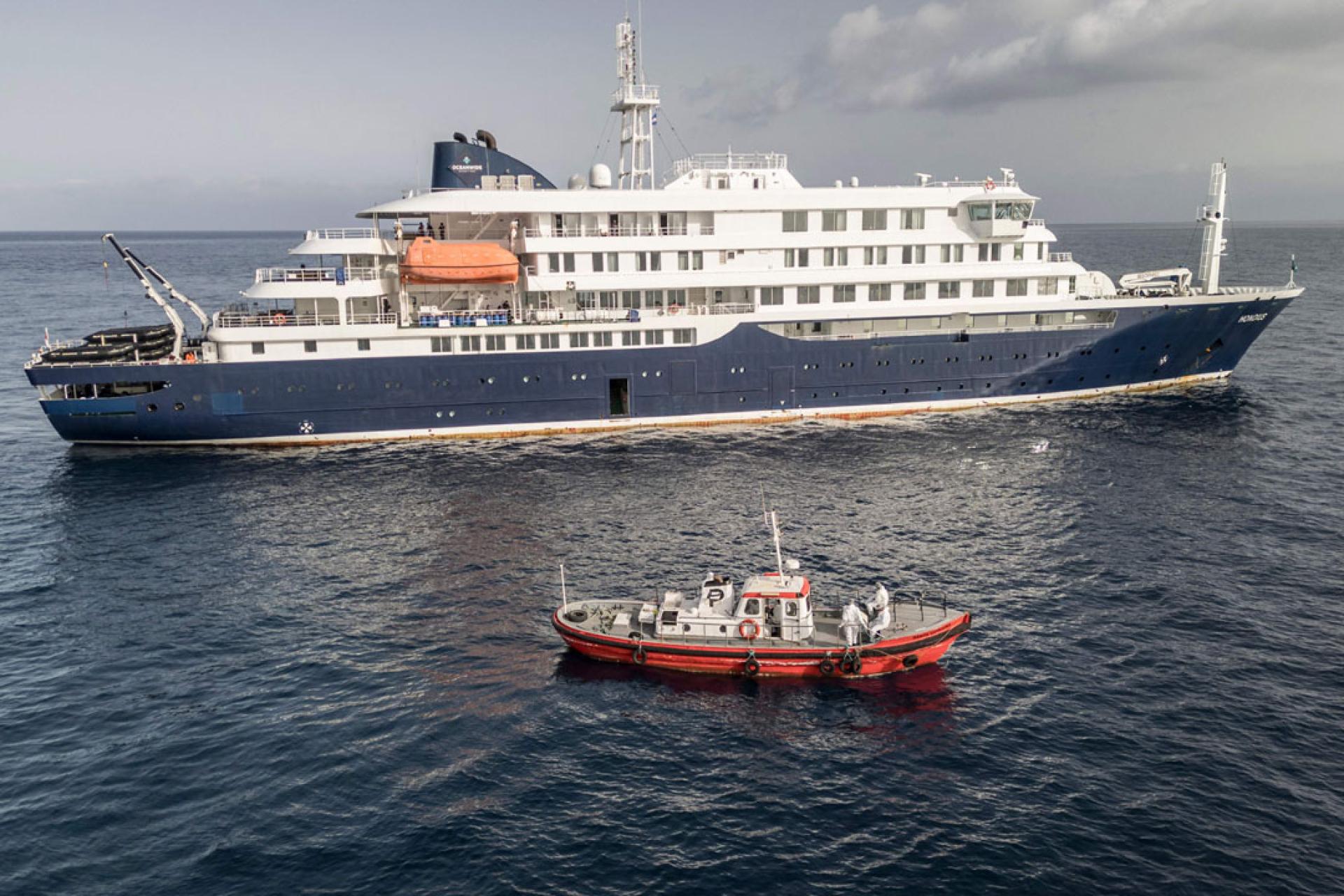
Maria Van Kerkhove, Acting Director of the Epidemic and Pandemic Preparedness and Prevention Department at the World Health Organization (WHO), stated on the 5th that there may have been a certain degree of human-to-human transmission of the hantavirus on the 'Hondius' cruise ship.
At a press conference, she pointed out that the cruise ship stopped at several islands along the coast of Africa, and some of these islands have many rodents. Therefore, for some suspected cases, the source of infection may have come from these islands. “But in any case, we do believe that among extremely close contacts, such as couples or people living in the same cabin, there may have been a certain degree of human-to-human transmission.”
Hantavirus is mainly carried by rodents, and humans are usually infected through contact with urine, feces, or saliva of infected rodents. Human-to-human transmission of the virus is rare, but there have been limited transmissions among close contacts in past outbreaks.
As for the suspected source of this outbreak, Van Kerkhove said the first confirmed patients were a couple who boarded the cruise ship in Argentina.
She said that as of the 5th, seven out of nearly 150 passengers and crew on the cruise ship had reported illness, three of whom have died. One patient is receiving intensive care treatment in South Africa and is currently improving, while two patients on board are preparing to be transferred to the Netherlands for treatment.
Spain Agrees to Receive Affected Cruise Ship Personnel in the Canary Islands
The Spanish Ministry of Health stated on the 5th that Spain, based on international law and humanitarian principles, will receive the affected 'Hondius' cruise ship in the country’s Canary Islands in the Atlantic Ocean.
In an announcement, the Spanish Ministry of Health said that after coordination with the European Union, the World Health Organization had requested the Spanish government to receive the affected cruise ship. The ship is currently located in waters near Cape Verde, an African country.
The announcement pointed out that the European Centre for Disease Prevention and Control is conducting a comprehensive assessment of the situation on board to determine which individuals need to be urgently transferred at Cape Verde. The remaining personnel on board will continue on to the Canary Islands, with arrival expected in 3 to 4 days; the specific port of call has yet to be determined.
According to the arrangement, after the cruise ship arrives, Spanish officials will conduct medical examinations of the crew and passengers, and, under specially arranged facilities and transportation systems, handle and transfer them, with the entire process aiming to prevent contact with local residents. These measures will be implemented according to case and contact management protocols developed by the WHO and ECDC to ensure safety.
The Spanish government stated that more details of the plan will be announced once clarified by the WHO and ECDC, and will promptly update on progress in implementation.
The announcement pointed out that Cape Verde does not have the capacity to carry out the above-mentioned measures, and the Canary Islands are the nearest location with relevant capabilities. Spain believes it has a responsibility to provide necessary humanitarian assistance to the affected individuals.
This cruise ship is operated by a Dutch company. At the request of the Dutch government, a seriously ill doctor on board will be transferred by medical aircraft to the Canary Islands for treatment on the 5th.