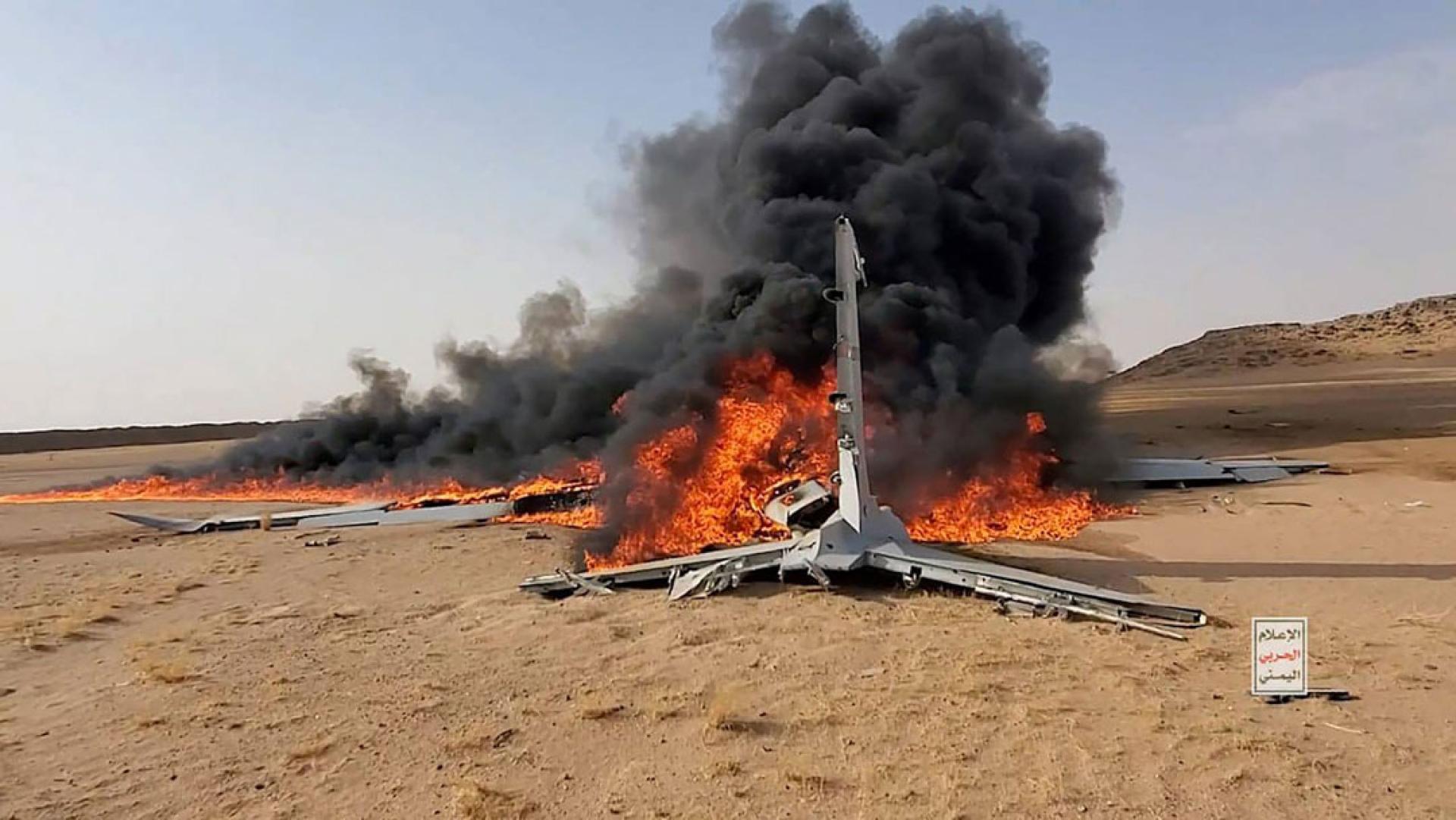
The Yemeni government has issued a warning that, as the Iran-backed Yemeni rebel group 'Ansar Allah' (Houthi movement) steps up attacks on Saudi oil facilities and enforces a maritime blockade, it is prepared to respond to an escalation of conflict. Observers are concerned that the actions of the 'Ansar Allah' may open up a new front for a broader regional conflict and threaten the safety of shipping in the Red Sea.
According to AFP, the internationally recognized Yemeni government stated on the 27th that in the wake of attacks and a maritime blockade carried out by the Iran-backed 'Ansar Allah' (Houthi) rebels against Saudi Arabia, they are ready for a possible escalation in their conflict with the group.
There is mounting concern that renewed conflict between Saudi Arabia and the 'Ansar Allah' will further undermine stability on the Arabian Peninsula and exacerbate existing issues in the region.
At a press conference in the Saudi capital Riyadh, incoming Yemeni Foreign Minister Zuba said, "In short, we are ready for any escalation."
Zuba noted that the Yemeni government is increasingly worried that this Tehran-supported rebel group is replicating Iran’s strategy in the Strait of Hormuz to gain control over the Bab al-Mandeb Strait, a crucial gateway leading to Yemen's Red Sea coastline.
Since maritime traffic was largely halted due to fighting in the Strait of Hormuz, Bab al-Mandeb has remained a critical channel for Saudi Arabia to export crude oil to international markets.
'Ansar Allah' (the Houthi movement) announced last week that it was imposing a maritime blockade on Saudi Arabia, and claimed to have launched attacks against Saudi oil tankers and oil infrastructure.
Zuba stated, “'Ansar Allah' wants to replicate Iran's experience in the Strait of Hormuz,” adding that the actions of the rebels and Iran in the region are “closely coordinated.”
Since Yemen’s civil war erupted in 2015, a Saudi-led military coalition has provided support to the Yemeni government in fighting the 'Ansar Allah' movement. This latest round of direct clashes between Saudi Arabia and 'Ansar Allah' marks the first such direct attacks in years and threatens the ceasefire agreement reached in 2022, which has technically lapsed but largely held until now.
● The strait is 115 km long and 36 km wide
The Bab al-Mandeb Strait is located between Yemen on the Arabian side of the Red Sea and Djibouti and Eritrea on the African side. Ships traveling from the Indian Ocean and the Gulf of Aden to the Suez Canal must pass through this strait.
The strait is 115 kilometers in length and 36 kilometers wide. Since the opening of the Suez Canal in 1869, it has become an indispensable part of global trade, forming the shortest maritime route between Europe and Asia.
The Red Sea shipping corridor is now one of the world’s busiest maritime routes, with about a quarter of global seaborne traffic passing through.
The Strait of Hormuz, already effectively closed due to conflict, is responsible for around 20% of the world’s oil shipments. Should the Bab al-Mandeb Strait be closed, another 12% of the world’s oil shipping would also be disrupted.