ALOR GAJAH, April 25 (Bernama) -- The implementation of the National Water Policy will focus on key challenges in the water sector, including reducing the high level of non-revenue water (NRW) at the national level.
Deputy Prime Minister Datuk Seri Fadillah Yusof said the current average NRW rate stands at about 33.4 per cent, and the government aims to reduce it to 28 per cent through a more comprehensive and integrated approach to ensure the country does not face water scarcity issues as experienced by some countries.
He said the policy encompasses planning at both federal and state levels, while emphasising the overall management of water resources, including distribution and supply system efficiency.
“The national water policy involves planning at both the federal and state levels. We are looking at the overall water ecosystem and how to manage this resource more efficiently, including addressing the challenges of NRW.
“We want to ensure that water is safe, clean and, most importantly, affordable. That is why we must also protect our water resources, as we do not want a situation where the country has water but requires extensive processing, making it expensive,” he said at a press conference here today.
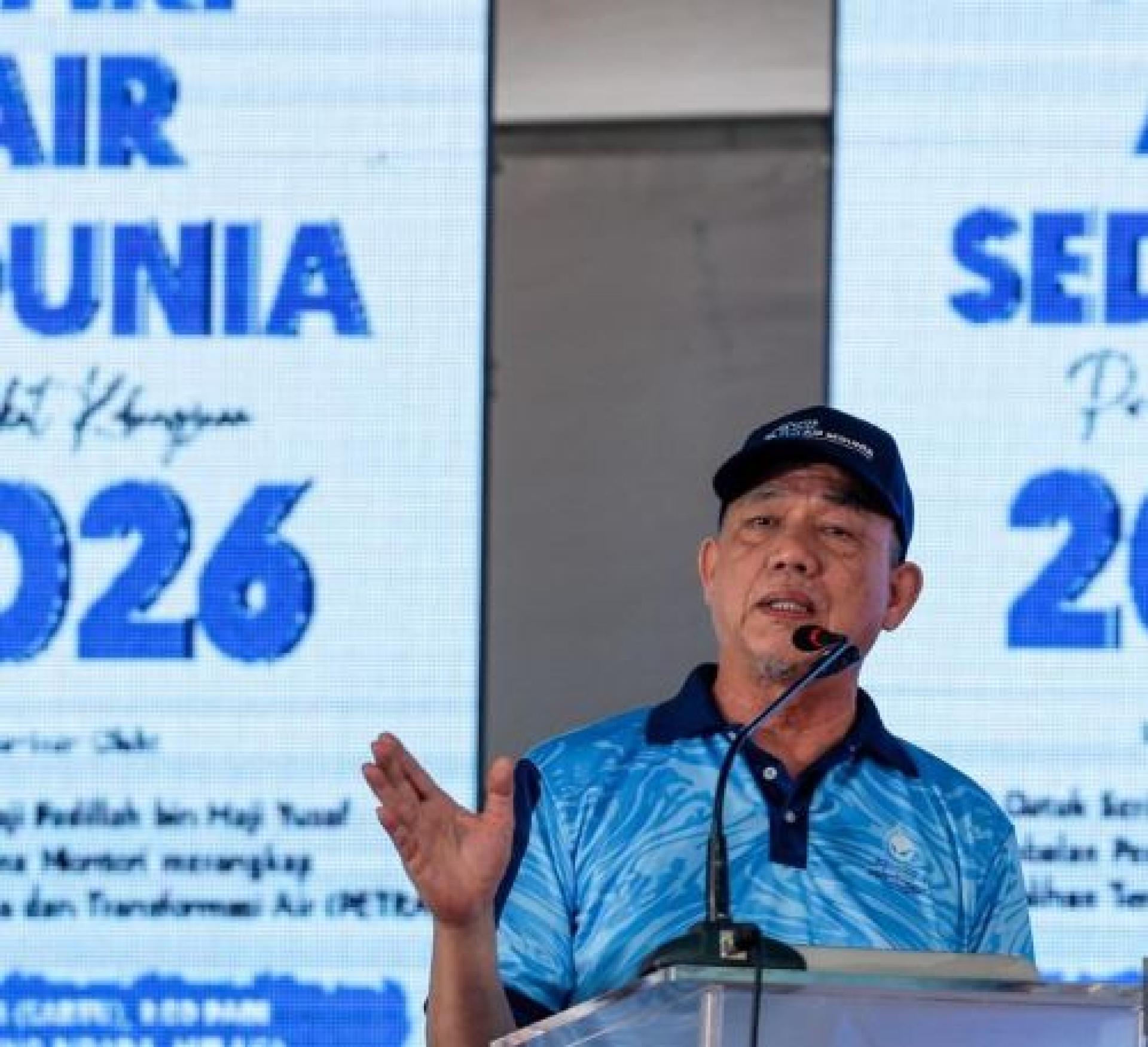
Earlier, Fadillah, who is also Minister of Energy Transition and Water Transformation, officiated the National-level World Water Day 2026 celebration at Tanjung Bidara, Masjid Tanah, which was also attended by Melaka Chief Minister Datuk Seri Ab Rauf Yusoh.
He said among the measures taken is the provision of matching grants to states that successfully reduce NRW rate below the set threshold, based on their level of achievement.
“This means states must first implement the measures, and if they succeed in reducing NRW levels, the government will reimburse the allocation based on their percentage of achievement. If they achieve 75 per cent, we will return 75 per cent; if 50 per cent, then 50 per cent,” he said.
Elaborating further, Fadillah said states recording high NRW levels include Kelantan, Kedah, Sabah and Sarawak.
Meanwhile, he said the government will establish a special task force to monitor the implementation of all water-related projects to ensure they are carried out more effectively.
“We are aware there are challenges in project implementation, so this task force will ensure close monitoring and that any issues can be resolved promptly,” he said.
He said the policy encompasses planning at both federal and state levels, while emphasising the overall management of water resources, including distribution and supply system efficiency.
“The national water policy involves planning at both the federal and state levels. We are looking at the overall water ecosystem and how to manage this resource more efficiently, including addressing the challenges of NRW.
“We want to ensure that water is safe, clean and, most importantly, affordable. That is why we must also protect our water resources, as we do not want a situation where the country has water but requires extensive processing, making it expensive,” he said at a press conference here today.
Earlier, Fadillah, who is also Minister of Energy Transition and Water Transformation, officiated the National-level World Water Day 2026 celebration at Tanjung Bidara, Masjid Tanah, which was also attended by Melaka Chief Minister Datuk Seri Ab Rauf Yusoh.
He said among the measures taken is the provision of matching grants to states that successfully reduce NRW rate below the set threshold, based on their level of achievement.
“This means states must first implement the measures, and if they succeed in reducing NRW levels, the government will reimburse the allocation based on their percentage of achievement. If they achieve 75 per cent, we will return 75 per cent; if 50 per cent, then 50 per cent,” he said.
Elaborating further, Fadillah said states recording high NRW levels include Kelantan, Kedah, Sabah and Sarawak.
Meanwhile, he said the government will establish a special task force to monitor the implementation of all water-related projects to ensure they are carried out more effectively.
“We are aware there are challenges in project implementation, so this task force will ensure close monitoring and that any issues can be resolved promptly,” he said.