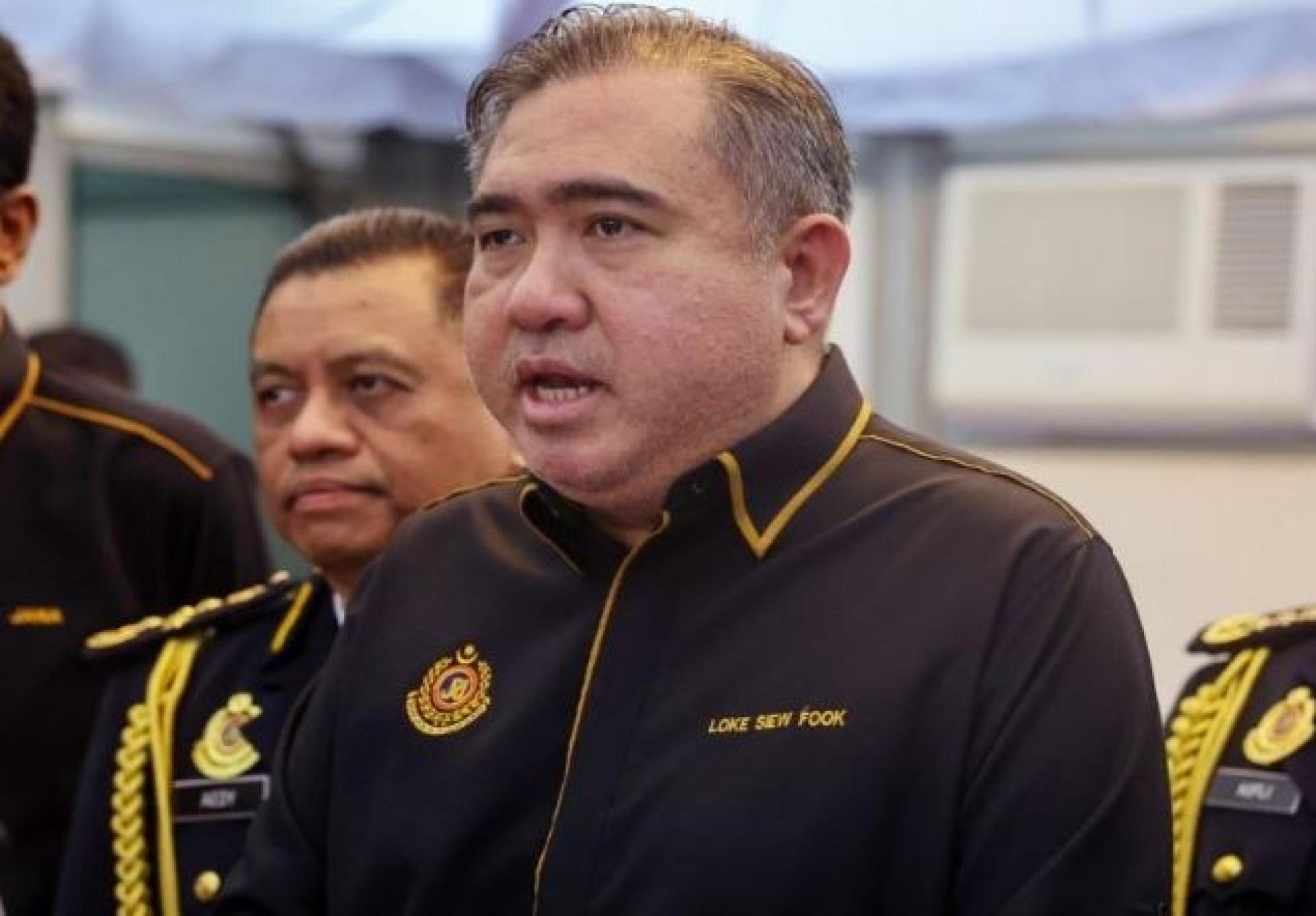
BATU KAWAN, April 25 (Bernama) -- The Transport Ministry (MoT) has proposed to the National Economic Action Council (MTEN) secretariat a mechanism to reduce road tax rates for diesel vehicles to help ease the burden on the public following rising fuel costs.
Its minister, Anthony Loke Siew Fook said the proposal is in line with the government’s efforts to adopt a more comprehensive approach to assist diesel vehicle owners affected by changes in fuel prices.
He said diesel prices are currently set on a floating basis to ensure market transparency and curb leakages and smuggling activities.
“Our policy is to float diesel prices, except for groups receiving subsidies, as setting prices below market levels would lead to more smuggling.
“To help diesel vehicle owners, we currently provide the BUDI Diesel Individual subsidy of up to RM400 a month, while bus and lorry operators receive subsidies through the fleet card system.
“For those who do not receive such assistance, we are looking at ways to help, including reducing road tax,” he said at the 80th anniversary celebration of the Road Transport Department (JPJ) and the JPJ MADANI Mega Carnival at the State Stadium grounds here today.
The event was officiated by Prime Minister Datuk Seri Anwar Ibrahim and was also attended by Penang Chief Minister Chow Kon Yeow, Chief Secretary to the Government Tan Sri Shamsul Azri Abdul Bakar and JPJ director-general Datuk Aedy Fadly Ramli.
Also launched at the event was the new version of the MyJPJ mobile application, an integrated platform offering various JPJ services in a more modern, efficient and user-friendly format.
National songstress Datuk Seri Siti Nurhaliza Tarudin was also named ‘Road Safety Icon’.
Loke said further studies are being carried out to assess the implications of the proposal, including the appropriate reduction rate and its impact on government revenue, with an announcement expected soon.
Earlier, Anwar said the government is considering reducing road tax for diesel vehicles in the near future to ease the burden on the public following the increase in fuel prices.
He said MoT has been tasked with identifying a suitable mechanism, taking into account the impact of higher diesel prices on affected users, particularly sectors that still rely on diesel vehicles.
He said diesel prices are currently set on a floating basis to ensure market transparency and curb leakages and smuggling activities.
“Our policy is to float diesel prices, except for groups receiving subsidies, as setting prices below market levels would lead to more smuggling.
“To help diesel vehicle owners, we currently provide the BUDI Diesel Individual subsidy of up to RM400 a month, while bus and lorry operators receive subsidies through the fleet card system.
“For those who do not receive such assistance, we are looking at ways to help, including reducing road tax,” he said at the 80th anniversary celebration of the Road Transport Department (JPJ) and the JPJ MADANI Mega Carnival at the State Stadium grounds here today.
The event was officiated by Prime Minister Datuk Seri Anwar Ibrahim and was also attended by Penang Chief Minister Chow Kon Yeow, Chief Secretary to the Government Tan Sri Shamsul Azri Abdul Bakar and JPJ director-general Datuk Aedy Fadly Ramli.
Also launched at the event was the new version of the MyJPJ mobile application, an integrated platform offering various JPJ services in a more modern, efficient and user-friendly format.
National songstress Datuk Seri Siti Nurhaliza Tarudin was also named ‘Road Safety Icon’.
Loke said further studies are being carried out to assess the implications of the proposal, including the appropriate reduction rate and its impact on government revenue, with an announcement expected soon.
Earlier, Anwar said the government is considering reducing road tax for diesel vehicles in the near future to ease the burden on the public following the increase in fuel prices.
He said MoT has been tasked with identifying a suitable mechanism, taking into account the impact of higher diesel prices on affected users, particularly sectors that still rely on diesel vehicles.