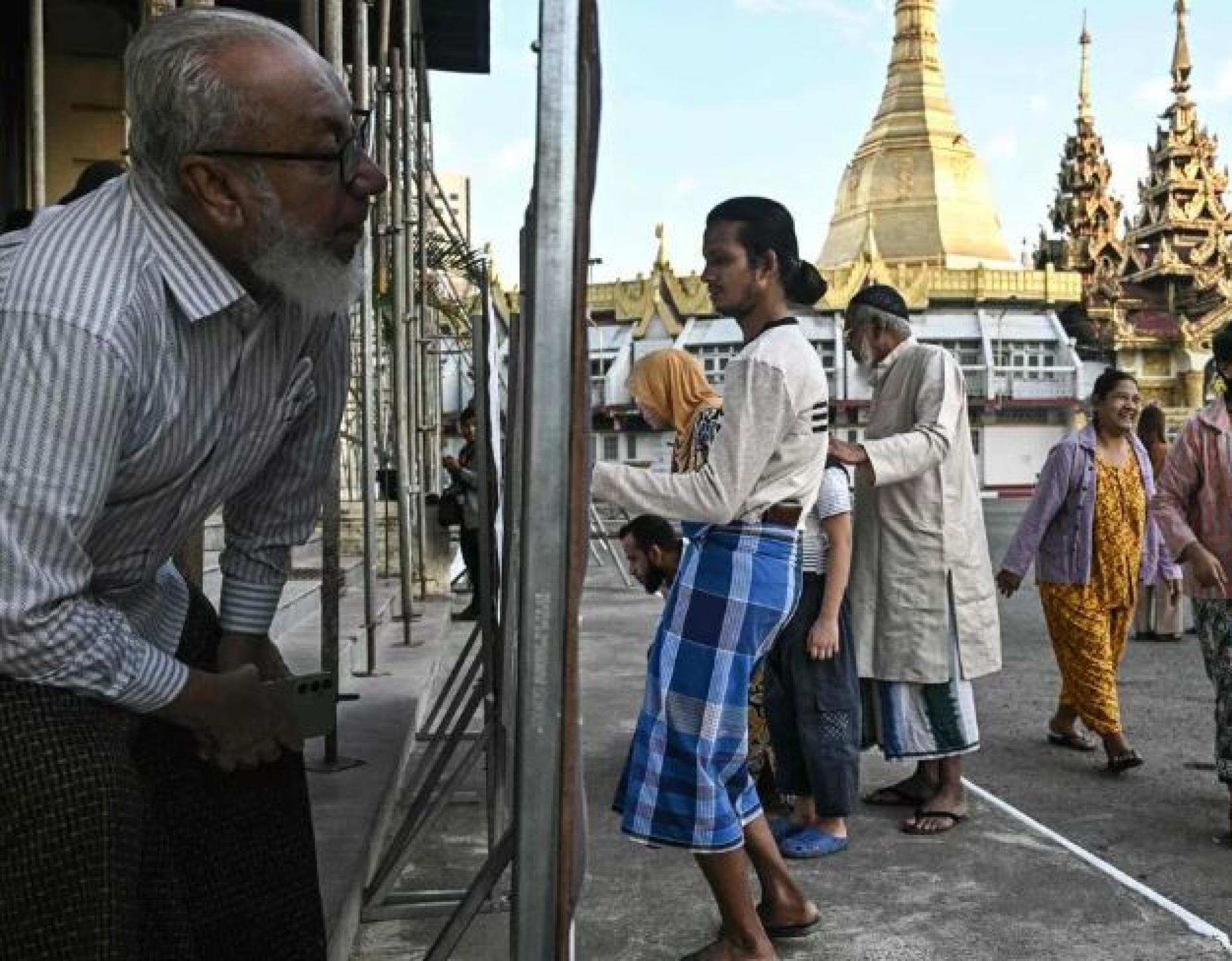
(Yangon, 29th, Comprehensive News)—Against the backdrop of ongoing civil war and international skepticism about the credibility of its election, Myanmar officially launched the first phase of its general elections on December 28. Public and frontline observations indicate a subdued voting atmosphere, with initial turnout rates significantly lower than the same period during the 2020 elections.
The first phase of voting started at 6 a.m. local time and ended at 4 p.m. This election stands in stark contrast to the fervent scenes of long queues in 2020. Voting stations in many areas saw sparse crowds, and in some cities, stations even appeared empty.
Acting President and Commander-in-Chief of the Defense Forces Min Aung Hlaing, dressed in plain clothes, voted under heavy security in Nay Pyi Taw and displayed his inked finger to the media after casting his ballot. He stressed that the military-led election was “free and fair,” and stated that the military would not allow its reputation to be tarnished.
Government spokesman Zaw Min Tun also reiterated that the election was being held for the Myanmar people, aiming to restart democratic institutions and revive political and economic activity. However, the United States and multiple human rights organizations and international agencies have criticized this election for “lacking freedom, fairness, and inclusivity,” as parties opposing the military government were not permitted to participate.
The United Nations Myanmar office issued a statement noting that Myanmar’s future should be determined by a “free, fair, inclusive and credible process” that truly reflects the will of the people.
According to disaster relief officials and local polling staff, at one Yangon polling station with approximately 1,700 registered voters, only 470 cast ballots—a turnout of less than 28%. In interviews, residents of major cities such as Yangon and Mandalay said they had not observed the military forcing people to vote, but noted that the election “lacked energy and passion.”
In Hakha, capital of northern Chin State, local armed groups called for a boycott, resulting in eerily quiet city streets. Several residents said they were uninterested in the election, bluntly stating that “nobody went to vote.”
Analysts believe Min Aung Hlaing may assume the position of president after the election, or continue to control the transitional government in his military role. Lalida, a Myanmar affairs expert at Thailand’s Kasetsart University, noted that the military-backed Union Solidarity and Development Party (USDP) is expected to win and may form a new government in coalition with allied parties.
Advance ballot counting began on December 26. An official media editorial described this election as a bridge to a prosperous future for the people, urging citizens to “create their own destiny with their own efforts.”
The second and third phases of Myanmar’s general election are scheduled to take place on January 11 and January 25, 2026, respectively.
Acting President and Commander-in-Chief of the Defense Forces Min Aung Hlaing, dressed in plain clothes, voted under heavy security in Nay Pyi Taw and displayed his inked finger to the media after casting his ballot. He stressed that the military-led election was “free and fair,” and stated that the military would not allow its reputation to be tarnished.
Government spokesman Zaw Min Tun also reiterated that the election was being held for the Myanmar people, aiming to restart democratic institutions and revive political and economic activity. However, the United States and multiple human rights organizations and international agencies have criticized this election for “lacking freedom, fairness, and inclusivity,” as parties opposing the military government were not permitted to participate.
The United Nations Myanmar office issued a statement noting that Myanmar’s future should be determined by a “free, fair, inclusive and credible process” that truly reflects the will of the people.
According to disaster relief officials and local polling staff, at one Yangon polling station with approximately 1,700 registered voters, only 470 cast ballots—a turnout of less than 28%. In interviews, residents of major cities such as Yangon and Mandalay said they had not observed the military forcing people to vote, but noted that the election “lacked energy and passion.”
In Hakha, capital of northern Chin State, local armed groups called for a boycott, resulting in eerily quiet city streets. Several residents said they were uninterested in the election, bluntly stating that “nobody went to vote.”
Analysts believe Min Aung Hlaing may assume the position of president after the election, or continue to control the transitional government in his military role. Lalida, a Myanmar affairs expert at Thailand’s Kasetsart University, noted that the military-backed Union Solidarity and Development Party (USDP) is expected to win and may form a new government in coalition with allied parties.
Advance ballot counting began on December 26. An official media editorial described this election as a bridge to a prosperous future for the people, urging citizens to “create their own destiny with their own efforts.”
The second and third phases of Myanmar’s general election are scheduled to take place on January 11 and January 25, 2026, respectively.