Miri Cultural Festival Boosts Economy – Gawai Bazaar Generates RM1.8 Million
Published atMay 05, 2026 10:32 am
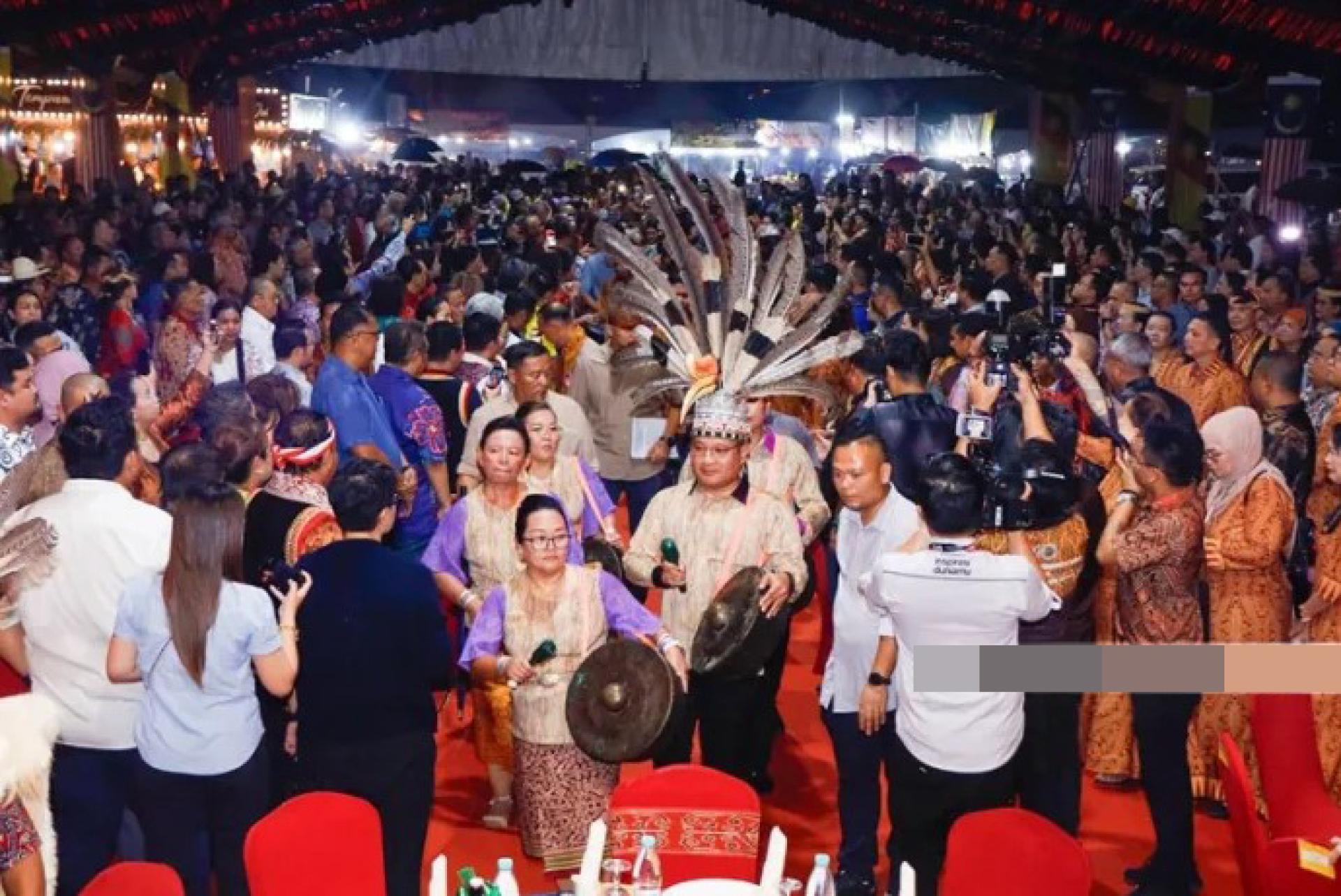
(Miri, 5th) The Gawai Dayak Bazaar and Ethnocultural Festival, held this year at Permyjaya New Township in Miri, is expected to generate up to RM1.8 million in income, mainly due to an enthusiastic public response and the participation of over 70 vendors. Deputy Premier of Sarawak Datuk Seri Douglas stated that this projected growth demonstrates the expanding economic impact of cultural festivals in Sarawak, serving not only as a driver of tourism but also as an important platform for strengthening unity and cultural identity. He pointed out that this figure is higher than the RM1.3 million recorded previously in Kuching, reflecting a more positive market response. Even with less favorable weather conditions, cultural tourism activities continue to grow.
He made these remarks while officiating the opening ceremony on Monday (May 4), which was also broadcast live via the UKAS channel. Douglas said that besides generating income, the bazaar also provides an important platform for small traders and entrepreneurs to increase their earnings and expand market coverage, including gradually adopting business digitalization in line with the "Post COVID-19 Development Strategy 2030 (PCDS 2030)". He added that the Sarawak government rotating the venue of the Gawai celebration to Miri is part of a "decentralization" strategy for cultural events, allowing more regions to share in the benefits of tourism and economic development, rather than concentrating solely in Kuching. He said that this approach helps promote more inclusive regional development and gives different areas the opportunity to host large-scale state events.
Regarding community involvement, he noted that the success of this event relied on close cooperation between NGOs and local communities, fully embodying the spirit of “Segulai Sejalai” (Together in Unity). He also emphasized that the meaning of the ethnocultural festival goes beyond performances and traditional costumes, encompassing broader cultural elements such as the lifestyles, values, history, and identities of Sarawak’s diverse ethnic groups. Moreover, he pointed out that traditional cultural expressions—including the Iban ngajat dance, Ulu performances, weaving crafts, and ethnic cuisine—have tremendous potential to be further developed as tourism products and economic assets. 开幕仪式现场人潮涌动。
This article has been translated using our AI technology. While we strive for accuracy,
AI translations
may contain errors. For the most precise information, please refer to the original article.
于2026年5月4日抵达美里柏迈再也达雅节集市与民族文化节会场。-fhd.jpg)