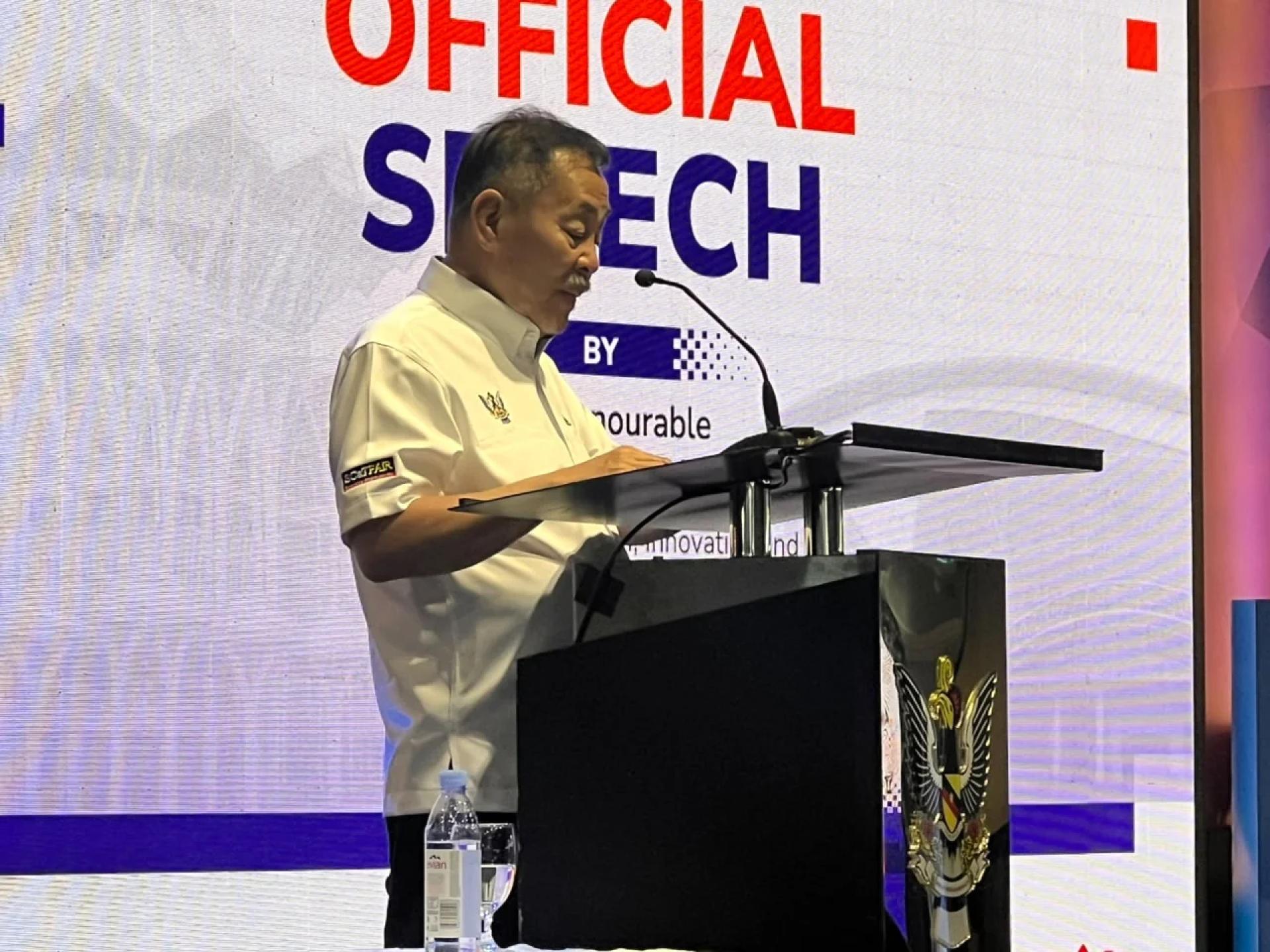
KUCHING: Sarawak is undertaking a comprehensive study of its Talent Development Policy as the state works towards producing 500,000 skilled workers by 2030 to meet growing industry demands.
Minister of Education, Innovation and Talent Development Datuk Seri Roland Sagah Wee Inn said the study would provide a data-driven roadmap to strengthen Sarawak’s talent ecosystem and ensure workforce development remains aligned with economic priorities under the Post-COVID-19 Development Strategy (PCDS) 2030.
He said the ministry is working closely with industries, training institutions and public agencies to equip young Sarawakians with skills required in emerging sectors.
“Our targets are clear. We want to develop 500,000 skilled workers, and we are putting in place the policies and programmes needed to achieve that goal,” he said during the launch of the 12th Sarawak Career and Training (SCaT) Fair at the Hikmah Exchange Event Centre today (June 6).
Sagah said Sarawak’s future workforce strategy is supported by investments in Science, Technology, Engineering and Mathematics (STEM) education, digital literacy and English language proficiency.
He noted that the ministry has introduced robotics and innovation kits in selected schools throughout the state to expose students to technology from an early age and reduce disparities between urban and rural areas.
“These programmes ensure that all Sarawakian children, regardless of where they live, have access to opportunities to develop technological skills and innovative thinking,” he said.
Sagah said the state’s education initiatives have already enabled Sarawakian students to gain international recognition through achievements in global innovation and technology competitions.
He added that efforts to strengthen the talent pipeline are also supported by the Free Tertiary Education Scheme (FTES), Special Financial Assistance and Free Laptop and Book Voucher programmes introduced by the Sarawak Government.
“These initiatives are aimed at reducing financial barriers and ensuring that every Sarawakian has the opportunity to pursue quality higher education,” he said.
Sagah said demand for skilled workers continues to grow across sectors ranging from heavy industries in Samalaju and maritime activities in Miri and Sibu to the digital, aerospace and high-technology industries in Kuching.
He stressed that one of the state’s key challenges is ensuring graduates possess the skills required by industry.
“The task before us is to bridge the gap between workforce readiness and industry needs so that Sarawak can sustain its long-term economic growth,” he said.
He said the ministry is working closely with industries, training institutions and public agencies to equip young Sarawakians with skills required in emerging sectors.
“Our targets are clear. We want to develop 500,000 skilled workers, and we are putting in place the policies and programmes needed to achieve that goal,” he said during the launch of the 12th Sarawak Career and Training (SCaT) Fair at the Hikmah Exchange Event Centre today (June 6).
Sagah said Sarawak’s future workforce strategy is supported by investments in Science, Technology, Engineering and Mathematics (STEM) education, digital literacy and English language proficiency.
He noted that the ministry has introduced robotics and innovation kits in selected schools throughout the state to expose students to technology from an early age and reduce disparities between urban and rural areas.
“These programmes ensure that all Sarawakian children, regardless of where they live, have access to opportunities to develop technological skills and innovative thinking,” he said.
Sagah said the state’s education initiatives have already enabled Sarawakian students to gain international recognition through achievements in global innovation and technology competitions.
He added that efforts to strengthen the talent pipeline are also supported by the Free Tertiary Education Scheme (FTES), Special Financial Assistance and Free Laptop and Book Voucher programmes introduced by the Sarawak Government.
“These initiatives are aimed at reducing financial barriers and ensuring that every Sarawakian has the opportunity to pursue quality higher education,” he said.
Sagah said demand for skilled workers continues to grow across sectors ranging from heavy industries in Samalaju and maritime activities in Miri and Sibu to the digital, aerospace and high-technology industries in Kuching.
He stressed that one of the state’s key challenges is ensuring graduates possess the skills required by industry.
“The task before us is to bridge the gap between workforce readiness and industry needs so that Sarawak can sustain its long-term economic growth,” he said.