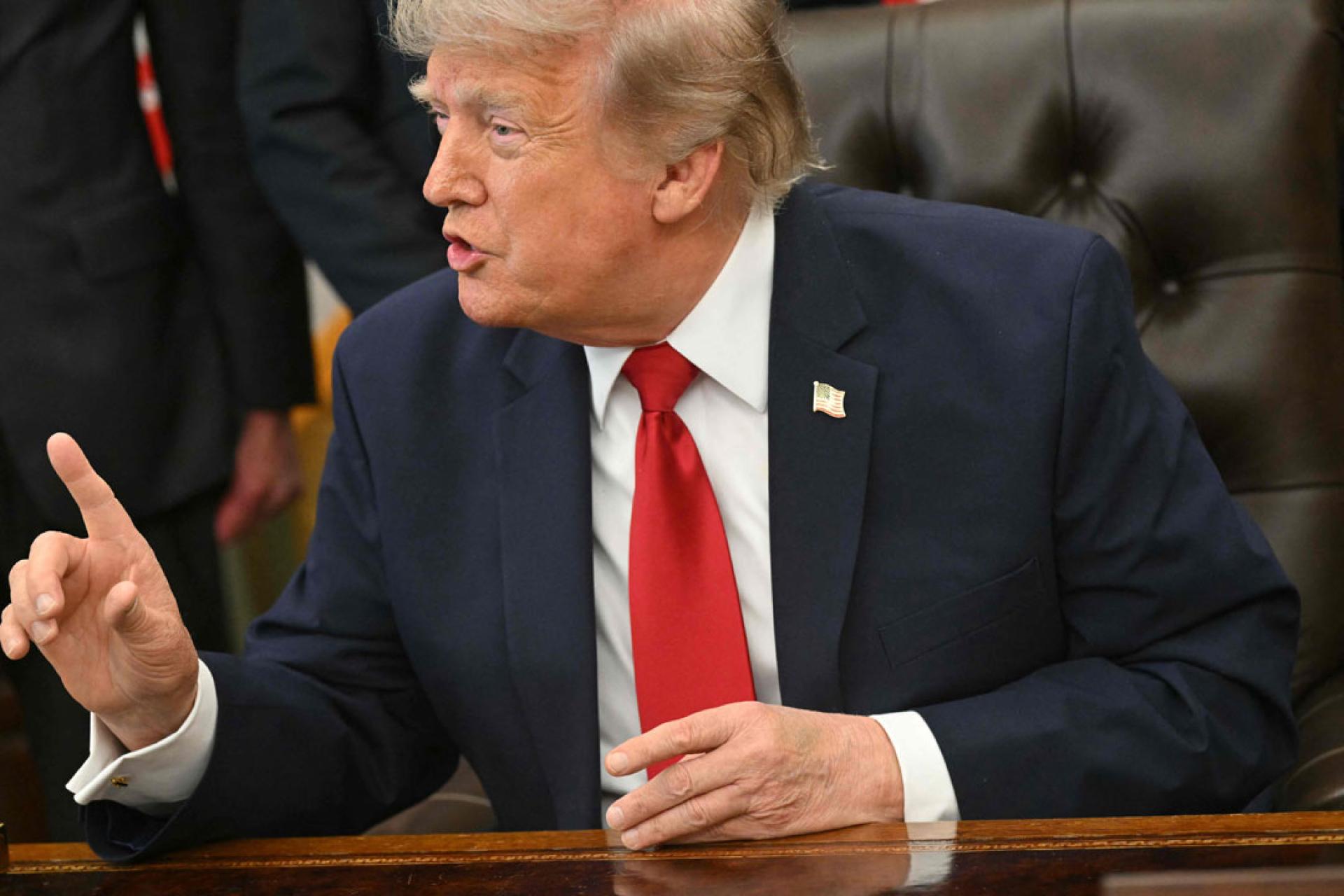
US President Trump stated on social media on the 13th that the United States will reinstate a maritime blockade against Iran, and will charge a 20% fee on all cargo transported through the Strait of Hormuz.
He pointed out that the Strait of Hormuz is currently open and will remain open regardless of Iran's participation.
He said: "We are restarting the 'Iran Blockade Order', so named because it only blocks Iranian ships or clients from entering and exiting the strait. All other countries can use the strait fairly and openly."
Trump stated that, effective immediately, the United States will be the guardian of the Strait of Hormuz and will collect a 20% fee on all cargo transported through the strait, with related procedures and deployments to start immediately.
Iran will always be the Strait's Guardian
On the 13th, Iranian Foreign Minister Aragchi said that Iran has always been the guardian of the Strait of Hormuz and will always be so.
In response to Trump's claim to impose a 20% fee on Hormuz Strait cargo transport, Aragchi posted on social media: "The US President is right—whoever secures the safety of shipping in the Strait of Hormuz deserves to charge for this service. Iran has always been the guardian of the strait, and will remain so in the future. But 20% is really too high; we will be fair."
The southern channel of the Strait is unsafe
The Iranian Embassy in the UK stated on social media on the 13th that the southern channel of the Strait of Hormuz is unsafe, unreliable, and accident-prone.
The Iranian Ambassador to the UK also serves as Iran's Permanent Representative to the International Maritime Organization.
The Iranian Embassy in the UK said that, in order to comply with the US-Iran Memorandum of Understanding, Iran has established a temporary maritime safety corridor that is free of technical and military obstacles, and has informed the International Maritime Organization. However, the United States is directing ships to a dangerous parallel route in the southern channel. This route is not only of questionable legality but is also unsafe, unreliable, and accident-prone."
The Iranian Embassy in the UK pointed out that US military attacks on Iranian ports and other acts of military aggression have turned the Strait of Hormuz into a highly tense and high-risk zone.
After the US-Iran Memorandum of Understanding was reached, the strait was divided into two navigation channels: the northern channel under Iran's control and the southern channel near Oman, where the US military provides navigation assistance.