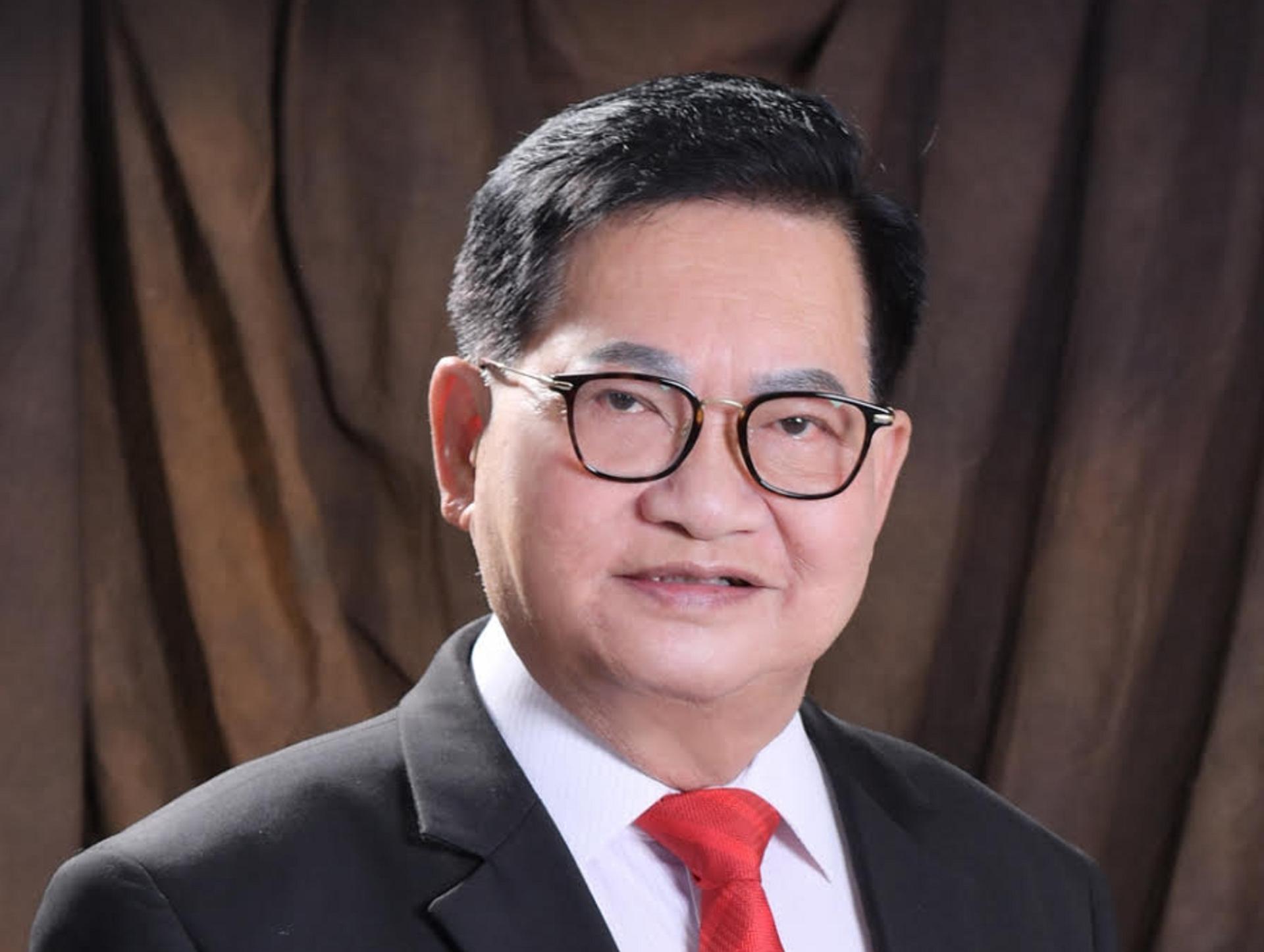
(Sibu, 15th) — In response to the Ministry of Education’s plan to discuss the feasibility of working from home and online teaching next week, Sarawak Chinese Association President and Sibu Chinese Chamber of Commerce President Dato Ng Boon Seng has strongly expressed his opposition.
He pointed out that what our country’s education system needs most at present is a stable, normal, and high-quality physical teaching environment, not a return to the online teaching model.
He emphasized that, under the current circumstances, reintroducing home-based learning (PdPR) is tantamount to “moving backwards,” which is detrimental to the development of national education and the physical and mental growth of students.
Ng stated that although the Ministry of Education is considering this policy due to government austerity measures and fluctuations in international oil prices triggered by the Middle East conflict, education issues cannot be taken into account merely for “cost-saving.”
He stressed that online teaching can only be an “emergency measure for extraordinary times” and must never become the norm.
Reflecting back to the worst stage of the COVID-19 pandemic, the government’s implementation of the Movement Control Order (MCO) and home-based learning was a last resort in a public health crisis—an emergency measure for extraordinary times. However, society has now fully returned to normal operations, and schools should continue to prioritize physical lessons to ensure students receive a comprehensive, systematic, and high-quality education.
“We suffered enough during the pandemic period.” Ng Boon Seng pointed out that the long-term online classes during the MCO exposed many problems:
- Significant reduction in learning effectiveness: Online teaching demands a high level of self-discipline from students. Many lagged seriously behind in their studies due to lack of supervision. For vocational and technical courses requiring practical operation, online learning simply cannot replace the hands-on guidance present in physical classes.
- Hidden threats to mental and physical health: Ng cited health research that shows looking at a screen for long periods not only worsens students’ myopia but also leads many children to become withdrawn and anxious due to lack of social interaction. He described it as “locking lively children into a digital cage.”
- Increased burden on parents: “During the MCO, how many parents had to work from home while serving as ‘teaching assistants’ and barely caught their breath?” Ng said that reinstating home-based learning would push dual-income families into a “nobody to supervise” predicament once again, affecting parents’ work and potentially causing tension in parent-child relationships.
- Aggravating educational inequality: Differences in network and device conditions made the urban-rural learning gap in resources even wider. Further, a prolonged lack of face-to-face interaction negatively impacted students’ psychological and social skills.
Ng lamented that many rural students had to climb mountains or trees for signal due to inadequate network infrastructure, just to participate in online classes. These heart-wrenching scenes truly reflect the numerous limitations of online teaching in our country’s reality.
“Education is not only about imparting knowledge; it is also about character development, discipline training, and social learning—areas that online teaching cannot fully replace.”
He emphasized that especially in rural and semi-rural areas, network infrastructure remains inadequate. If home-based learning is reintroduced, the urban-rural education divide will only widen further, greatly disadvantaging student development.
Ng understands the government’s pressure to introduce austerity policies in response to global events, but he stresses: “While saving expenses is important, it cannot come at the expense of the next generation’s education quality. Education is the foundation of the nation’s future and must be a policy priority.”
“Last time, it was because going out during the city lockdown could risk your life. There was simply no other way. Now, schools operate normally, and both teachers and students are back on track—so why should we take a step backwards?” he questioned.
He cited the current debate on remote learning in New York, USA, as an example, stating that even in technologically advanced Western countries, substantial data shows that remote learning led to a ‘cliff-like plunge’ in students’ math and reading scores, proving it to be a failed educational experiment.
Ng called on the Ministry of Education to listen carefully to grassroots voices, especially the opinions of parents and educational stakeholders, when making decisions.
“If the intention is to deal with rising fuel prices or fiscal pressure, the government should carry out more efficient administrative management and financial planning to trim costs, rather than passing the cost on to students by reducing physical teaching.”
He bluntly said that if the government truly wants to save, it should first review and streamline its bloated civil service, cut unnecessary bureaucratic layers, and improve administrative efficiency to lower expenditure—instead of sacrificing education quality as the price.
“Cost-cutting is fine, but never from children’s classrooms.”
Ng proposed that instead of exploring how to get students to study at home, resources should focus on improving the quality of physical teaching—by renovating dilapidated school facilities, strengthening teaching resources, and reducing teachers’ excessive non-teaching administrative workloads—so that teachers can concentrate on their core task of educating students.
He emphasized that schools are not just places for knowledge transmission, but also essential environments for children to learn social skills, develop discipline, and establish values. Any attempt to fully replace blackboards with screens is highly irresponsible to Malaysia’s future.
Education should not move backwards, and national development should never come at the cost of the next generation. I firmly oppose the normalization of home-based learning and urge the Ministry of Education to make the wisest decision in the upcoming Cabinet meeting, prioritizing the best interests of students.