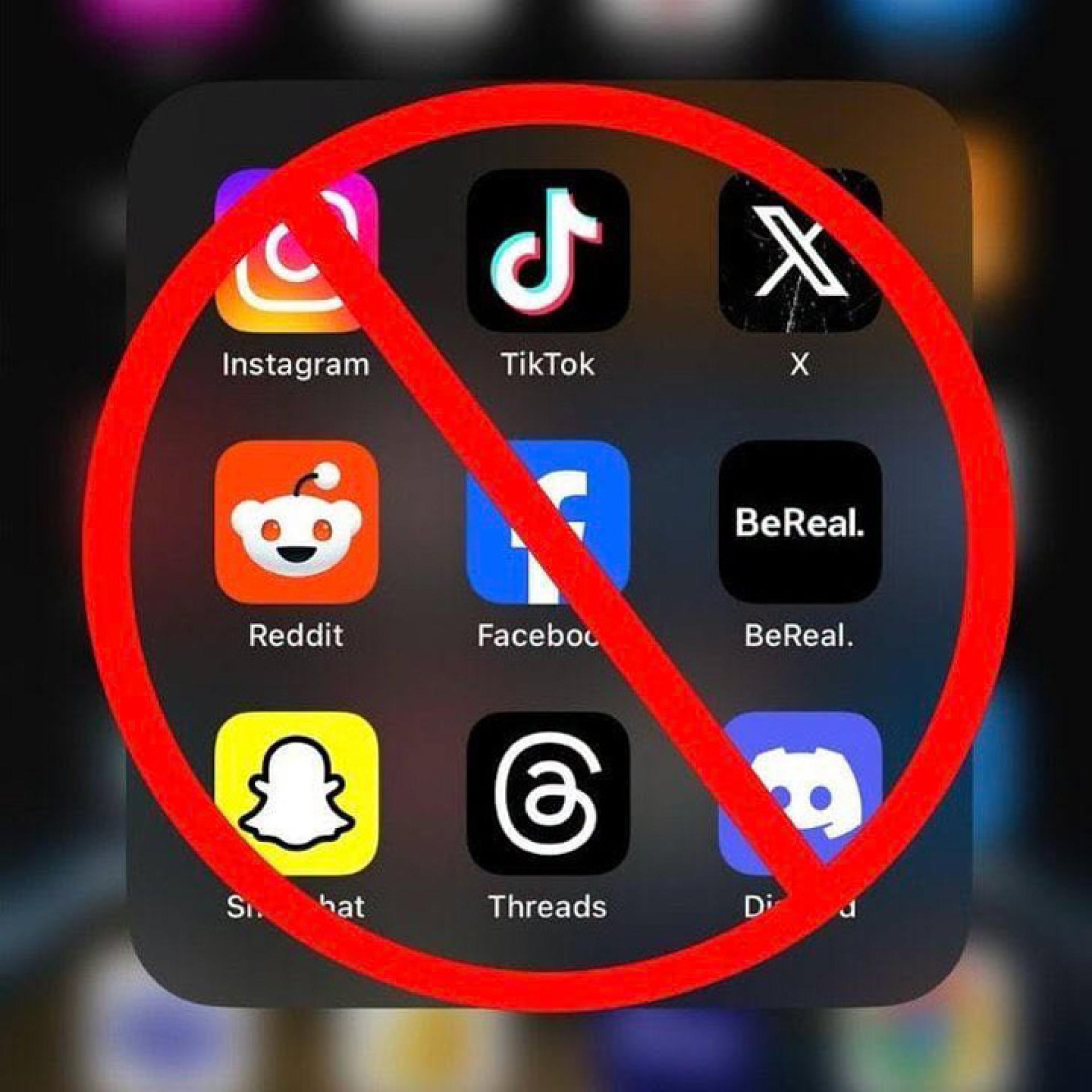
The Ministry of Digital Economy and Society of Thailand is currently studying a stricter proposal: banning anyone under 14 from opening social media accounts; requiring parental consent and identity verification for those aged 14 to 16; and setting daily usage time limits at the same time.
In 2025, Australia became the world’s first country to legally ban minors under 16 from using social media. Subsequently, countries such as France, Denmark, Sweden, Spain, Malaysia, and Indonesia followed suit. And now, this wave has reached Thailand.
On June 15, 2026, UK Prime Minister Starmer put forward a legislative draft, planning to prohibit minors under 16 from using major social media platforms such as TikTok, Instagram, YouTube, Facebook, and X, while simultaneously restricting livestreaming, private messaging, and other functions. The bill is expected to take effect as soon as 2027, and the latest poll shows that its approval rating exceeds 90%.
More and more countries are beginning to realize that social media is no longer just an entertainment tool, but is deeply involved in children's development.
From the first short video after waking up to the last swipe of the screen before bed; from obtaining information, building social relationships, to shaping their sense of aesthetics, values, and even life goals, algorithms are constantly intervening.
Some children, after prolonged screen time, become more sensitive and irritable; some stay up late scrolling through short videos, resulting in tiredness in class the next day; more and more parents are also realizing that while their children chat freely online, they’re becoming increasingly silent in real life.
Even more worrying is that cyberbullying, vulgar content, flaunting wealth, and extreme viewpoints are entering minors’ worlds at unprecedented speed.
As these phenomena become more common, governments globally are starting to upgrade the issue from being a 'personal habit' to a 'public health matter.'
However, another perspective is also emerging: If a 14-year-old child cannot have their own social media account, can they still acquire the most important digital competencies in the AI era in advance? Can they still study, create, and express themselves online? Can they still become participants in the future digital economy?
Thailand is vigorously developing its digital economy and artificial intelligence industry. Cultivating these skills is inherently inseparable from early engagement with the digital world. If the simplest approach is to cut off the connection, it may also mean severing possibilities for growth.
According to the current plan, the Ministry of Digital Economy and Society of Thailand will launch a 60-day public hearing and strive to submit it to the cabinet for deliberation in the third quarter of this year.
Official data shows that Thai teenagers’ average daily screen time reaches 5.5 hours, significantly higher than the global average of 3.7 hours. Meanwhile, a survey conducted by Ipsos in 2025 indicates that 87% of Thai respondents support restricting social media use for children under 14, a proportion that ranks among the highest out of the 30 countries surveyed worldwide.