The Indonesian government is actively promoting its abundant nickel and mineral resources to the global market and has opened up investment opportunities worth as much as $121 billion, aiming to build a complete national electric vehicle (EV) battery ecosystem.
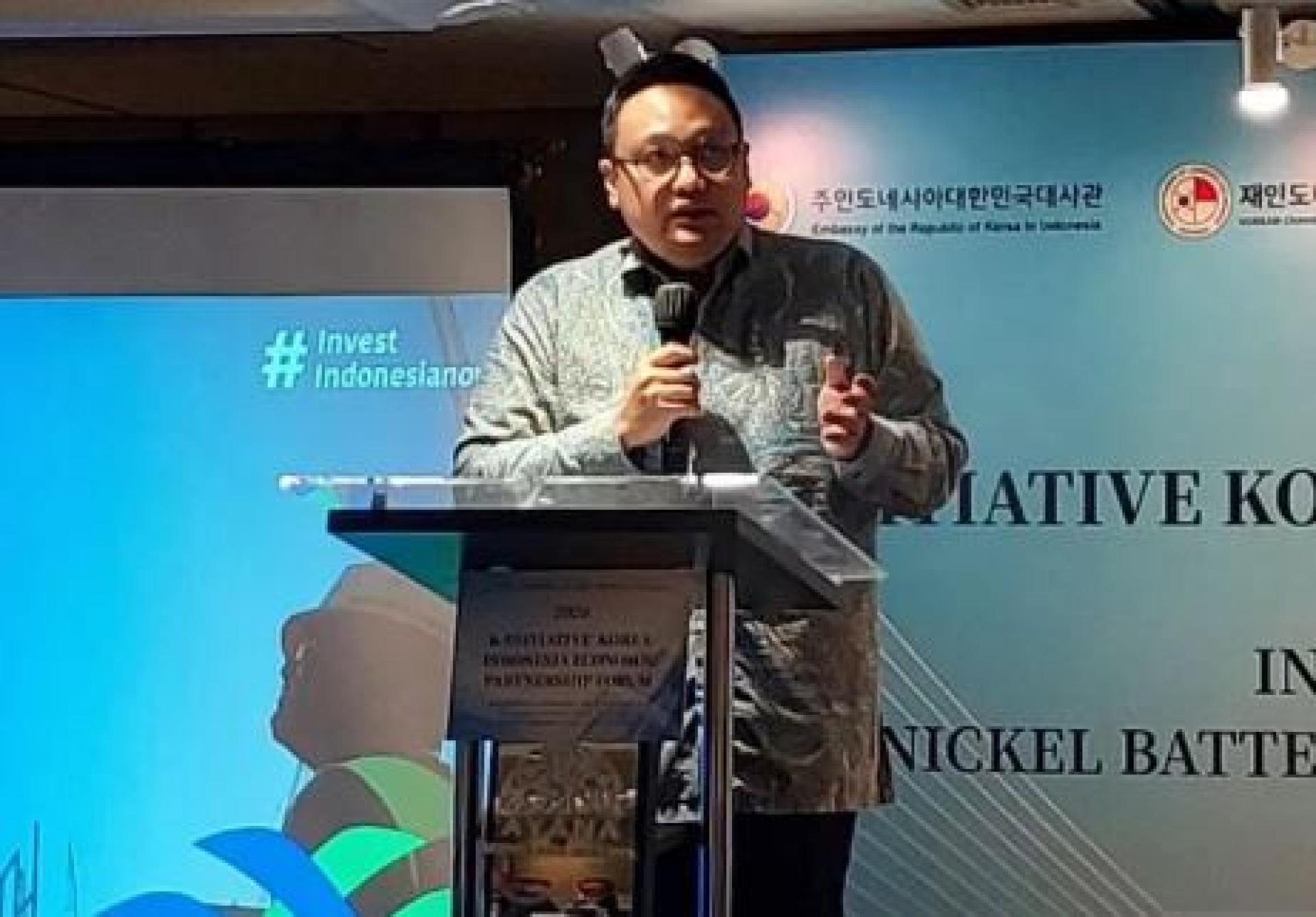
Ahmad Faisal Sularaga, Director of Downstream Strategy and Governance at Indonesia's Ministry of Downstream Industry and Investment, stated at the Korea-Indonesia Economic Partnership Forum on Wednesday that Indonesia is positioned to play a key role in the future global clean energy supply chain.
He said that among the six main raw materials needed to manufacture EV batteries, four can be abundantly sourced in Indonesia, including nickel, bauxite, manganese, and copper.
“These mineral resources provide Indonesia with a solid foundation for developing downstream industries, enabling further processing of raw materials into battery components and EV products,” he said.
Currently, Indonesia is the world's largest nickel producer, accounting for about 42% of global supply.
In addition to nickel, the government has identified another 28 strategic commodities to be included in the national downstream industry value-added development plan.
Ahmad Faisal Sularaga stated that Indonesia's goal is to establish a highly competitive and complete industrial chain, from the supply of mineral raw materials to the final battery assembly, achieving fully integrated development.
He pointed out that by 2045, Indonesia plans to rank among the world's top five EV battery producers.
He said that downstream industrialization can bring significant added value. For example, if nickel ore is successfully processed into EV batteries, its value can increase by up to 67 times.
Additionally, a localized industrial ecosystem helps reduce extra costs caused by scattered global supply chains, including export taxes, overseas taxes, and international logistics costs.
Currently, several international EV battery companies have entered the Indonesian market, participating in the construction of this integrated industrial ecosystem.
According to official data, the long-term downstream development strategy is expected to drive total investment up to $618 billion, increase total export value to $857 billion, and create more than three million job opportunities.
At present, investment in Indonesia is still mainly concentrated in the mining sector, totaling approximately 98.3 trillion rupiah (about $6.18 billion).
Investment in the plantation and forestry sector reached 29.8 trillion rupiah (about $1.67 billion); the oil and gas sector at 17.6 trillion rupiah (about $989 million); and the maritime sector recorded 1.7 trillion rupiah (about $95.5 million).
He said that among the six main raw materials needed to manufacture EV batteries, four can be abundantly sourced in Indonesia, including nickel, bauxite, manganese, and copper.
“These mineral resources provide Indonesia with a solid foundation for developing downstream industries, enabling further processing of raw materials into battery components and EV products,” he said.
Currently, Indonesia is the world's largest nickel producer, accounting for about 42% of global supply.
In addition to nickel, the government has identified another 28 strategic commodities to be included in the national downstream industry value-added development plan.
Ahmad Faisal Sularaga stated that Indonesia's goal is to establish a highly competitive and complete industrial chain, from the supply of mineral raw materials to the final battery assembly, achieving fully integrated development.
He pointed out that by 2045, Indonesia plans to rank among the world's top five EV battery producers.
He said that downstream industrialization can bring significant added value. For example, if nickel ore is successfully processed into EV batteries, its value can increase by up to 67 times.
Additionally, a localized industrial ecosystem helps reduce extra costs caused by scattered global supply chains, including export taxes, overseas taxes, and international logistics costs.
Currently, several international EV battery companies have entered the Indonesian market, participating in the construction of this integrated industrial ecosystem.
According to official data, the long-term downstream development strategy is expected to drive total investment up to $618 billion, increase total export value to $857 billion, and create more than three million job opportunities.
At present, investment in Indonesia is still mainly concentrated in the mining sector, totaling approximately 98.3 trillion rupiah (about $6.18 billion).
Investment in the plantation and forestry sector reached 29.8 trillion rupiah (about $1.67 billion); the oil and gas sector at 17.6 trillion rupiah (about $989 million); and the maritime sector recorded 1.7 trillion rupiah (about $95.5 million).