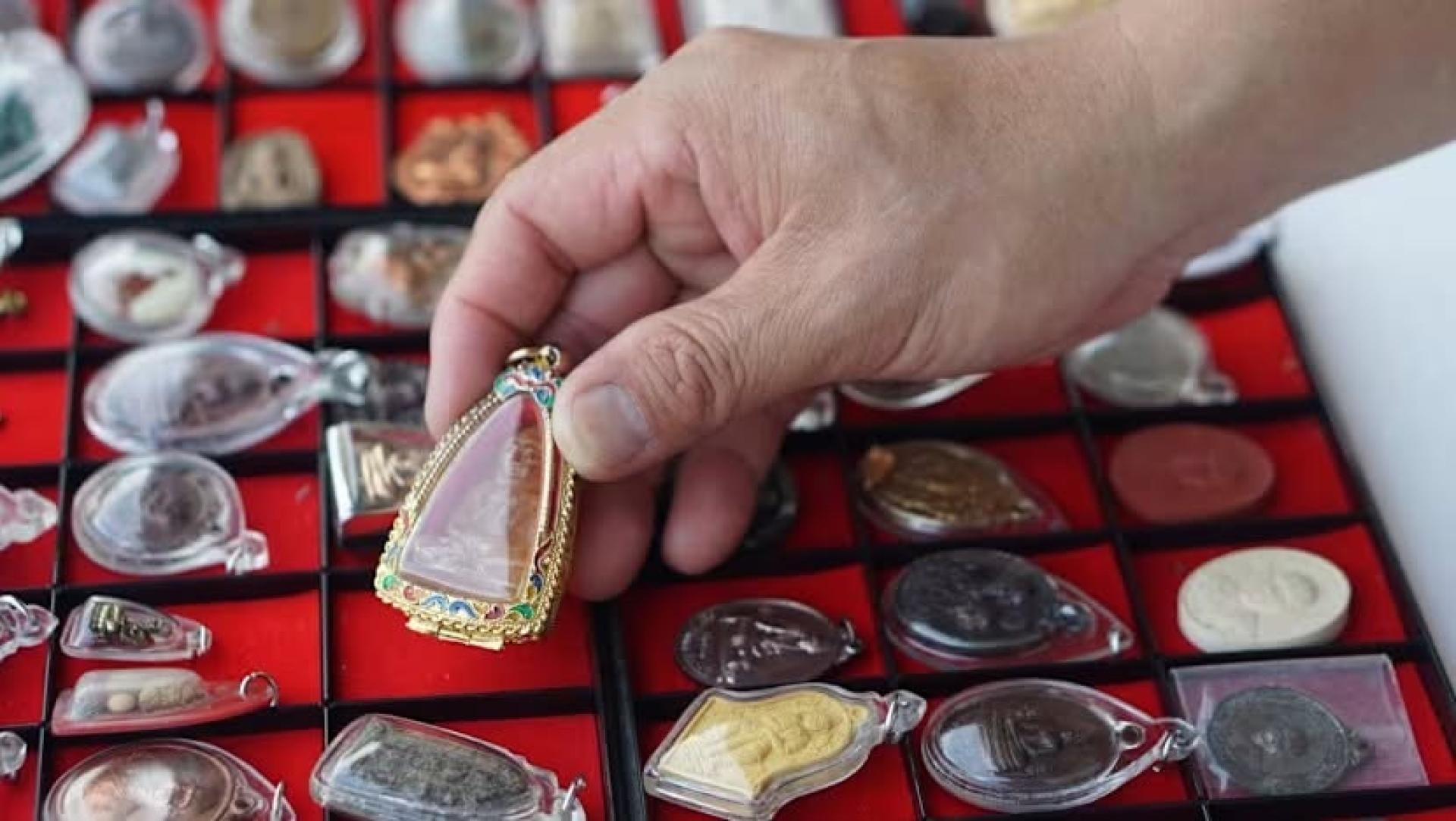
In Thai society, Buddha amulets have traditionally been seen as talismans and symbols of faith. However, in recent years, they have frequently appeared in the asset declarations of politicians and senior officials, and are even suspected of becoming an 'alternative tool' for hiding wealth or transferring illicit assets.
To plug this long-standing loophole in anti-corruption efforts, the National Anti-Corruption Commission (NACC) of Thailand recently announced a tightening of the asset declaration system, requiring officials to more strictly declare their holdings of amulets, antiques, and art collections, and to submit photos and source information for record-keeping, in order to prevent these 'hard-to-value' special assets from becoming tools for corruption and money laundering.
According to Thai media reports, Thai public officials have long been required to declare assets above a certain value, but due to the lack of unified market pricing standards for amulets, antiques, and artwork, their value is often determined by negotiation between buyer and seller.
This feature creates room for maneuver for some officials.
In the past, many politicians listed amulet collections worth tens or even hundreds of millions of baht in their asset declarations. Some even marked certain assets as 'priceless treasures', evading external scrutiny of their true value.
In the eyes of anti-corruption agencies, the biggest risk of such assets is not the high or low price, but their lack of valuation transparency, easily turning them into vessels for hiding wealth, packaging illicit income, or even laundering money.
In other words, a single Buddha amulet could be worth several thousand baht, or it could be artificially packaged as a 'rare treasure' worth tens of millions of baht, which outsiders can hardly verify for authenticity.
Claiming Wealth Originates from Amulet Trading
In recent years, many investigations into the wealth of Thai officials have been related to amulet assets.
There have been cases where members of parliament who were new to politics and had no apparent business background declared Buddha amulet collections worth several billion baht, triggering widespread public skepticism.
Some politicians were found possessing astoundingly valuable famous amulets and claimed that their wealth came from profits earned in amulet trading. However, after in-depth investigation by anti-corruption agencies, the source of their funds could not be reasonably explained.
In one representative case, a high-ranking official cited amulet trading as the source for vast sums of wealth, but investigators ultimately found the explanation untenable, and the court ordered forfeiture of over 49 million baht in unexplained assets.
The case has also drawn societal attention to the issue: Are amulets merely religious collectibles, or have they become 'financial instruments' for some to package the origin of their wealth?
New Rules Target 'Invisible Wealth'
In response to longstanding criticism, the NACC has revised the system, placing regulatory focus on amulets and other high-value, non-standard assets.
According to the new regulations, when declaring such assets, officials must provide detailed item-by-item information, attach clear photographs, and specify the source, background, and estimated value of each asset.
Even if market prices cannot be provided, enough information must be submitted for anti-corruption agencies to verify.
In the future, if someone reports or investigation finds that declared assets do not exist at all, this will be considered a false declaration; if the physical item exists but the declaration valuation is clearly out of line with the market, further investigation may be triggered as well.
Law enforcement will also trace related cash flows to investigate any involvement in money laundering, benefit transfer, or unexplained wealth accumulation.
The reports also point out that the core significance of this Thai legal amendment is not targeting amulets themselves, but the act of using faith-related collectibles to package the origins of wealth.
In the past, cash, real estate, and stocks were relatively easy to regulate. In contrast, those special collectibles with hard-to-measure value and opaque transactions became gray areas in the anti-corruption system.
When amulets are given financial attributes that go beyond faith, they may become camouflage for transactions of power and money.
Now, with Thai anti-corruption agencies choosing to crack down in this field, it reflects the global trend in anti-corruption shifting from regulation of traditional assets to extending oversight to art, collectibles, and other non-standard forms of wealth.