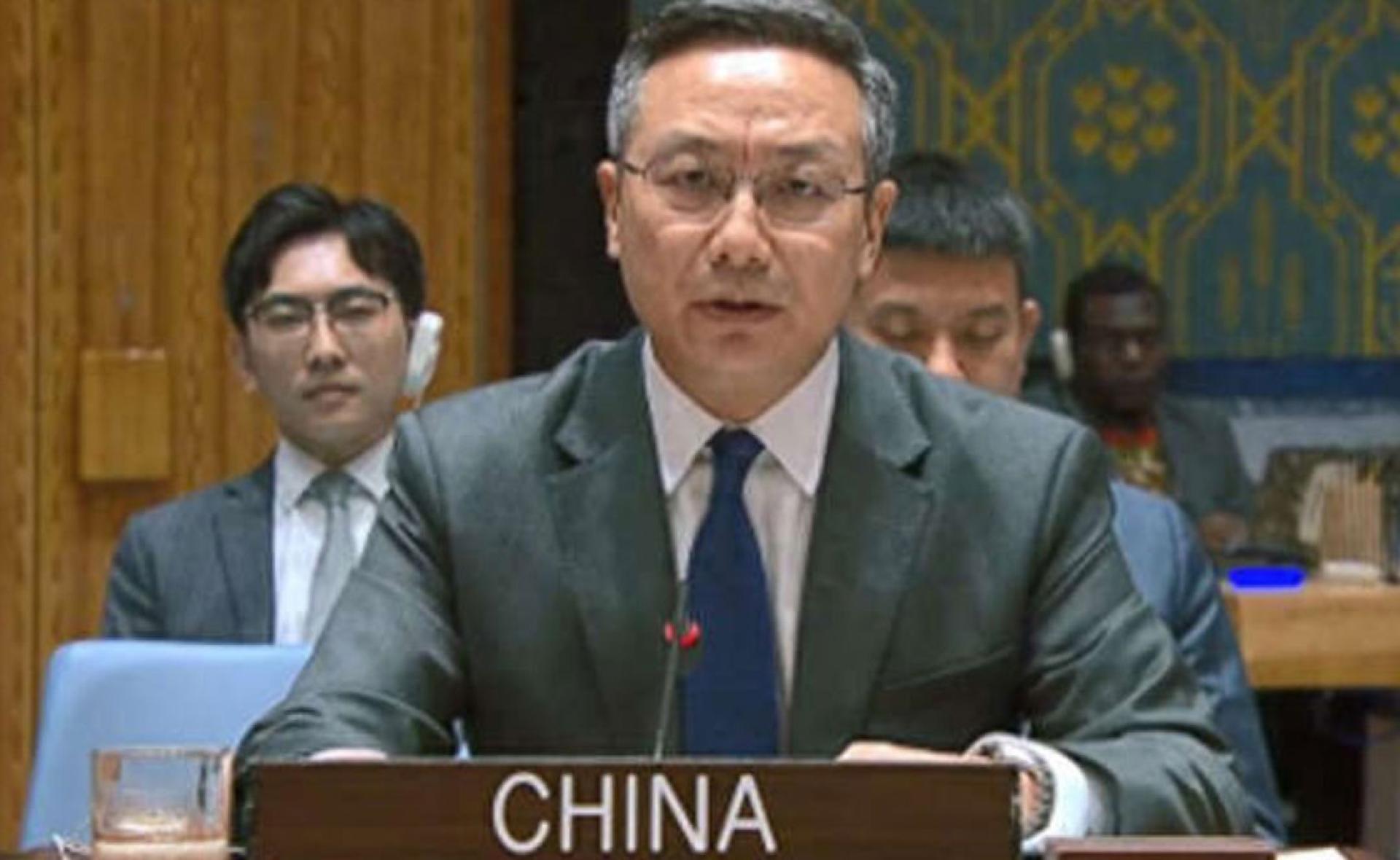
Sun Lei, Chargé d'Affaires a.i. of the Chinese Permanent Mission to the United Nations, stated on the 21st Eastern Time at the 80th UN General Assembly Intergovernmental Negotiations on Security Council Reform that a country like Japan, which shows no remorse for historical crimes, violates fundamental norms of international relations, challenges the outcomes of World War II, and openly tramples on the post-war international order, is incapable of shouldering the responsibility of maintaining international peace and security, cannot earn the trust of the international community, and fundamentally has no qualifications to seek to become a permanent member of the Security Council.
According to Xinhua News Agency on the 22nd, Sun Lei said the Security Council is the core of the international collective security mechanism and bears a uniquely important mission of upholding the post-war international order and safeguarding international peace and security. Eighty years ago, the International Military Tribunal for the Far East formally convened. The Tokyo Trial severely punished Japanese war criminals, upheld international justice, and defended human dignity. It also served as a powerful warning against any attempt to restore militarism or revive aggressive expansionism. However, Japanese militarism has not been thoroughly eradicated, but instead reemerged under new forms and has been stealthily growing.
Japanese right-wing forces vigorously glorify the history of aggression, categorically deny historical crimes such as the Nanjing Massacre, forced recruitment of comfort women, and forced labor, push for revisions of history textbooks, and attempt to whitewash its history of aggression. Many current Japanese leaders have paid homage at Yasukuni Shrine, the spiritual symbol of militarism, and worshipped Class A war criminals. From Japanese Prime Minister Sanae Takaichi's erroneous remarks on Taiwan and military threats against China, to Japanese officials' open statements in favor of nuclear armament, to the advancement of amending the 'three security documents' and the claim to revise the 'three non-nuclear principles', all fully expose the sinister intent of right-wing forces in Japan to promote 'remilitarization' and attempt to revive militarism, posing new threats to the peace and security of the region and even the world.
Sun Lei emphasized that such a country—one that shows no remorse for historical crimes, violates basic norms of international relations, challenges the outcomes of World War II, and openly tramples the post-war international order—is incapable of undertaking the responsibility to maintain international peace and security, cannot gain the trust of the international community, and fundamentally does not qualify to seek to become a permanent member of the Security Council.
Sun Lei stated that China, as a permanent member of the Security Council and a responsible major country, is willing to work together with all peace-loving countries and peoples to resolutely defend the outcomes of World War II and the post-war international order, jointly safeguard the authority and unity of the Security Council, and play a constructive role in promoting international peace and security.
On the issue of Security Council reform, Sun Lei said that China supports the necessary and reasonable reform of the Security Council to enhance its authority and efficiency and better respond to crisis challenges. Reform must take the real improvement of the representation and voice of developing countries as the only correct direction. The five major categories of issues in Security Council reform are fundamental and crucial issues and must be resolved through a comprehensive package plan. China hopes that the current round of intergovernmental negotiations will carry out in-depth discussions based on new concepts of reform.