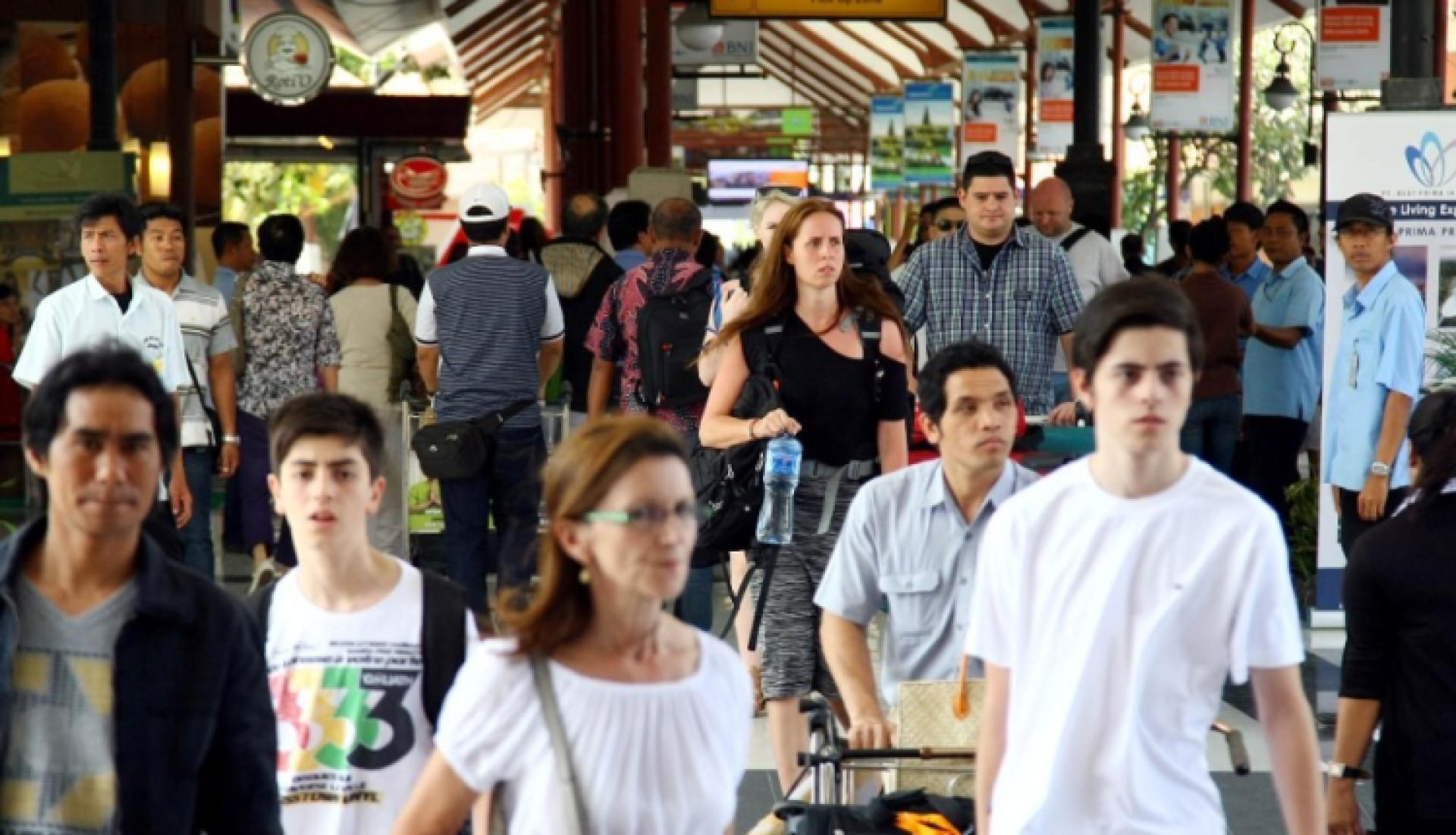
(Jakarta, 14th) — The Indonesian government is highly confident about the development prospects of its tourism industry for 2026, aiming to attract 16 to 17.6 million foreign tourists and striving to generate US$22 to 24.7 billion in foreign exchange income. The goal is to increase the tourism sector's contribution to GDP to between 4.5% and 4.7%.
Coordinating Minister for Economic Affairs Airlangga stated at a tourism coordination meeting on January 12 that, based on the tourism minister’s report, Indonesia had already achieved its set target of 15 million foreign tourists in 2025. The 2026 visitor target has thus been raised to 16 to 17.6 million.
The meeting unanimously agreed to strengthen several key pillars of the tourism sector, including accelerating infrastructure construction and enhancing connectivity. This will involve improving connections between existing and newly opened airports, while also promoting joint projects between central and local governments in key tourist destinations.
Airlangga said the government will also review its visa policy for foreign tourists, further simplify entry procedures, and—regarding governance transformation and digitalization—strengthen the management ecosystem of cross-regional tourism activities through an integrated licensing system, while introducing a tourism insurance mechanism to improve safety standards.
In terms of human resources and financing, the government plans to improve the professionalism and competitiveness of tourism workers through annual upskilling programs that cover about 400,000 people. It will also establish the "Indonesia Quality Tourism Fund" to ensure the industry’s fiscal sustainability. Additionally, from 2025 to 2026, the government will offer income tax incentives for tourism workers.
Airlangga added that before the upcoming Eid holiday, the government will roll out stimulus measures such as transportation fare reductions and shopping discounts, and is also studying visa facilitation schemes, with relevant suggestions to be submitted to the president.
Data shows that as of the third quarter of 2025, tourism’s contribution to GDP reached 3.96%, with foreign exchange income of US$13.82 billion and a tourism jobs population of about 25.91 million. By November of the same year, 13.98 million foreign tourists had visited Indonesia, with Malaysians accounting for the highest proportion, followed by tourists from Australia, Singapore, and China.
The meeting unanimously agreed to strengthen several key pillars of the tourism sector, including accelerating infrastructure construction and enhancing connectivity. This will involve improving connections between existing and newly opened airports, while also promoting joint projects between central and local governments in key tourist destinations.
Airlangga said the government will also review its visa policy for foreign tourists, further simplify entry procedures, and—regarding governance transformation and digitalization—strengthen the management ecosystem of cross-regional tourism activities through an integrated licensing system, while introducing a tourism insurance mechanism to improve safety standards.
In terms of human resources and financing, the government plans to improve the professionalism and competitiveness of tourism workers through annual upskilling programs that cover about 400,000 people. It will also establish the "Indonesia Quality Tourism Fund" to ensure the industry’s fiscal sustainability. Additionally, from 2025 to 2026, the government will offer income tax incentives for tourism workers.
Airlangga added that before the upcoming Eid holiday, the government will roll out stimulus measures such as transportation fare reductions and shopping discounts, and is also studying visa facilitation schemes, with relevant suggestions to be submitted to the president.
Data shows that as of the third quarter of 2025, tourism’s contribution to GDP reached 3.96%, with foreign exchange income of US$13.82 billion and a tourism jobs population of about 25.91 million. By November of the same year, 13.98 million foreign tourists had visited Indonesia, with Malaysians accounting for the highest proportion, followed by tourists from Australia, Singapore, and China.