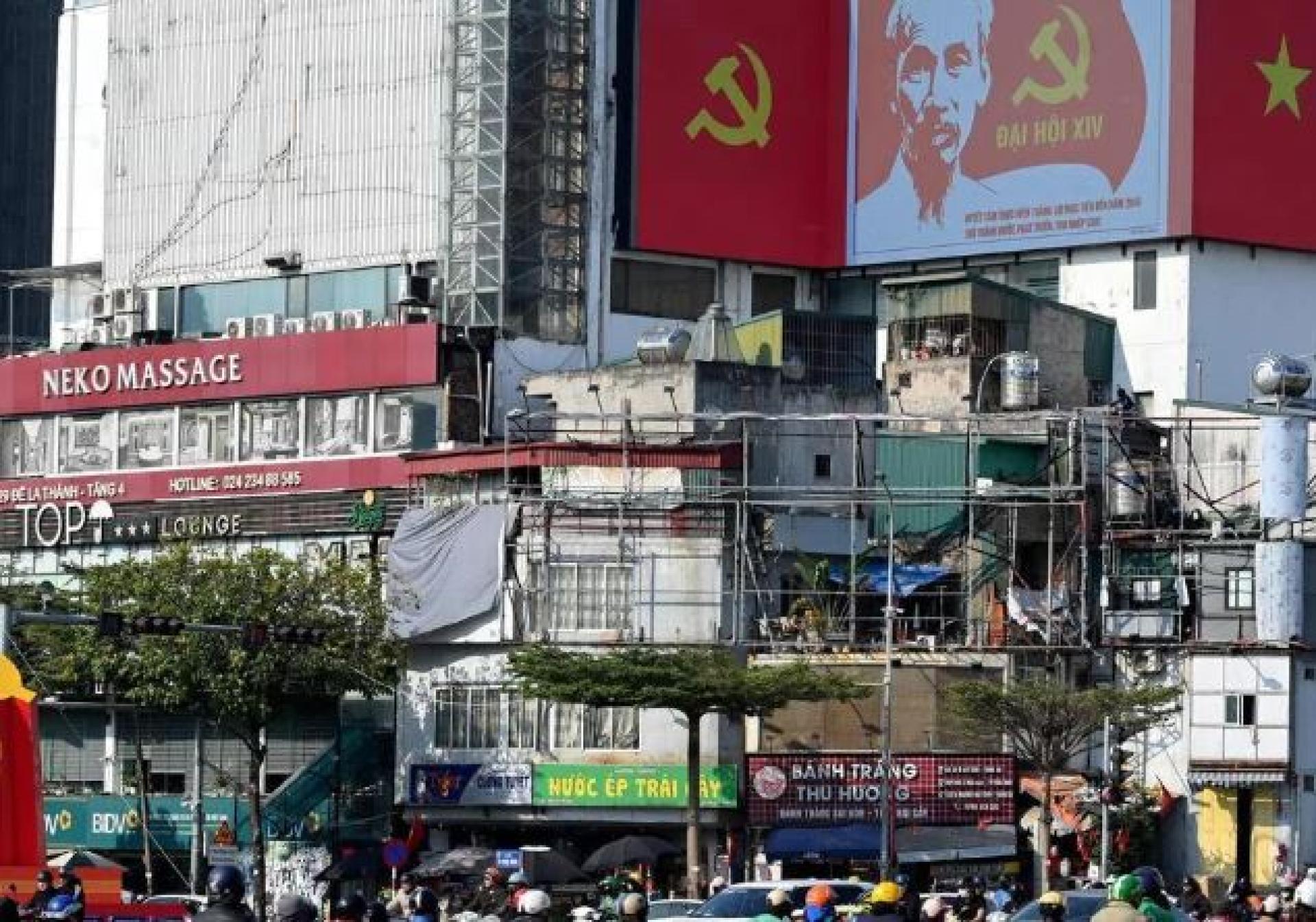
(Hanoi, 15th, Comprehensive Report) The 14th National Congress of the Communist Party of Vietnam will open on January 19. It is widely expected that General Secretary Pham Minh Chinh will further consolidate his power at the congress, with foreign affairs being regarded as a core focus of his governance strategy.
Some analyses point out that Chinh may seek to concurrently hold both the General Secretary and State President positions, sparking international attention on the future political landscape of Vietnam and the direction of its foreign and economic policies.
In the past, the Communist Party’s leadership emphasized decentralization of power, with international affairs mainly led by the State President and Prime Minister. However, since taking office, Chinh has been actively engaged in diplomacy, clearly demonstrating that the General Secretary is not only the party’s leader, but also assumes the role of representing the nation on the international stage.
Since taking office in August 2024, Chinh has visited 16 countries, upgraded Vietnam’s bilateral relations with Singapore and five other countries to comprehensive strategic partnerships, and signed numerous economic and technological cooperation agreements with multiple countries. He has also spoken at many international summits and universities, reiterating Vietnam’s stance of actively integrating into regional frameworks.
Analysts point out that Chinh’s intensive diplomatic activities have clearly sent the signal that diplomacy is at the core of his governance strategy.
James Borton, Senior Fellow at the Foreign Policy Institute of the School of Advanced International Studies at Johns Hopkins University, told the media that Chinh’s diplomatic moves over the past year have demonstrated coordination and strategic thinking, enhancing the overall effectiveness of Vietnam’s foreign policy.
He said that through high-level visits to the United States, China, and major ASEAN countries, Chinh is attempting to shape Vietnam into a medium-sized power with key influence in an increasingly polarized region.
Analysts believe that after the 14th Congress, the basic direction of Vietnam’s foreign policy is not expected to fundamentally change, but the implementation and leadership style may see adjustments. Hanoi has long practiced “bamboo diplomacy” that balances between major powers; future diplomatic decision-making may become more centralized and proactive.
Borton noted that if decision-making becomes excessively centralized, it may weaken diplomatic checks and balances, and increase the risk of misjudgment and external pressure on issues like the South China Sea or trade negotiations.
Regarding Vietnam’s relations with ASEAN, analysts believe a more confident Vietnam may promote regional coordination but could also pose challenges to ASEAN’s consensus- and low-key-diplomacy-based operational model. The outcome remains to be seen.
In the past, the Communist Party’s leadership emphasized decentralization of power, with international affairs mainly led by the State President and Prime Minister. However, since taking office, Chinh has been actively engaged in diplomacy, clearly demonstrating that the General Secretary is not only the party’s leader, but also assumes the role of representing the nation on the international stage.
Since taking office in August 2024, Chinh has visited 16 countries, upgraded Vietnam’s bilateral relations with Singapore and five other countries to comprehensive strategic partnerships, and signed numerous economic and technological cooperation agreements with multiple countries. He has also spoken at many international summits and universities, reiterating Vietnam’s stance of actively integrating into regional frameworks.
Analysts point out that Chinh’s intensive diplomatic activities have clearly sent the signal that diplomacy is at the core of his governance strategy.
James Borton, Senior Fellow at the Foreign Policy Institute of the School of Advanced International Studies at Johns Hopkins University, told the media that Chinh’s diplomatic moves over the past year have demonstrated coordination and strategic thinking, enhancing the overall effectiveness of Vietnam’s foreign policy.
He said that through high-level visits to the United States, China, and major ASEAN countries, Chinh is attempting to shape Vietnam into a medium-sized power with key influence in an increasingly polarized region.
Analysts believe that after the 14th Congress, the basic direction of Vietnam’s foreign policy is not expected to fundamentally change, but the implementation and leadership style may see adjustments. Hanoi has long practiced “bamboo diplomacy” that balances between major powers; future diplomatic decision-making may become more centralized and proactive.
Borton noted that if decision-making becomes excessively centralized, it may weaken diplomatic checks and balances, and increase the risk of misjudgment and external pressure on issues like the South China Sea or trade negotiations.
Regarding Vietnam’s relations with ASEAN, analysts believe a more confident Vietnam may promote regional coordination but could also pose challenges to ASEAN’s consensus- and low-key-diplomacy-based operational model. The outcome remains to be seen.