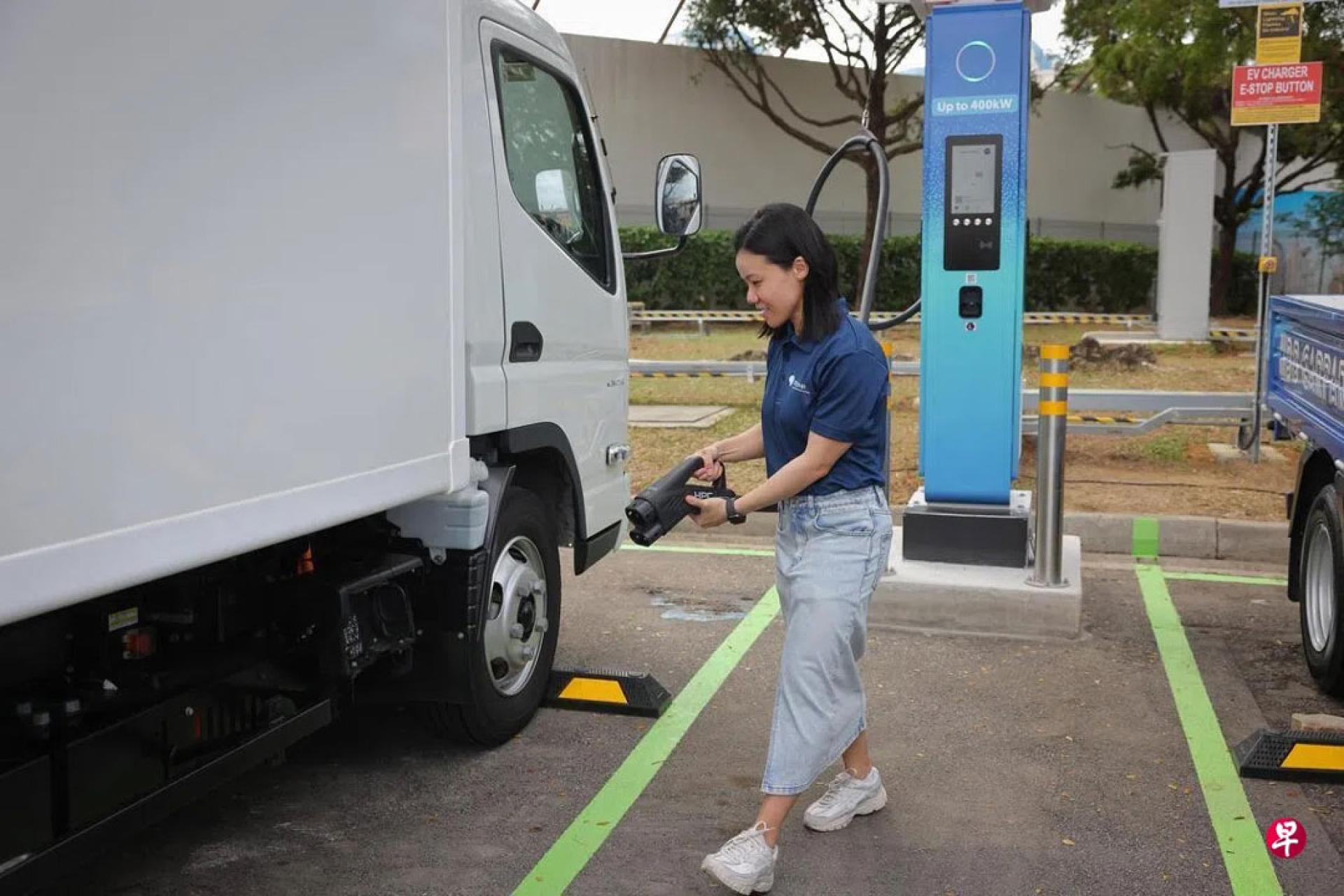
Singapore EV charging operator SP Mobility has partnered with Huawei to launch Singapore's first ultra-fast electric vehicle charging station equipped with a battery energy storage system at Temasek Polytechnic.
According to a report from Lianhe Zaobao on the 6th, data from the Land Transport Authority's official website shows that Singapore registered a total of 52,678 new vehicles in 2025, of which 23,684 are electric vehicles, accounting for around 44.9% of all new vehicle registrations.
This is the first ultra-fast charging station in the eastern region, featuring four ultra-fast charging units with power levels up to 480kW—the highest-capacity public charging points in Singapore to date. These stations benefit private EV owners, high-usage fleets, and heavy-duty electric trucks in need of daily charging.
However, due to the current power supply infrastructure at Temasek Polytechnic, the maximum output of the ultra-fast charging units at this location is capped at 400kW, and the actual charging speed also depends on whether the vehicle is compatible with such charging power.
This is the fastest charging station under SP Mobility. The previous highest DC fast charging power under SP Mobility was 200kW. Currently, the fee is the same as other SP Mobility DC fast charging stations, at $0.774 per kWh. After the promotional period, the price may increase by $0.05 per kWh.
On the 6th, Senior Parliamentary Secretary for Transport and for Culture, Community and Youth, Baey Yam Keng, was invited to officiate the launch of the new charging station.
● New Charging Speed Nearly 10 Times Faster Than Existing Fast Chargers
The liquid-cooled ultra-fast charging station developed by Huawei, combined with the battery energy storage system for additional buffering, allows EVs to add up to 200km of range in just 5 minutes—almost 10 times faster than current general fast charging facilities. This greatly shortens charging time for commercial vehicles like heavy-duty electric trucks and high-mileage vehicles.
The Battery Energy Storage System (BESS) stores electricity when the charger is idle, then releases it during charging sessions, thereby reducing the grid load and enabling a faster and more stable charging experience.
Wang Long, Director of Singapore Charging Network Business at Huawei Digital Power, noted that power supply at local public car parks is generally low. To support ultra-fast charging, lengthy applications to the authorities or expensive electrical infrastructure upgrades may be required. “By combining battery storage systems, we can more quickly overcome such limitations, allowing heavy-duty electric trucks, electric buses, and private EVs with different charging power demands to charge simultaneously. This paves the way for deploying more ultra-fast charging stations in more affordable parking areas in the future.”