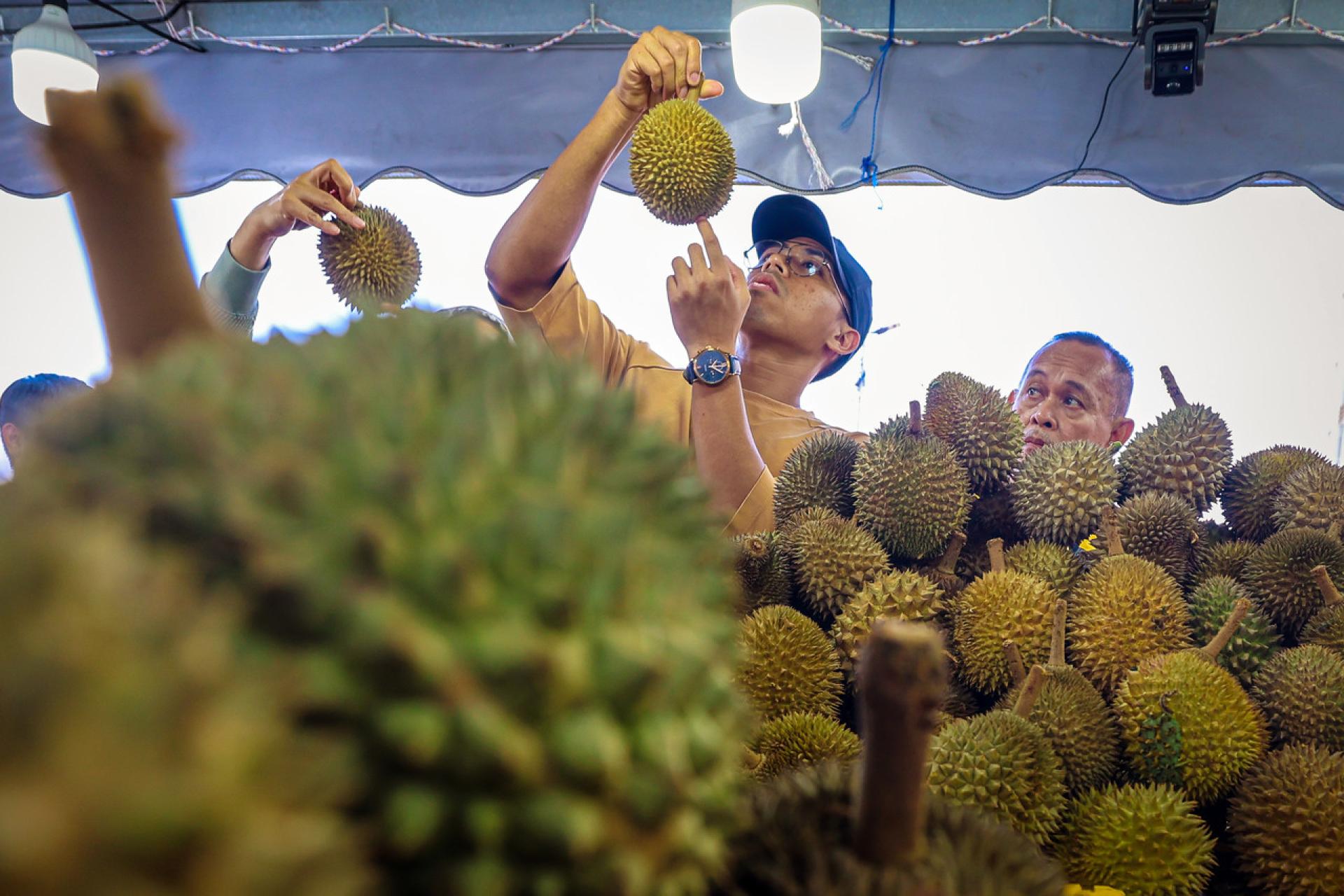
(Kuala Lumpur, 21st) Deputy Minister of Agriculture and Food Security Datuk Chan Hong Kian pointed out that in the first half of this year, Malaysia’s durian imports from Thailand decreased by 36.67% to 4,184.58 metric tons, compared to 6,606.86 metric tons in the same period last year, refuting claims of Thai durian dumping.
He said that according to the compliance certificate data from the Federal Agricultural Marketing Authority (FAMA) e3P system, the quantity of durians imported from Thailand only accounts for about 2% of domestic durian production.
“However, the main challenge currently comes from the domestic durian peak season from June to August this year, during which local durian production increases, leading to market oversupply.”
He said this today in the Senate in response to Senator Nirlan’s question on how the government is handling the impact of neighboring countries dumping durian and its effect on the local market and smallholders’ incomes.
Chan Hong Kian mentioned that to balance the market, the Ministry of Agriculture is implementing a dual-pronged strategy through FAMA, namely by strengthening market regulation and launching the Seasonal Fruit Intervention Plan 2026.
He said that this year FAMA expects to procure 1,000 metric tons of seasonal fruits, including durians, through its operation centers, with a total value of about RM7 million.
He said that as of July 12, FAMA had directly procured 468.94 metric tons of seasonal fruits worth RM2.87 million; at the same time, another 1,550.73 metric tons worth RM6.98 million was indirectly procured through its network of guided entrepreneurs.
In response to additional questions from Senator Abdul Nasir about how the Ministry of Agriculture will address future difficulties in local durian sales, Chan Hong Kian pointed out that the ministry is studying the feasibility of exporting fresh Malaysian durians to China using land or sea transport instead of air freight.
He said this plan would require negotiating a new export protocol with China’s General Administration of Customs, and the Malaysian Agricultural Research and Development Institute (MARDI) and Agriculture Department would have to conduct scientific research, especially on post-harvest treatment technology.
In response to Senator Datuk Wong Ching Hing’s question of why FAMA set the minimum purchase price of durians at RM2.70 per kilogram instead of RM3, Chan Hong Kian said the minimum purchase price set by the intervention plan is aimed at helping kampung durian smallholders reduce losses.
He said FAMA will further study the suggestion to raise the minimum purchase price to RM3 per kilogram, including whether more funding is needed, but at this stage the minimum price will remain at RM2.70 per kilogram.