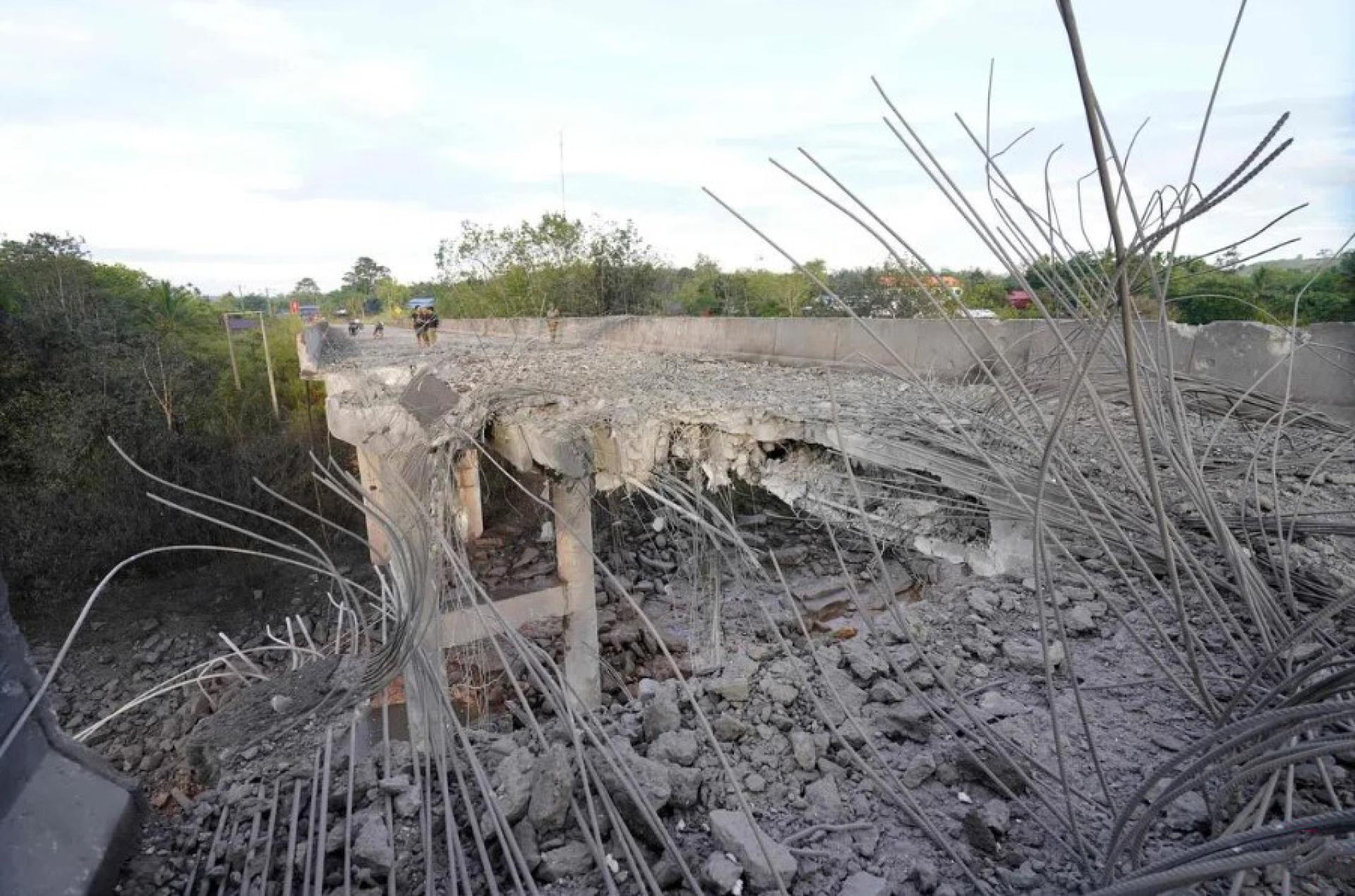
(Thailand, 14th) The United States and ASEAN chair Malaysia have once again intervened to mediate the Thai-Cambodian border conflict, but Thailand's caretaker Prime Minister Anutin has stated they will not enact a ceasefire, saying no negotiations or ceasefire agreements have been reached with Cambodia, and stressing that now is not the time for talks.
'Thairath' reported that Anutin, attending the funeral of an officer killed in the Thai-Cambodian conflict on Saturday (December 13), clearly rejected Malaysian Prime Minister Anwar's ceasefire proposal when asked by reporters. Anwar proposed that both sides halt military actions at 10pm local time (11pm Singapore time) on Saturday.
'Thairath' reported that Anutin, attending the funeral of an officer killed in the Thai-Cambodian conflict on Saturday (December 13), clearly rejected Malaysian Prime Minister Anwar's ceasefire proposal when asked by reporters. Anwar proposed that both sides halt military actions at 10pm local time (11pm Singapore time) on Saturday.
Anutin said that residents along the Thai border continue to suffer artillery attacks, "How can we possibly agree to a ceasefire under these circumstances?"
Anwar posted on Facebook on Saturday afternoon, saying that he spoke separately with Anutin and Cambodian Prime Minister Hun Manet that day, urging both sides to exercise restraint and to halt further military action, including the use of force or advancing front-line troops, from 10pm local time.
Anwar posted on Facebook on Saturday afternoon, saying that he spoke separately with Anutin and Cambodian Prime Minister Hun Manet that day, urging both sides to exercise restraint and to halt further military action, including the use of force or advancing front-line troops, from 10pm local time.
Anwar also said a special ASEAN foreign ministers' meeting will be held next Tuesday (16th) to discuss the current situation and de-escalation measures between Thailand and Cambodia.
Hun Manet subsequently announced that Cambodia welcomes and accepts Anwar's proposed ceasefire initiative. Cambodia also welcomes the deployment of an ASEAN observer group to monitor the ceasefire, with additional satellite monitoring support provided by the United States.
Because both Thailand and Cambodia accuse each other of initiating hostilities, Hun Manet earlier suggested that the US and Malaysia utilize their military intelligence or relevant agencies' capabilities, such as satellite imagery, to clearly ascertain which side fired first.
Hun Manet subsequently announced that Cambodia welcomes and accepts Anwar's proposed ceasefire initiative. Cambodia also welcomes the deployment of an ASEAN observer group to monitor the ceasefire, with additional satellite monitoring support provided by the United States.
Because both Thailand and Cambodia accuse each other of initiating hostilities, Hun Manet earlier suggested that the US and Malaysia utilize their military intelligence or relevant agencies' capabilities, such as satellite imagery, to clearly ascertain which side fired first.
Hun Manet also posted on Facebook earlier on Saturday, saying that Cambodia would continue to seek a peaceful resolution to the dispute, in accordance with the agreement reached with Thailand in October.
A few hours prior, US President Trump announced a renewed effort to broker a Thai-Cambodian ceasefire. After calls with Anutin and Hun Manet on Friday (12th), Trump posted on his own social media platform, Truth Social, saying that both countries had agreed to a "comprehensive ceasefire" beginning that night, resuming the peace agreement brokered by the US and Malaysia months earlier.
A few hours prior, US President Trump announced a renewed effort to broker a Thai-Cambodian ceasefire. After calls with Anutin and Hun Manet on Friday (12th), Trump posted on his own social media platform, Truth Social, saying that both countries had agreed to a "comprehensive ceasefire" beginning that night, resuming the peace agreement brokered by the US and Malaysia months earlier.
However, a few hours later Anutin denied this in a Facebook post, declaring that Thailand would continue military action "until we believe our land and people are no longer being harmed or threatened."
Later, at a press conference, he said that his call with Trump did not touch upon a ceasefire, nor was any ceasefire agreement reached — it was only a general communication.
Thailand's caretaker Defense Minister, Natthapong, stressed in another occasion that the Thai military would not enact a ceasefire until Cambodia clearly halts all hostile actions.
Regarding Trump and Anwar's renewed efforts at mediation, which Thailand appears to disregard, international relations and regional studies scholar, Dr. Sun Tianmei, director of the ASEAN Community for Shared Destiny Studies Center at Universiti Utara Malaysia, said in an interview that the Thai-Cambodian border dispute is a historical issue involving sovereignty and national dignity, and cannot be resolved simply by a few words from Trump and Anwar.
Later, at a press conference, he said that his call with Trump did not touch upon a ceasefire, nor was any ceasefire agreement reached — it was only a general communication.
Thailand's caretaker Defense Minister, Natthapong, stressed in another occasion that the Thai military would not enact a ceasefire until Cambodia clearly halts all hostile actions.
Regarding Trump and Anwar's renewed efforts at mediation, which Thailand appears to disregard, international relations and regional studies scholar, Dr. Sun Tianmei, director of the ASEAN Community for Shared Destiny Studies Center at Universiti Utara Malaysia, said in an interview that the Thai-Cambodian border dispute is a historical issue involving sovereignty and national dignity, and cannot be resolved simply by a few words from Trump and Anwar.
She said that previously, Trump pressured the dispute with tariff threats, but that is only a temporary fix and not a long-term solution. "Border issues have never been easy to solve... Only if both leaders are willing to exercise restraint and avoid provocation will things quiet down."
The Thai parliament has been dissolved and elections are looming, so the situation is expected to remain unstable; generally, when a country faces a common enemy, voters rally behind the incumbent government.
The Thai parliament has been dissolved and elections are looming, so the situation is expected to remain unstable; generally, when a country faces a common enemy, voters rally behind the incumbent government.
Sun Tianmei said, creating an enemy is the easiest election strategy. If Thailand holds peace talks before the election ends, it would not benefit the ruling party. "Unless Cambodia is willing to make concessions, that would be another matter."
"However, Thailand will not let the border conflict escalate into full-scale war, because any war would harm the national economy, especially the tourism sector. Anutin will allow the situation to remain tense, with intermittent ceasefires and flare-ups; even during a ceasefire, he will maintain a tense atmosphere."
"However, Thailand will not let the border conflict escalate into full-scale war, because any war would harm the national economy, especially the tourism sector. Anutin will allow the situation to remain tense, with intermittent ceasefires and flare-ups; even during a ceasefire, he will maintain a tense atmosphere."
This week, renewed conflict on the Thai-Cambodian border has resulted in more than 20 deaths on both sides, with hundreds of thousands displaced.
The Cambodian Ministry of Defense once again accused the Thai military on Saturday of continued operations in numerous border areas, including deploying two F16 fighter jets to drop nine bombs inside Cambodian territory. Cambodia will now suspend all border crossings with Thailand until further notice. This has left many Thais stranded locally, unable to evacuate.
The Thai military, in turn, accused Cambodian troops of launching BM-21 rockets into the Phu Khao Chum district of Thailand earlier that morning, injuring at least four civilians, two seriously, and damaging two houses.
The Cambodian Ministry of Defense once again accused the Thai military on Saturday of continued operations in numerous border areas, including deploying two F16 fighter jets to drop nine bombs inside Cambodian territory. Cambodia will now suspend all border crossings with Thailand until further notice. This has left many Thais stranded locally, unable to evacuate.
The Thai military, in turn, accused Cambodian troops of launching BM-21 rockets into the Phu Khao Chum district of Thailand earlier that morning, injuring at least four civilians, two seriously, and damaging two houses.